
You're probably reading this on the day of your procedure, tired from anaesthetic, a bit swollen, and not completely sure how you're meant to sleep without making things worse. That's normal. You might not be worried about bedtime until you get home, the numbness starts wearing off, and suddenly the simple act of lying down feels complicated.
The good news is that how to sleep after wisdom teeth removal isn't mysterious. A few specific choices make recovery smoother, while a few common mistakes can leave you throbbing, swollen, and wide awake. The rules matter because your mouth is trying to protect a fresh surgical site, form a stable clot, and keep swelling under control while you rest.
Your First Night Home After Wisdom Teeth Removal
When you first get home, sleep might feel like the only thing you want, but don't rush straight into bed. The first night goes best when you slow down, get organised, and make the room work for your recovery instead of against it.
Your body has been through a procedure. Even if the extraction itself went smoothly, your system is still coming down from anaesthetic or sedation, your jaw tissues are inflamed, and your mouth may still be oozing a little. That combination makes people feel both exhausted and uneasy at the same time.
Get your space ready before you lie down
Set up your bed or resting area first. Keep tissues, water, prescribed medication, a small rubbish bag, and any post-op instructions within easy reach. If you've never had surgery before, a practical guide to essential equipment for home recovery can help you think through the basics that make the night easier.
One simple way to lower stress is to avoid repeated trips up and down the hall. Every time you have to get up because you forgot something, you disturb yourself more and can end up feeling more sore and unsettled.
What usually feels normal on night one
A few things often catch patients off guard:
- Grogginess: You may feel sleepy, slow, or emotionally flat for a while.
- Light bleeding or oozing: Some staining is common early on.
- A strange taste in the mouth: Blood and saliva can create that metallic taste.
- Jaw tightness: Muscles around the extraction area often feel stiff and tired.
Practical rule: Aim for a calm night, not a perfect one. Broken sleep on the first evening doesn't mean anything is wrong.
If you want a broader overview of what the next few days can feel like, this guide to wisdom teeth removal recovery tips is a useful companion. It helps put the first night into context so you know what's expected and what deserves attention.
Navigating Sleep After Anaesthesia and Sedation
The first trap after sedation is assuming that because you're drowsy, it's safe to fall asleep however you like. It isn't. Right after a procedure, sleep safety matters more than comfort.
Anaesthetic and sedation can leave you heavy, disoriented, and less aware of what your mouth is doing. That matters if you still have gauze in place or if bleeding needs monitoring. A patient who feels “ready to crash” may still need supervision.

Why supervision matters
If gauze pads are required in the mouth to control post-op bleeding, a supervising adult must wake the patient every 20 minutes to check and replace the gauze, because sleeping with gauze unattended risks choking, according to Elite Oral Surgery Associates. That 20-minute interval is the critical safety threshold.
This is one of those instructions patients sometimes underestimate because they're tired. Don't. If you're groggy and the gauze shifts, you may not respond normally.
A safer first-evening plan
A responsible adult should stay with you while you're still affected by sedation. Their job isn't just to be nearby. They should actively check that you're resting safely and that any gauze is still doing what it should.
A practical approach looks like this:
- Stay upright while settling in: Don't slump fully flat on the bed straight away.
- Use gauze only as directed: If you still need it for bleeding control, treat it as something that requires active checking.
- Let someone monitor you: Especially if you're sleepy, nauseated, or not thinking clearly.
- Keep communication simple: If you feel sick, dizzy, or more confused, say so early.
If nausea is bothering you and your dentist or doctor has advised anti-nausea support, some patients look into a virtual Zofran prescription so they understand what options may exist through appropriate medical channels. The key is not to self-mix medicines casually after sedation.
You can feel sleepy and still need supervision. Those two things often happen together after oral surgery.
If your procedure involved sedation and you want to understand why the after-effects can linger into the evening, this overview of IV sedation dentistry explains the basics clearly.
The Only Safe Sleep Position for Healing
For the first few nights, there is one position that protects the surgical site properly. Sleep on your back with your head raised. Not flat. Not curled on your side. Not face-down because that “feels more natural”.
This isn't about fussiness. It's about pressure, blood flow, and protecting the clot your body is trying to build.
The position that works
The gold-standard mechanical protocol for post-extraction sleep requires elevating the head at a precise 45-degree angle for the first 3 to 5 nights, using two to three pillows or a wedge pillow to maintain that incline, which helps reduce pressure at the surgical site and minimise swelling by using gravity to keep blood from pooling near the gums, as explained by Aspen Dental.
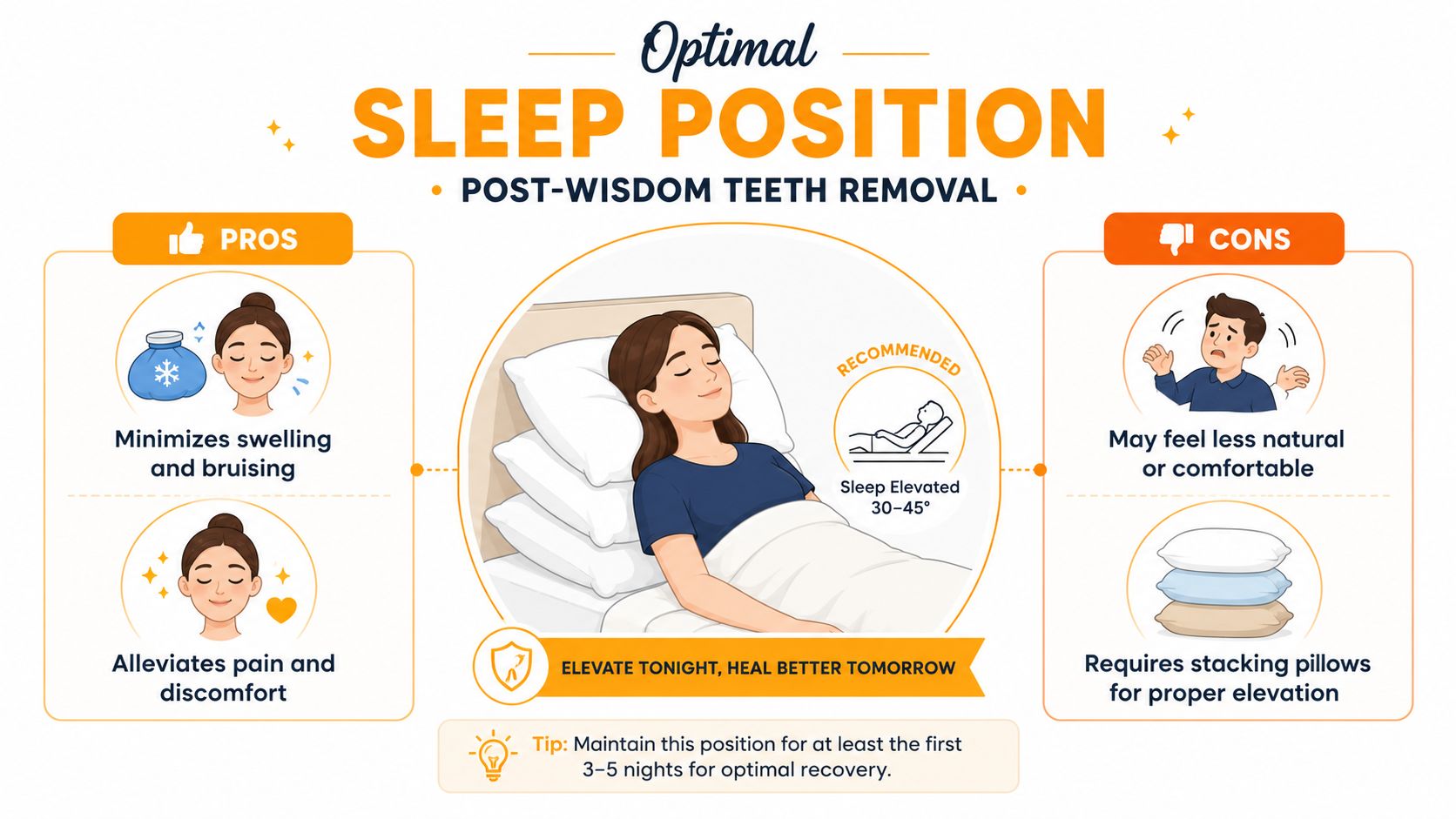
When you lie flat, blood pressure increases in healing gums. That often means more throbbing, more swelling, and a rougher night. When you keep your head raised, gravity works in your favour.
Why side sleeping backfires early
Sleeping on your side or stomach seems harmless, but it creates two problems at once. First, it adds uneven pressure to the jaw. Second, it makes it much harder to hold that propped-up position through the night.
Even people who swear they “always sleep on their side” usually do better when they treat the first few nights as a short-term recovery protocol, not a comfort contest. Put pillows on either side of your body if you tend to roll.
Here's the practical trade-off:
| Position | What it does well | What it does badly |
|---|---|---|
| Back with elevation | Supports healing and keeps pressure lower | Can feel unfamiliar |
| Side sleeping | Feels natural for many people | Adds jaw pressure and makes rolling more likely |
| Stomach sleeping | None during early recovery | Presses the face and jaw into the mattress |
A setup that feels slightly awkward but protects the clot is better than a comfortable position that irritates the surgery site all night.
If you don't have a wedge pillow, a recliner can be useful because it helps maintain the angle without constant slipping. Some people also compare bed versus chair sleeping before surgery, and articles like is sleeping in a recliner bad can help you think through comfort and support. The goal isn't the furniture itself. The goal is keeping your upper body stable and raised.
Make it easier to stick with
Use a simple setup:
- Behind you: two to three firm pillows, or a wedge
- Beside you: one pillow on each side if you tend to roll
- Under your knees: optional support if your lower back gets cranky on your back
If you're wondering how long this stage usually lasts, this article on wisdom teeth removal recovery time can help you match your sleep setup to the broader healing timeline.
A Nightly Routine for Pain and Swelling Control
Comfort at night rarely comes from one big thing. It comes from a sequence of small decisions that stop pain from building momentum. The best bedtime routine is the one you can repeat without overthinking.
Start with the basics before you're overtired. If you wait until the pain is already climbing, everything feels harder.
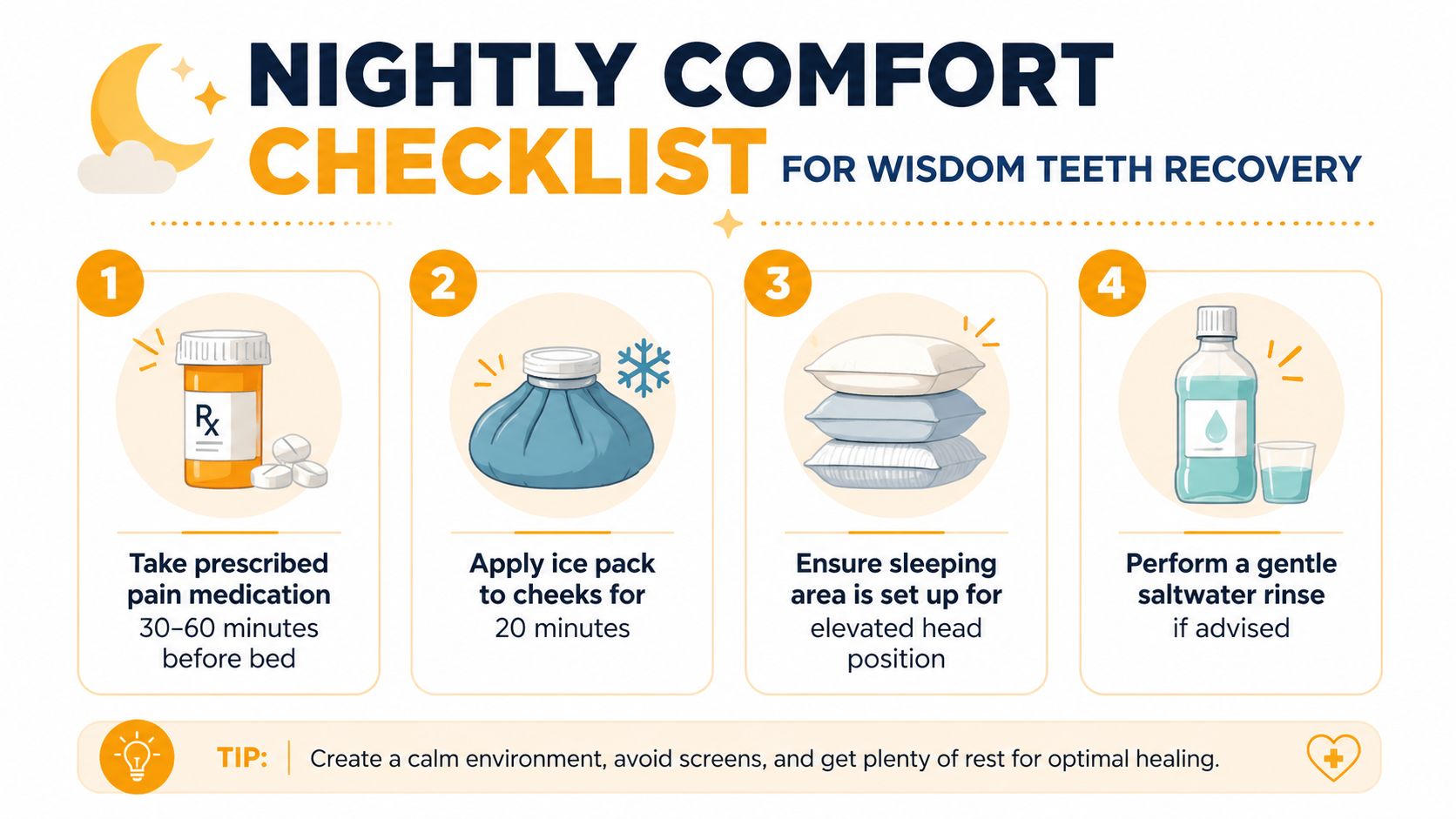
A simple pre-bed checklist
- Take prescribed pain relief on time: Don't save it until you're lying in bed and already miserable. Follow the schedule your dentist gave you.
- Use cold therapy before sleep: Apply an ice pack to the outside of the cheeks in short sessions before bed to help settle inflammation.
- Set up the pillows before you're sleepy: Trying to build a proper incline after the lights are off usually ends badly.
- Keep essentials nearby: Water, medication, tissues, and anything else you might need should be within arm's reach.
A brief visual explanation can help if you're more of a watch-and-do person:
What works better than guessing
Patients often do best when they think of bedtime as a reset point. Reduce swelling before you lie down, support the jaw properly, and avoid needing to get up repeatedly once you're settled.
This is also where preparation beats toughness. You don't get extra credit for “pushing through” pain at night. You just lose sleep, and the next day usually feels harder.
A bedside setup that's ready to go often includes:
- A bottle or glass for sipping water
- Any prescribed medication
- A towel over the pillow if you're worried about slight drooling
- Extra tissues or gauze if your dentist advised keeping some nearby
Night pain feels bigger when you're tired. A planned routine helps stop normal discomfort from becoming a long, restless night.
If pain is your main concern, this guide on wisdom tooth removal pain explains why discomfort often feels different at night and how to think about it more calmly.
Protecting Your Recovery From Hidden Dangers
Most setbacks after wisdom teeth removal don't happen because someone slept badly once. They happen because a few seemingly minor habits keep irritating the healing site. Patients often focus on what to do and overlook what undermines progress.
One of the biggest mistakes is treating the blood clot as if it's already secure. Early healing tissue is vulnerable. Anything that adds pressure, suction, dryness, or chemical irritation can interfere with it.
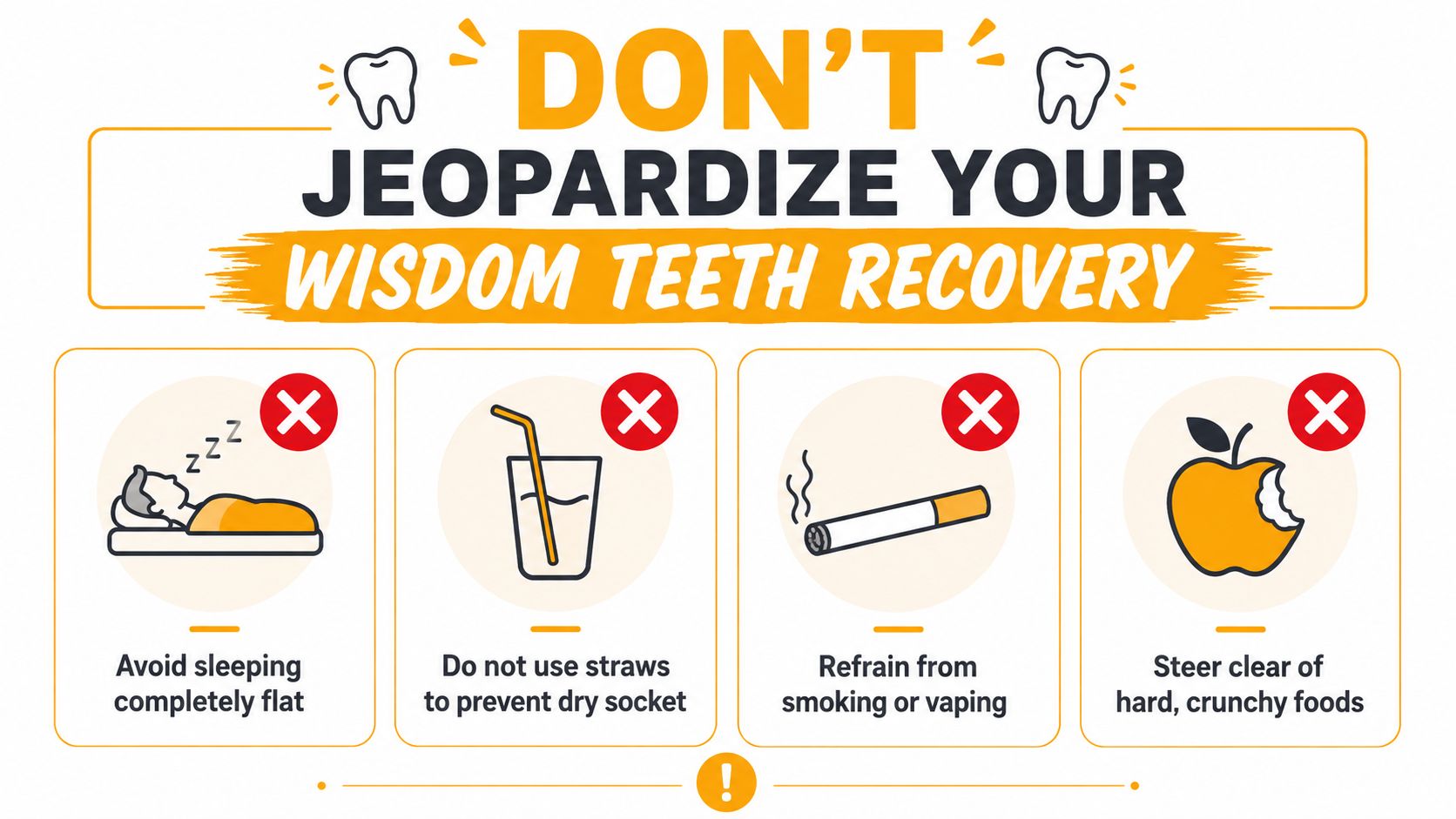
Habits that commonly cause trouble
Sleeping position belongs on the danger list as much as food or smoking. Sleeping on your back is the mandatory position for the first three to five nights. Sleeping on your side or stomach is strictly prohibited because it adds pressure to the jaw, risks causing bleeding, and may dislodge the blood clot. Side sleeping also makes it difficult to maintain the necessary head elevation and increases the risk of turning onto your side, which can trigger bleeding or dry socket, according to Dental Specialists of McKinney.
Other common problems are easier to miss because they don't feel dramatic in the moment:
- Using a straw: Suction can disturb the healing area.
- Smoking or vaping: Heat, suction, and chemical exposure all work against recovery.
- Alcohol with pain medication: That mix can be unsafe and can also worsen dehydration and poor-quality sleep.
- Hard, crunchy foods late in the day: They can irritate the site and leave you sorer at bedtime.
Why these rules matter
The “don'ts” aren't random. Each one either risks dislodging the clot or makes the mouth drier, more inflamed, or more chemically irritated. Once that healing surface is disturbed, sleep usually becomes much worse because pain becomes sharper and more localised.
That's why prevention matters more than trying to fix a bad night after it starts. If something feels off suddenly, especially after smoking, using a straw, or sleeping in a poor position, don't brush it off.
If your symptoms shift from expected soreness into something more urgent, it helps to know when to seek dental emergency services.
Knowing When to Contact Your Dentist
It is common to experience some swelling, some tenderness, and a less-than-perfect first few nights. That part is expected. What matters is recognising when recovery is staying within normal limits and when it's drifting into something that needs professional review.
A simple way to think about it is this. Expected symptoms should gradually settle. Warning signs tend to intensify, persist, or feel distinctly wrong.
Usually normal
- Mild swelling and soreness: Especially in the early phase
- Light oozing: Small amounts of blood-tinged saliva can happen
- Broken sleep: Discomfort and an awkward sleep setup can disturb rest
- Jaw stiffness: Muscles may feel tight for a while
Call your dentist
- Bleeding that doesn't seem to settle
- Pain that feels severe or isn't controlled by your prescribed plan
- A sudden worsening rather than slow improvement
- Fever, pus, or signs that concern you
- Anything that makes you feel something isn't right
If you're unsure whether a symptom is normal, call. Patients rarely regret checking early.
You never need to wait until things feel extreme before asking for help. A quick conversation can save you a much harder night and a more complicated recovery.
If you need support with healing after wisdom teeth removal, The Smile Spot is here to help. Our team provides gentle, experienced dental care for patients across Dulwich Hill and the Inner West, including follow-up advice when recovery doesn't feel as straightforward as it should.