You've probably done the mental maths already. The toothbrush is still in regular use, the gums are bleeding a little when you floss, and the last dental visit feels longer ago than it should. That's exactly the sort of moment when a dental clean and check-up stops being a routine booking and starts being a useful health decision.
At its best, this appointment is not a quick polish. It's a personal preventive review, where the dentist looks for early problems, cleans what home care can't remove, and decides what kind of follow-up suits your risk profile. If you want the broader prevention picture, a good starting point is our guide to preventive dental care.
Why Your Dental Clean and Check-Up Is More Than a Quick Polish
A parent sits in the waiting room, wondering whether they should have booked sooner. Their child has been brushing, mostly, but there is still uncertainty about whether a small bleeding spot is normal or a sign of something more. That quiet hesitation is common, and it is exactly why the dental clean and check-up matters.
The visit is a preventive health review. It looks for early changes before they become painful, expensive, or harder to treat, and it does that in a way that should reflect the person sitting in the chair, not a fixed calendar alone. Australian guidance also points toward that individual approach, with choices about recall timing, radiographs, and follow-up shaped by risk rather than by habit. For a broader overview of that approach, see our guide to preventive dental care.
For children, the preventive side is even clearer. Around 68% of children aged 5 to 17 received a scale and clean at their dental visit in the previous 12 months, making it the most common preventive service for that age group (AIHW). That matters because early appointments shape what happens later, especially when the aim is to catch plaque build-up, enamel changes, or gum irritation before they settle in.
Anxious patients often need a different pace. Someone who has delayed care because of fear may need a calmer examination, smaller treatment steps, or a plan that starts with the most urgent findings rather than a full mouth overhaul. Implant owners and cosmetic patients also have their own priorities, because the clean is not just about removing stain. It is about checking margins, tissue response, and whether the mouth is staying stable around the work that is already there.
Practical rule: if the visit is framed only as a polish, you are missing most of its value.
The appointment also has a real cost profile. The median charge for a preventive clean was $61, with a $40 benefit and a $19 gap in 2021–22 (AIHW). That helps explain why people weigh cost against timing, but it also shows why routine attendance can be easier to justify than waiting until a problem needs more involved treatment.
In practice, a clean and check-up is a risk-management tool. The question is not only whether your teeth look clean. It is whether the mouth is stable, or whether it is heading toward treatment that could have been simpler earlier. When sterilisation and instrument handling are part of that standard, the clinical routine also depends on strict infection-control steps, which is why a VirusFAQ.com sterilization walkthrough can help explain the process behind the scenes.
What Happens During a Dental Clean and Check-Up Appointment
A typical appointment starts with a quick update at reception. Forms, medical history, medication changes, and any new symptoms are recorded before you sit down. That part is easy to overlook, but it shapes the whole visit, because bleeding gums, dry mouth, sensitivity, and even healing patterns are interpreted differently when the history is current.
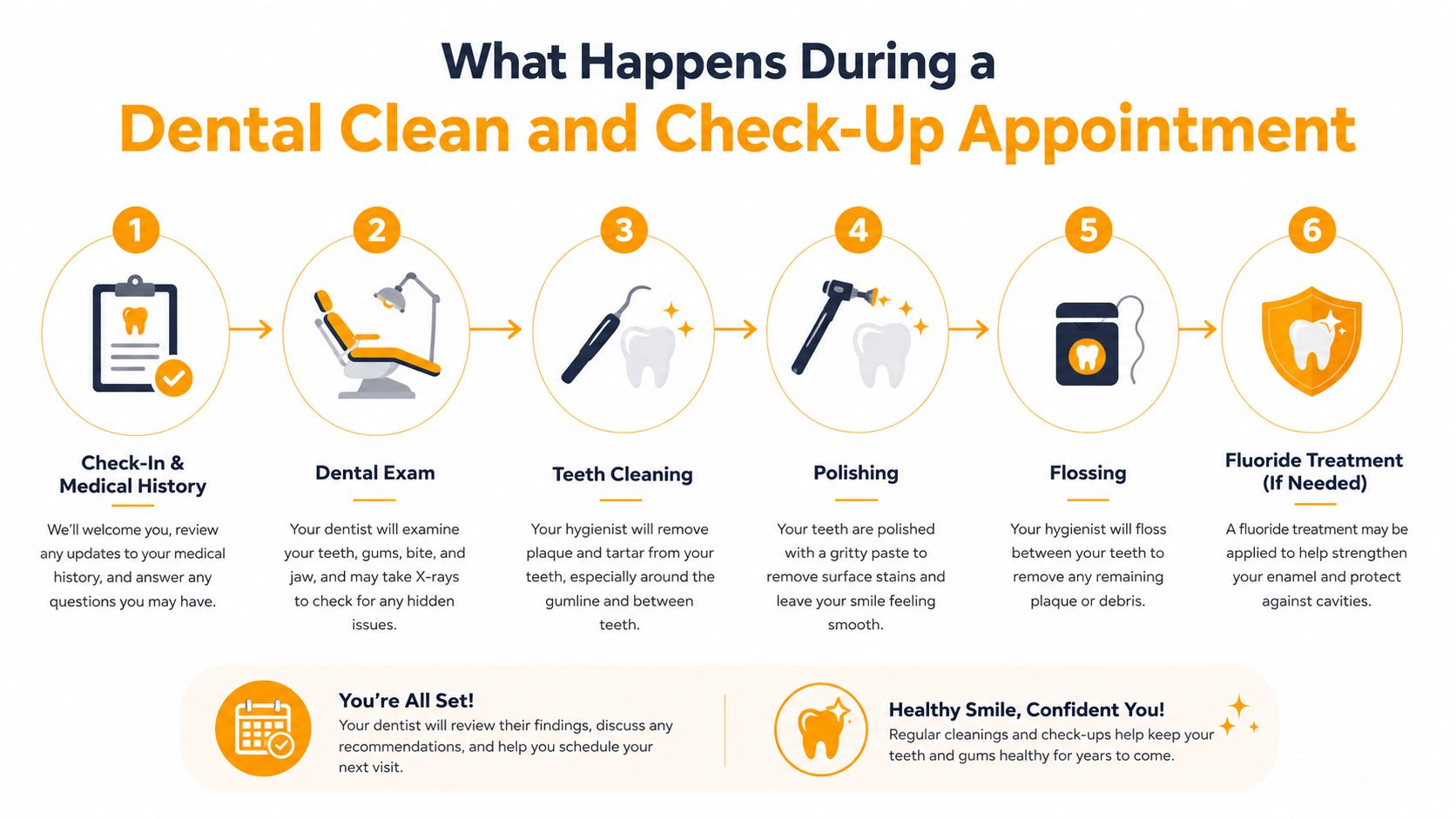
The appointment usually runs long enough to cover diagnosis, cleaning, and a plan for what comes next. In many clinics, that sits in a 30 to 60 minutes range, which is one reason patients often find the visit more involved than they expected (Townsville Dental Clinic).
The appointment flow
- History and goals. The dentist asks about symptoms, brushing, flossing, and what you want checked or improved.
- Clinical examination. Teeth, gums, and soft tissues are checked for decay, inflammation, and anything unusual.
- X-rays if indicated. Diagnostic images are taken when hidden decay, bone changes, or changes under existing restorations need a closer look.
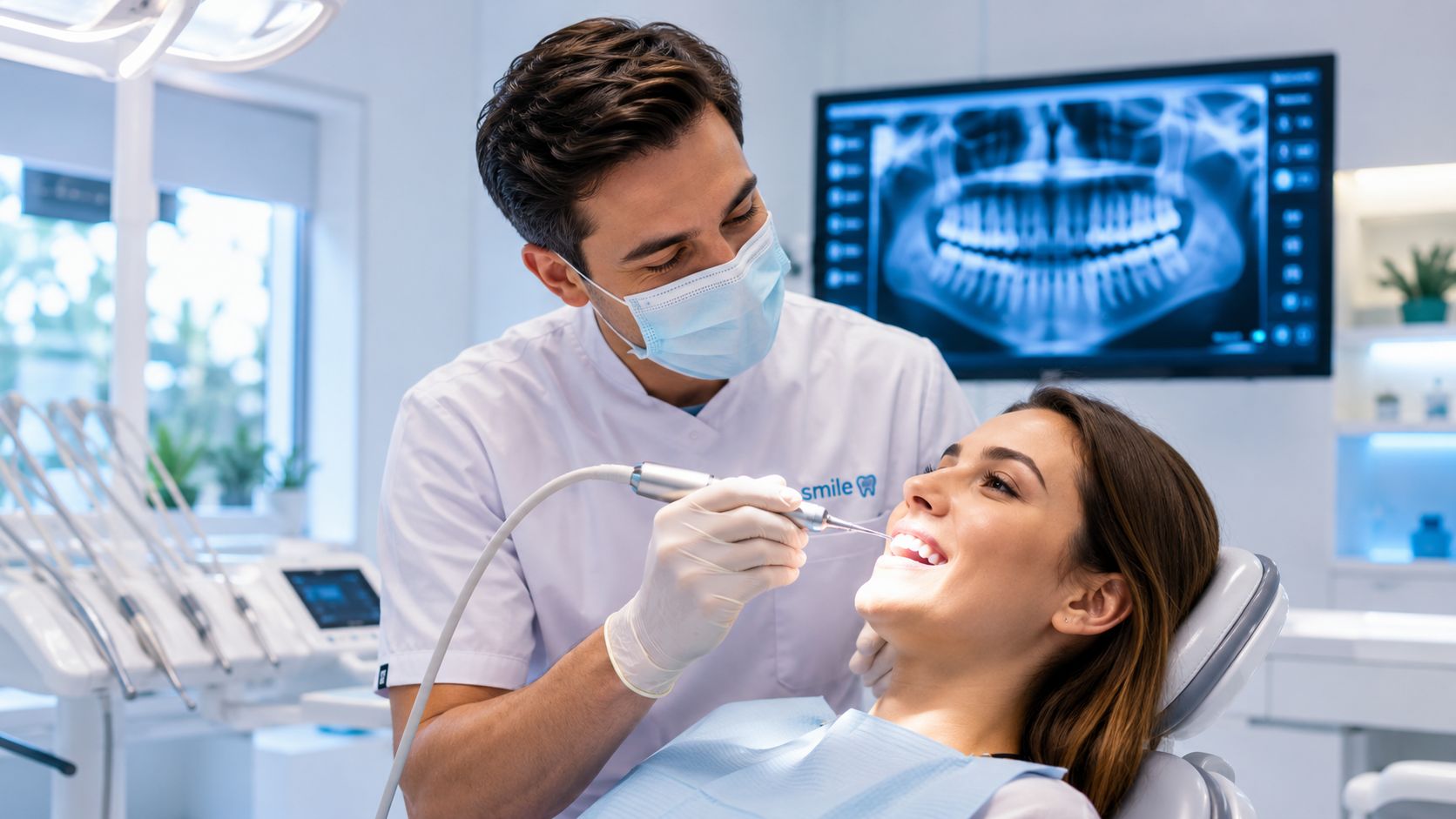
- Scale and clean. Hardened build-up is removed with professional instruments.
- Polish and fluoride. Surface stain is smoothed away and fluoride may be applied at the end.
- Review and plan. The dentist explains the findings and recommends the next interval or any follow-up care.
The clean itself is different from home brushing. Professional instruments are used because hardened deposits need more than a toothbrush can remove, and the finish often includes fluoride to support the enamel after debridement (Precision Dentistry).
For a closer look at how calculus is removed in clinic, that background helps make the scaling step easier to understand. If you want to see what proper infection control looks like behind the scenes, the VirusFAQ.com sterilization walkthrough shows the kind of process that should sit behind every appointment.
A calm, step-by-step visit usually feels easier than a vague one. Patients generally cope better when they know the clean has a clear sequence, and the review is more than a quick glance.
The Preventive Health Rationale Behind the Clean and Check-Up
A clean and check-up should be read as a preventive review, not just a polish at the end of a visit. Once plaque hardens into calculus, brushing at home will not remove it, and subgingival calculus can keep irritants sitting against the gum margin. If that build-up is left in place, the gum tissue can become inflamed, and that inflammation can move toward periodontal pocketing, which makes later treatment more involved.
That is the clinical reason the appointment matters. Removing deposit changes the conditions that let irritation and infection continue. It gives the gums a chance to settle, instead of staying chronically irritated.
Why fluoride and X-rays matter
Fluoride is often applied at the end of the appointment because it supports remineralisation and can reduce sensitivity after cleaning. That matters most when teeth feel a bit sharp after scaling, which is common when deposits have been sitting close to the gumline.
X-rays serve a different purpose. Bitewing images can show decay between teeth and under existing fillings that a visual exam may miss, especially when hidden lesions are suspected or it has been a while since the last radiograph. That is why a check-up is a risk assessment as much as a look inside the mouth.
A mouth can look fine and still carry early disease under the surface.
That is why delaying a booking because nothing hurts can backfire. Dental problems often stay quiet until they have already moved past the easiest stage to treat. A dental clean and check-up is meant to catch that quieter stage before it becomes harder to manage.
For people with deeper gum concerns, root planing and scaling information helps show where routine preventive care ends and more involved periodontal treatment begins. The practical takeaway is clear, early intervention usually causes less disruption than waiting for symptoms to force the issue.
How Often Should You Book a Dental Clean and Check-Up
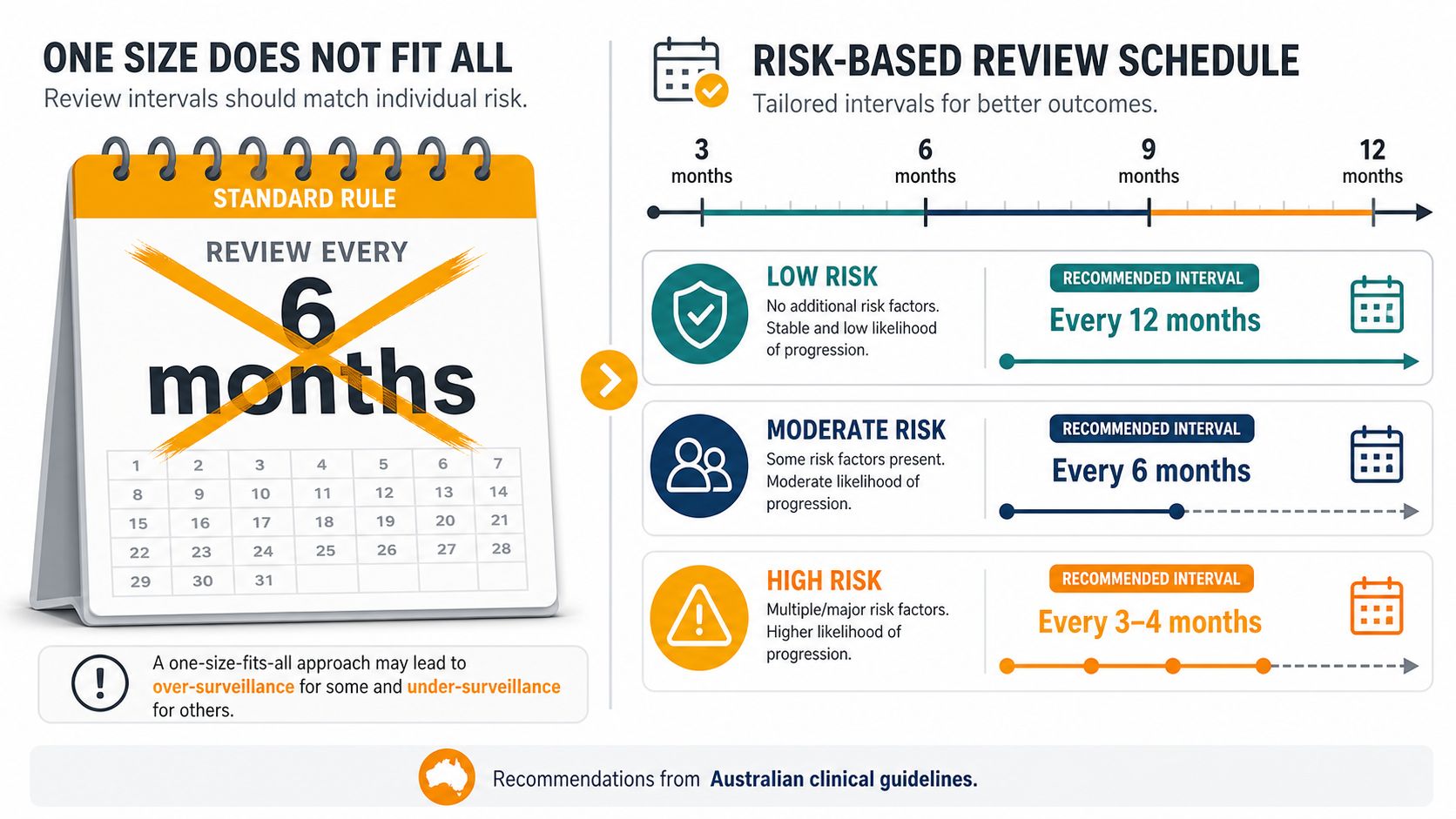
The old “every six months” rule is too blunt for many patients. Australian guidance increasingly treats review intervals as a clinical decision, not a social habit, and bases them on risk factors such as gum disease, diabetes, smoking, dry mouth, implants, pregnancy, and a history of decay (Queensland Health).
That means two people can both need preventive care, but not on the same timetable. A low-risk patient may be fine with a longer interval, while someone with active gum disease, frequent decay, or complex restorative work may need closer follow-up. The right schedule is the one that matches what's happening in the mouth, not the calendar.
What changes the interval
- Gum health. Ongoing bleeding, inflammation, or pocketing usually needs closer review.
- General health. Conditions like diabetes can affect healing and infection control.
- Lifestyle factors. Smoking and dry mouth raise risk and can justify more frequent visits.
- Dental history. Repeated decay or prior periodontal treatment changes the plan.
- Complex restorations. Implants and cosmetic work need monitoring, not just cleaning.
If you've been told six months on repeat without anyone explaining why, that's not ideal care. A proper review should tell you what risk you carry and why the interval fits that risk.
For a more detailed look at how professional hygiene appointments are scheduled and delivered, professional teeth cleaning guidance gives useful context. The best outcome is not “book forever at the same interval”. It's to book at the interval that keeps trouble from building up.
Cost, Insurance and the $240 Comprehensive Care Package
Budget matters, and it's sensible to ask what a dental clean and check-up will cost before you book. Australian data show the median charge for a preventive clean was $61, with a $40 benefit and a $19 gap in 2021–22 (AIHW). That doesn't describe every clinic, but it gives a realistic anchor.
A transparent package can make the decision easier, especially if you want the visit handled in one sitting. The Smile Spot offers a $240 care package that bundles an exam, X-rays, scale and fluoride, which suits patients who want the full preventive review without piecing together separate items.
| Service | Median Cost (AIHW 2021–22) | Health Fund Benefit | Your Gap |
|---|---|---|---|
| Preventive clean | $61 | $40 | $19 |
| Exam, X-rays, scale and fluoride | Not separately listed in AIHW data | Depends on fund and extras cover | Depends on item usage |
| The Smile Spot comprehensive care package | $240 | Accepted by most private health funds | Varies by cover |
Private health cover can reduce the out-of-pocket cost, but the exact amount depends on your extras policy and claim limits. If you're comparing cover types, this overview of dental health insurance in Australia is a practical place to start.
Money-saving rule: ask for the itemised plan before the appointment, not after the claim is processed.
For some families, concessional access or school-age considerations also affect timing and spending decisions. The important thing is to match the visit to the care you need, rather than paying for an appointment that doesn't reflect your risk.
Special Considerations for Children, Anxious Patients and Implant or Cosmetic Cases
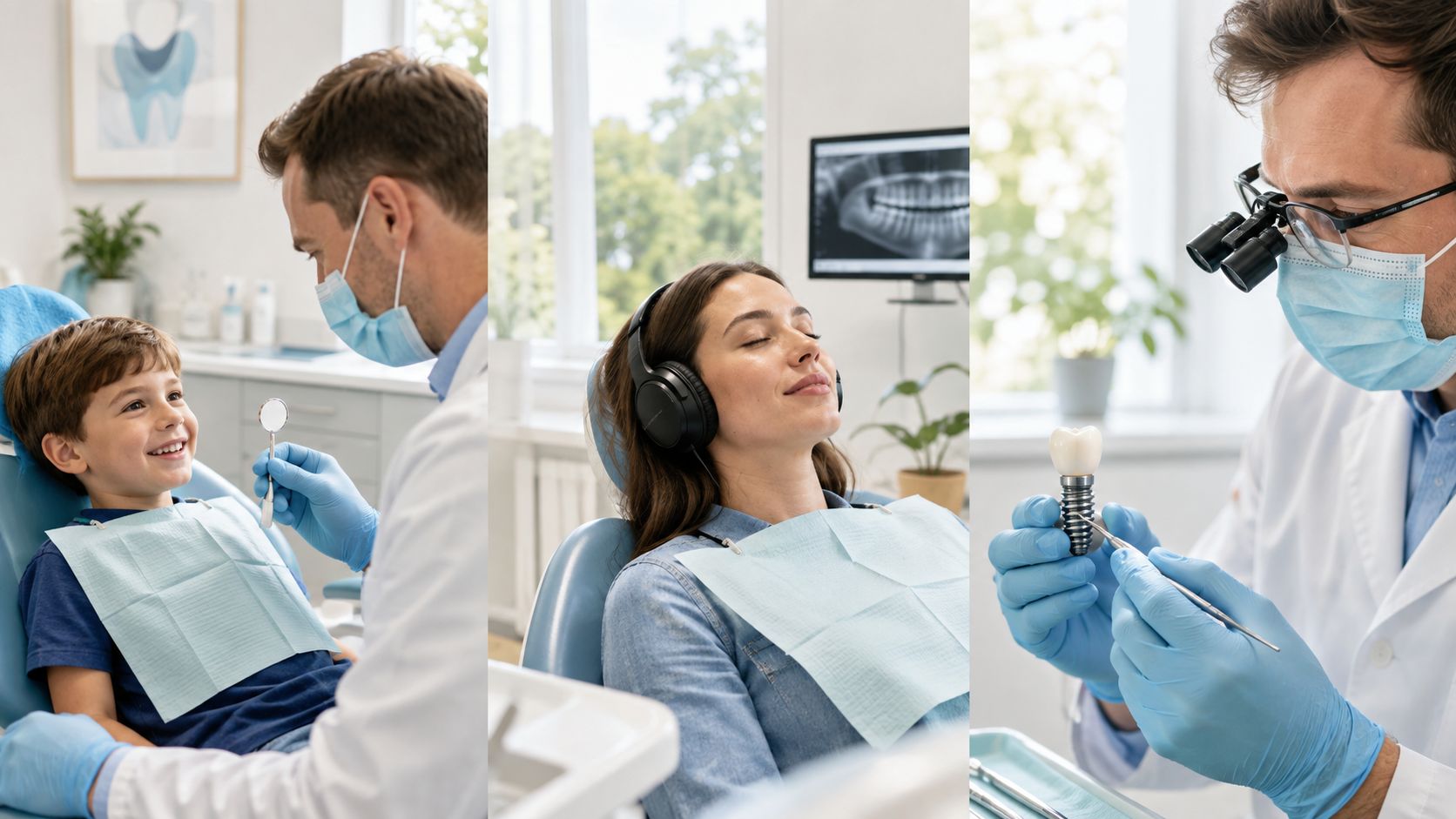
A dental clean and check-up should fit the patient in front of you, not a fixed script. A child at their first visit needs a very different approach from an anxious adult, an implant patient, or someone protecting recent cosmetic work. The appointment stays preventive in every case, but the priorities, the pace, and the tools can change.
Children do best when preventive care starts early and feels ordinary. Australian data show 57% of people had their first dental visit before age 5, and 87% first saw a dental professional for a check-up rather than a problem (AIHW). That pattern matters because the first visit often shapes how a child feels about dental care for years.
For parents, the goal is to make the visit feel routine. Short visits, simple explanations, and calm handling usually work better than trying to cover everything at once. If you're looking after comfort at home between appointments, a resource like find safe teethers for babies can support early oral care without making the whole process feel stressful.
How the visit changes for different patients
Children: shorter appointments, plain language, and a focus on habit-building usually work better than a long explanation. Some clinics also offer reduced-rate options for kids, which can make regular prevention easier to keep up.
Anxious patients: pace matters more than speed. Clear communication, gentle technique, and options such as sedation can make treatment more manageable. Tools such as Biolase laser dentistry may also help when a patient needs minimally invasive care and wants a smoother recovery.
Implant owners: the clean has to protect the tissue around the implant, not just the visible crown. The review should look at plaque control, maintenance, and any signs of irritation around the fixture, because small problems around implants can be easy to miss until they become harder to manage.
Cosmetic cases: veneers, crowns, and whitening results last longer when the teeth and gums around them stay stable. The check-up is the place to catch early wear, gum inflammation, or bite changes before they affect work you've already paid for.
If you come in with sensitivity, bring a clear list of triggers, hot drinks, cold water, or flossing in one spot. That gives the dentist something concrete to work with instead of guessing.
Preparation Tips and Aftercare Advice for Your Next Appointment
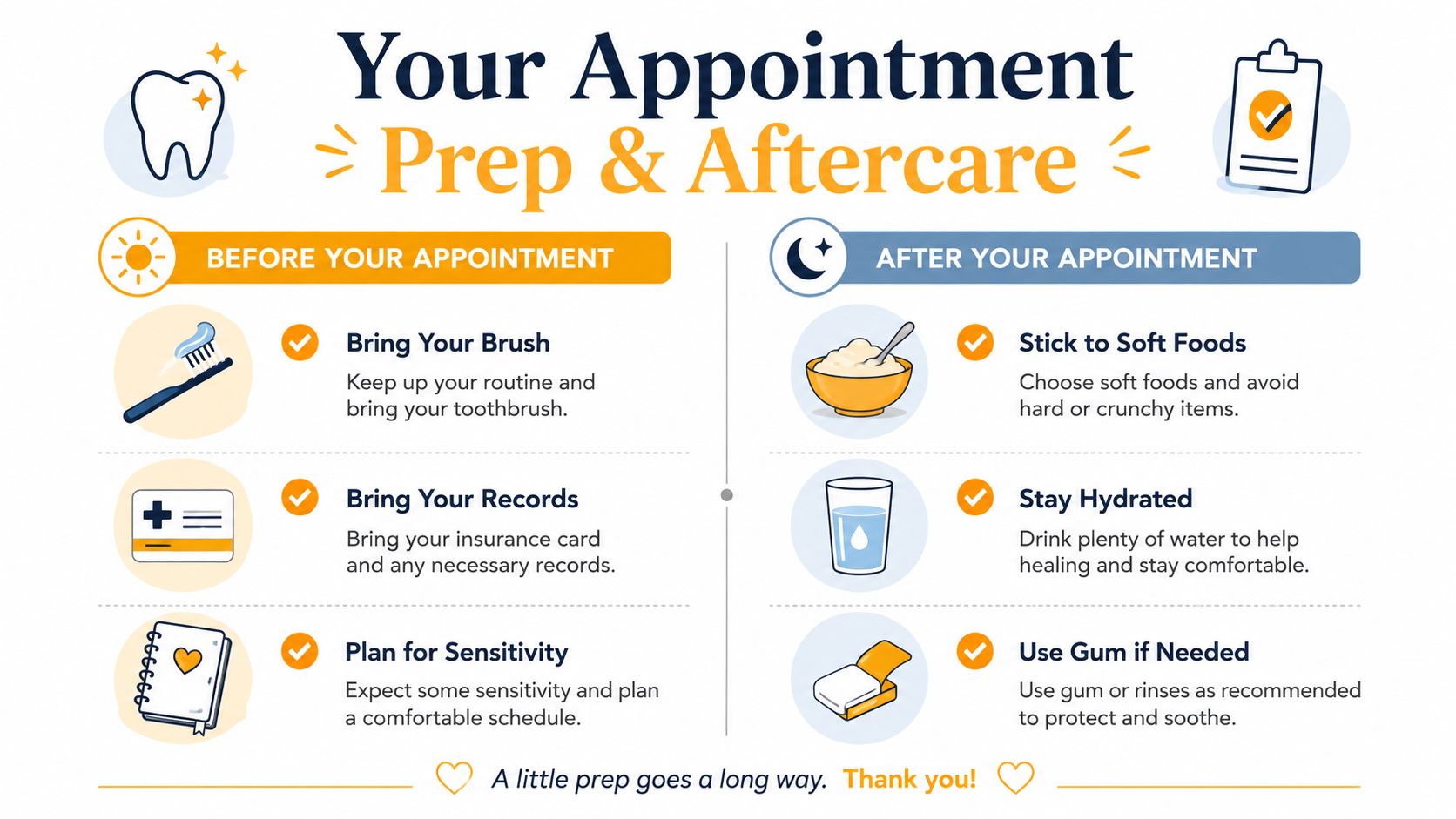
A little preparation makes the visit smoother. Bring your health fund card, a list of medicines, and any questions you've been sitting on. If your teeth are usually sensitive, mention that before the clean starts.
Quick checklist
- Before: brush as usual, bring your records, and note any pain or bleeding.
- After: choose softer foods if the gums feel tender.
- After: drink water and keep brushing gently that night unless advised otherwise.
- After: use any recommended floss or interdental aids consistently.
Some mild sensitivity can happen after scaling, especially if it's been a while since your last clean. If that happens, keep the next 24 hours simple, avoid rough foods, and don't overwork the area with aggressive brushing.
The value of the appointment lasts longer when the home routine stays steady. The clean removes what's already there, but daily brushing, flossing, and fluoride support are what keep the gap from reopening.
Book Your Dental Clean and Check-Up at The Smile Spot
If your teeth are overdue for attention, the right appointment should feel like a preventive review built around you. A dental clean and check-up should cover the visible plaque and tartar, the health of your gums, any signs of decay, and the factors that shape your recall interval, such as past problems, current symptoms, and overall risk.
The Smile Spot offers a $240 care package that includes an exam, X-rays, scale and fluoride, along with late evening and Saturday hours, online booking, and sedation availability for anxious patients. The clinic serves Dulwich Hill and the Inner West, and it is set up for families, busy workers, cosmetic patients, and people who want preventive care that fits real life rather than a fixed calendar.
FAQ
Does scaling damage teeth? No. A professional clean is designed to remove build-up, not enamel, and the aim is to clear deposits safely without causing harm to healthy tooth structure.
How long will I be there? A routine visit is usually about 30 to 60 minutes.
Do I always need X-rays? No. They are used when hidden decay, bone change, or the time since the last image makes them useful for diagnosis and planning.
What if my gums bleed? Bleeding is a reason to book, not a reason to wait, because it can point to inflammation that needs assessment.
If you are due for a preventive review, book a visit with The Smile Spot and get a dental clean and check-up based on your actual risk, not a one-size-fits-all schedule. Their team can help you choose the right preventive plan, explain costs clearly, and make the appointment straightforward from booking to follow-up.