Small Steps, Big Smiles. Paediatric dental care can feel overwhelming when you're juggling teething, snack habits, school routines, and a child who'd rather be anywhere else. Bite size paediatric dentistry breaks the job into manageable steps, so you can protect your child's smile without turning every visit into a battle. In Australia, that matters because childhood decay is still common, with untreated decay showing up in both primary and permanent teeth across the mixed-dentition years, according to the National Child Oral Health Study 2012–14 source study. The goal is simple, build habits early, keep visits positive, and act before small problems become bigger ones.
1. Start Dental Visits by Age One or First Tooth
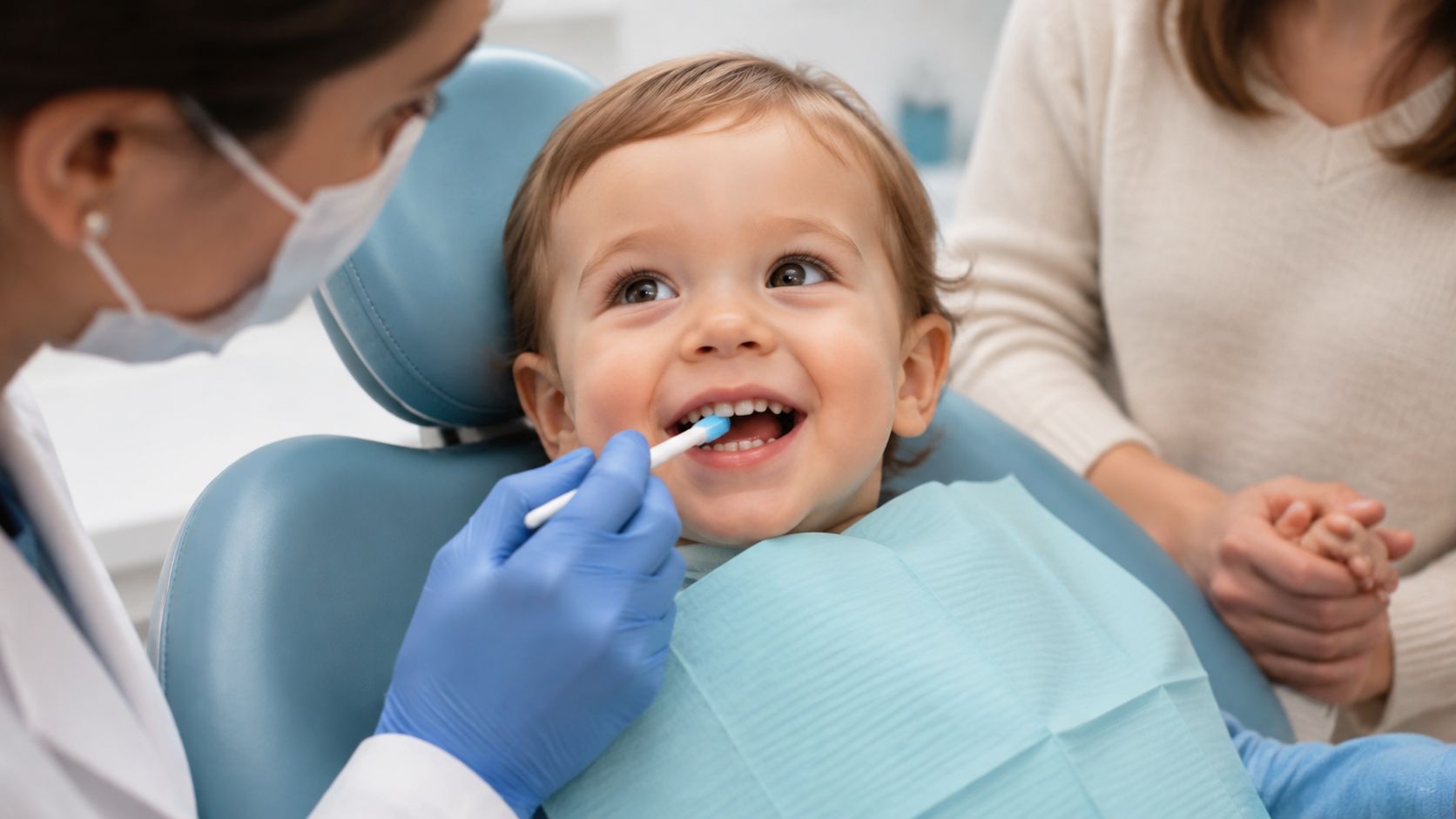
The first visit should happen early, not after problems start. A child who's seen soon after the first tooth erupts gives the dentist a chance to check eruption, feeding patterns, plaque build-up, and early signs of decay before those issues settle in.
Early care also helps parents feel less reactive. Instead of waiting until a toddler is in pain or refusing brushing, the family gets a plan, a rhythm, and a clear idea of what normal looks like.
Make the first appointment calm and short
Book as soon as that first tooth appears, or by age one at the latest. Morning or mid-week appointments often work better because young children are usually fresher, and the visit doesn't need to be long.
Practical rule: The first appointment is for familiarisation, parent education, and risk assessment. It doesn't need to be packed with treatment to be valuable.
Bring the parent or guardian who handles most of the day-to-day care, because that's usually the person who needs the brushing and feeding advice most. A good first visit can also pick up feeding concerns, oral habits, and early developmental issues before they snowball.
If you want a local starting point, this infant dentist guide is a useful place to understand what a first visit should feel like. For families still learning when babies start teething, a simple rule helps, don't wait for a full mouth of teeth before making the booking.
2. Use Fluoride Varnish Applications Every 6 Months
Professional fluoride varnish is one of the most practical tools in children's dentistry because it's quick, familiar to clinicians, and easy for families to tolerate. It works best as part of a routine, not as a rescue measure after decay is already well established.
The Australian benchmark data show why that matters. The Child Dental Health Survey 2016 reported average dmft 1.77 in children aged 5–10 years, average DMFT 0.60 in children aged 6–14 years, 30.3% with at least one decayed, missing or filled permanent tooth, and 16.1% with at least one untreated decay experience in permanent teeth survey report. Those figures support a strong preventive pathway, not a wait-and-see approach.
What helps varnish work in real practice
Apply it after teeth are cleaned and dried, so it can sit on the tooth surface properly. Tell parents the child shouldn't eat or drink for 30 minutes afterwards, then document it clearly and set the next recall before they leave.
Practical rule: Professional varnish isn't the same thing as home toothpaste. Parents often use the same word for both, so the explanation has to be explicit.
This works especially well for children with enamel defects, early white-spot changes, snack-heavy routines, or patchy access to regular care. In a real Australian clinic, it's often the difference between catching a problem early and watching it progress between recalls.
3. Establish a Consistent Twice-Daily Brushing Routine Early
Brushing works best when it becomes boringly automatic. The biggest win isn't perfect technique on day one, it's getting morning and bedtime brushing to happen every day with enough parent involvement to cover the tricky spots.
Australian guidance is specific about fluoride toothpaste amounts. For children under 3 years old, use a smear or rice-size amount of fluoridated toothpaste, and for children aged 3 to 6 years, use no more than a pea-sized amount fluoride dosing guide. That dosing matters because it balances protection with safety.
Make brushing part of the family rhythm
Sit behind the child or use a mirror so they can see what's happening. A timer, song, or the same bedtime sequence every night makes the routine feel less like a fight and more like a habit.
- Use the same time each day: Consistency beats occasional “good” brushing.
- Keep the brush soft and small: Young mouths need a brush that reaches the back teeth.
- Let the parent finish the job: Children can start helping, but an adult still needs to complete the brushing.
Supervised brushing usually needs to continue well beyond the toddler years, because many children can't reliably clean all tooth surfaces on their own. Families often do best when they treat brushing as a shared routine, not a test of independence.
The practicality of bite size paediatric dentistry emerges here: the smallest daily habit can do more than a fancy product ever will.
4. Limit Sugary Foods and Drinks, Especially Between Meals
Sugar isn't only about sweets. Juice, cordial, flavoured milk, smoothies, honey, dried fruit, and constant snacking can all keep the mouth in a decay-friendly state if they're given often enough.
The key issue is frequency. Every sugar exposure feeds acid-producing bacteria for a period of time, so a child who sips sweet drinks through the day gets repeated attacks on enamel rather than one clean exposure at mealtimes.
Focus on routines, not perfect diets
Ask parents to list everything their child drinks and snacks on during a normal day. That often reveals hidden sources, such as a “healthy” fruit smoothie or a drink offered in the car, after sport, and again before bed.
If a child expects a sweet drink, set it as a mealtime-only item and make water the default between meals. Unflavoured milk is usually easier on teeth than sweetened drinks, and it also keeps the household rule simple.
- Use water as the main drink: It's the easiest habit to maintain.
- Keep sweet items to meals: That limits repeated acid exposure.
- Watch for “natural” sugars: Fruit juice and dried fruit still count.
If you need a parent-friendly resource on prevention, how to prevent tooth decay is a good companion piece. Families can also look at Playz's guide to healthier kids if they're trying to align food habits across the whole household.
5. Screen for Dental Anxiety Early and Use Gentle Desensitisation Techniques
A worried child is not being difficult, they're signalling that the setting feels unfamiliar or unsafe. The earlier you notice that pattern, the easier it is to prevent avoidance later.
Anxious children do better when the dentist slows the pace down. Short visits, gentle language, and clear control points help the child feel safe enough to cooperate.
Start with a familiarisation visit when needed
Ask parents about past medical visits, temperament, and any triggers at the first appointment. If a child is highly anxious, it's often smarter to start with a short look-and-see visit than to push straight into treatment.
Children cooperate better when the adult in the room is calm, predictable, and quiet.
Tell-show-do still works because it gives the child a sequence they can understand. Say what you'll do, show the mirror or suction tip, then do the task once the child is ready. Praise effort, not just bravery, because a child who's scared but still trying is making real progress.
Parents help too, but only if they stay steady. Sitting where the child can see them is often enough, while hovering, warning, or over-explaining usually makes things worse.
For families looking for a gentle approach, gentle dental care can help set expectations before the visit. In real practice, this style of care can turn a future sedation case into a manageable series of calm appointments.
6. Use Pit and Fissure Sealants on Permanent Molars Within 12 Months of Eruption
The chewing surfaces of permanent molars are where a lot of trouble starts. Those deep grooves trap plaque and food, which is why sealants are so useful once the molars have erupted.
The timing matters. First permanent molars usually erupt around age 6, and second permanent molars around age 12, so those are the natural checkpoints for sealant discussions.
Seal early, then inspect at every recall
Apply sealants after eruption while the tooth is still new enough to benefit from that protective coating. Once placed, they need checking at each recall because chipped or missing sealant material should be repaired or replaced.
- Seal first molars early: They're often the first permanent teeth to need protection.
- Check second molars at age 12: That's another high-value prevention window.
- Do not treat sealants as a substitute: Brushing and fluoride still matter every day.
Sealants are quick, painless, and very useful for children with a high caries risk or a history of inconsistent brushing. They're also a sensible option for parents who want something practical done while a child is still cooperative, rather than waiting for decay to appear.
If you want a deeper explanation of the procedure, this fissure sealant guide gives a clear overview. In many families, sealants become one of the easiest wins in bite size paediatric dentistry because they prevent problems without creating a big appointment burden.
7. Educate Parents That Primary Teeth Matter for Development and Space Maintenance
Baby teeth are not disposable practice teeth. They support eating, speech, confidence, and the spacing that permanent teeth need later on.
When a primary tooth is lost too early, the neighbouring teeth can drift and crowd the space. That can change how the adult teeth come through, and sometimes it creates orthodontic problems that could have been avoided with earlier prevention.
Explain the job of baby teeth in plain language
A clear explanation usually lands better than a lecture. Tell parents that primary teeth are placeholders, and when they're healthy they protect function, space, and comfort until the permanent teeth are ready.
Healthy baby teeth help children eat, speak, and smile without pain. They also keep the adult teeth on track.
This message matters because many parents still think decay in primary teeth is less urgent. It isn't. Pain, infection, and early tooth loss can all interfere with a child's day-to-day wellbeing and later dental development.
Use examples when you can, especially if a child already has early decay or a history of extraction. A photo, a model, or even a quick sketch of how teeth drift after premature loss can make the point much more clearly than a long explanation.
For parents thinking ahead about spacing, dental space maintainers is a helpful read. Once families understand that primary teeth protect the future bite, they're usually more motivated about brushing, diet, and recall visits.
Bite-Size Pediatric Dentistry: 7-Point Comparison
| Intervention | 🔄 Implementation (process/complexity) | ⚡ Resources & speed (time, materials) | 📊 Expected outcomes (results/impact) | 💡 Ideal use cases | ⭐ Key advantages (effectiveness/quality) |
|---|---|---|---|---|---|
| Start Dental Visits by Age One or First Tooth | Low–moderate: scheduling & brief assessment; focus on education and risk stratification | Low clinic resources; short visit (15–30 min); parent attendance required | Early detection of ECC; builds rapport; lower decay rates (example: ~60% lower by age 5) | Infants at first tooth eruption; families with misconceptions or high-risk infants | Prevents progression of early decay; non‑invasive foundation for lifelong care ⭐⭐⭐ |
| Use Fluoride Varnish Applications Every 6 Months | Low: clinician-applied protocol; repeat at recall visits | Minimal chair time (minutes); varnish material and recall system required | Reduces caries incidence (up to ~37% in high-risk children); remineralises early lesions | Ages 1–18, especially high-risk children or areas without water fluoridation | Rapid, evidence-based caries prevention that is well tolerated and often funded ⭐⭐⭐⭐ |
| Establish a Consistent Twice‑Daily Brushing Routine Early | Moderate: behaviour change and parental supervision until ~7–8 years | Very low material cost (toothbrush, fluoride toothpaste); daily ~2 min twice | Major reduction in plaque and caries risk (e.g., ~50% fewer cavities with supervised routine) | All children from eruption; families ready to adopt daily routines | Highest-impact, low-cost home strategy; builds lifelong habits ⭐⭐⭐⭐ |
| Limit Sugary Foods and Drinks, Especially Between Meals | Moderate–high: sustained family habit change and counselling | No special products; requires parental time, planning and social management | Directly reduces caries (30–50% when implemented); benefits overall nutrition and weight | Children with frequent snacking or sugary-drink habits; households needing dietary change | Large preventive impact across dental and general health; universally applicable ⭐⭐⭐⭐ |
| Screen for Dental Anxiety Early & Use Gentle Desensitisation | Moderate–high: clinician skill, staged visits and behaviour techniques | Longer appointment times initially; staff training and small distraction tools | Prevents escalation to dental phobia; reduces need for sedation; improves cooperation | Children (critical window 3–8 yrs) with shy temperament or prior negative experiences | Preserves access to routine care, improves compliance, reduces future sedation needs ⭐⭐⭐ |
| Use Pit & Fissure Sealants on Permanent Molars Within 12 Months of Eruption | Low–moderate: clinical application requiring isolation and technique | Requires resin material, isolation and curing light; quick per surface (≈5–10 min) | Prevents ~80% of occlusal decay on sealed surfaces; long-lasting (5–10 yrs with monitoring) | First and second permanent molars soon after eruption; high‑risk children and school programs | Highly cost‑effective occlusal protection; painless and durable preventive measure ⭐⭐⭐⭐ |
| Educate Parents That Primary Teeth Matter for Development & Space Maintenance | Low: communication integrated into routine visits; may need visuals and repetition | Minimal material cost; clinician time for counselling and follow‑up | Increases parental uptake of prevention/treatment; reduces premature tooth loss and orthodontic sequelae | All families of infants and preschoolers; caregivers with "baby teeth don't matter" beliefs | Shifts behaviour toward early prevention, preventing complex future problems ⭐⭐⭐ |
Ready for Your Child's Next Smile Milestone?
The easiest wins in child dental care are usually the small, repeatable ones, early visits, fluoride, brushing, diet control, anxiety management, sealants, and protecting primary teeth while they still matter. If you're in the Inner West and want a practical plan for your child, The Smile Spot in Dulwich Hill offers preventive children's dentistry, late hours, Saturday visits, and a transparent $240 full care package that includes an exam, X-rays, scale and fluoride. For parents who want a child-friendly appointment that feels calm and well organised, that kind of setup can make the next step much easier.
You don't need to tackle every issue at once. Start with one or two changes this week, then bring the list to your next dental visit so the plan fits your child's age, risk level, and temperament. For more background on childhood growth alongside oral development, see this guide to childhood development milestones.
If you'd like support turning these bite size paediatric dentistry tips into a real plan, book a visit with The Smile Spot. The team can help with children's check-ups, fluoride, sealants, and gentle care that suits young or anxious patients.