Missing teeth usually become a daily problem before they become a treatment decision. You start chewing on one side. You avoid crusty bread, steak, or nuts. You smile with your lips closed in photos. If you already wear dentures, you may be tired of movement, sore spots, or the constant awareness that your teeth are a removable appliance.
That's when the main question starts. Not just “what costs less today?” but “what will work for my mouth, my budget, and my life over the next 15 years?”
Dentures and implants can both replace missing teeth. They are not equal solutions. They work in different ways, ask different things of your mouth, and create very different long term outcomes.
As a dentist, I find patients make the best decisions when they stop comparing only the upfront quote and start looking at the full health journey. Stability matters. Bone support matters. Maintenance matters. The ability to eat comfortably and speak confidently matters. So does the chance that a “cheaper” option now becomes the more frustrating and expensive option later.
Your Guide to a Confident and Complete Smile
If you're choosing between dentures and implants, you probably want clarity more than sales language. You want to know what each option feels like, how long it lasts, what upkeep it needs, and whether the higher initial spend on implants makes sense over time.
That's the right way to approach it.
In a practical dental implants vs dentures comparison, I look at four questions first:
- How do they stay in place: One option sits on the gums. The other anchors into bone.
- How do they affect daily life: Eating, speaking, cleaning, sleeping, and social confidence all change depending on the treatment.
- What happens to the jaw over time: Missing tooth roots are not a cosmetic issue alone. They affect the structure that supports your face and future treatment options.
- What will this cost across years, not weeks: Maintenance, relines, replacements, repairs, and possible upgrades later can change the picture substantially.
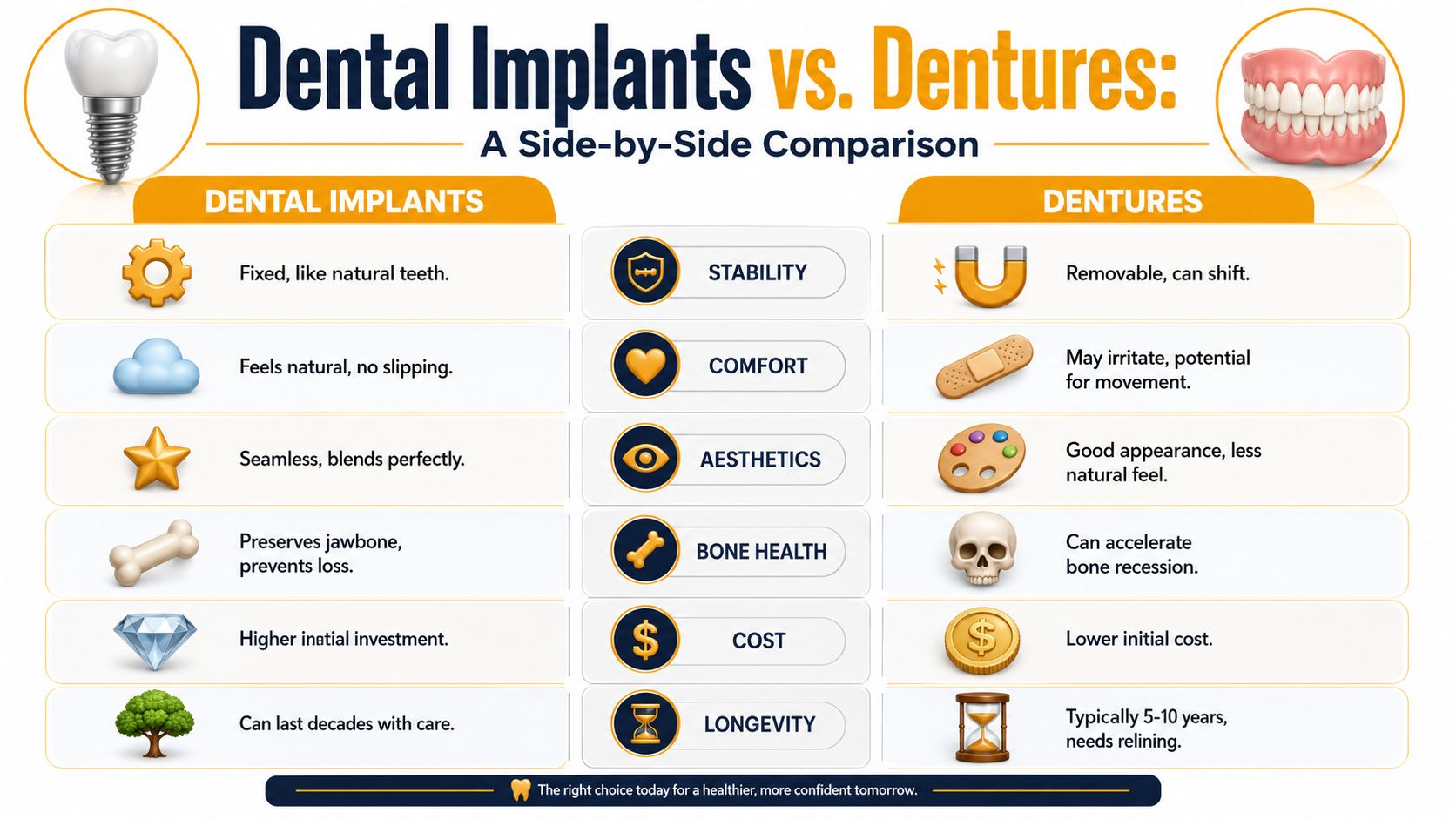
Here's a quick side by side view before we go deeper:
| Feature | Dental Implants | Dentures |
|---|---|---|
| Support | Anchored into the jawbone | Rest on the gums |
| Feel | More like natural teeth | Removable appliance |
| Stability | Secure during eating and speaking | Can move or loosen |
| Bone effect | Helps preserve jaw support | Doesn't stop jaw shrinkage |
| Maintenance | Similar to caring for teeth | Removal, cleaning, fit adjustments |
| Upfront cost | Higher | Lower |
| Long term pattern | Greater durability | More frequent maintenance and replacement |
The best choice isn't the one with the lowest starting fee. It's the one that matches your health, habits, and tolerance for ongoing maintenance.
Readers don't need more hype. They need a balanced explanation of what works, what doesn't, and what the next decade is likely to look like with each option.
Understanding Your Tooth Replacement Options
The first mistake many patients make is treating all replacement options as if they're versions of the same thing. They're not. A denture, an implant, an implant-retained overdenture, and an All-on-4 restoration behave differently in the mouth.
Dental implants
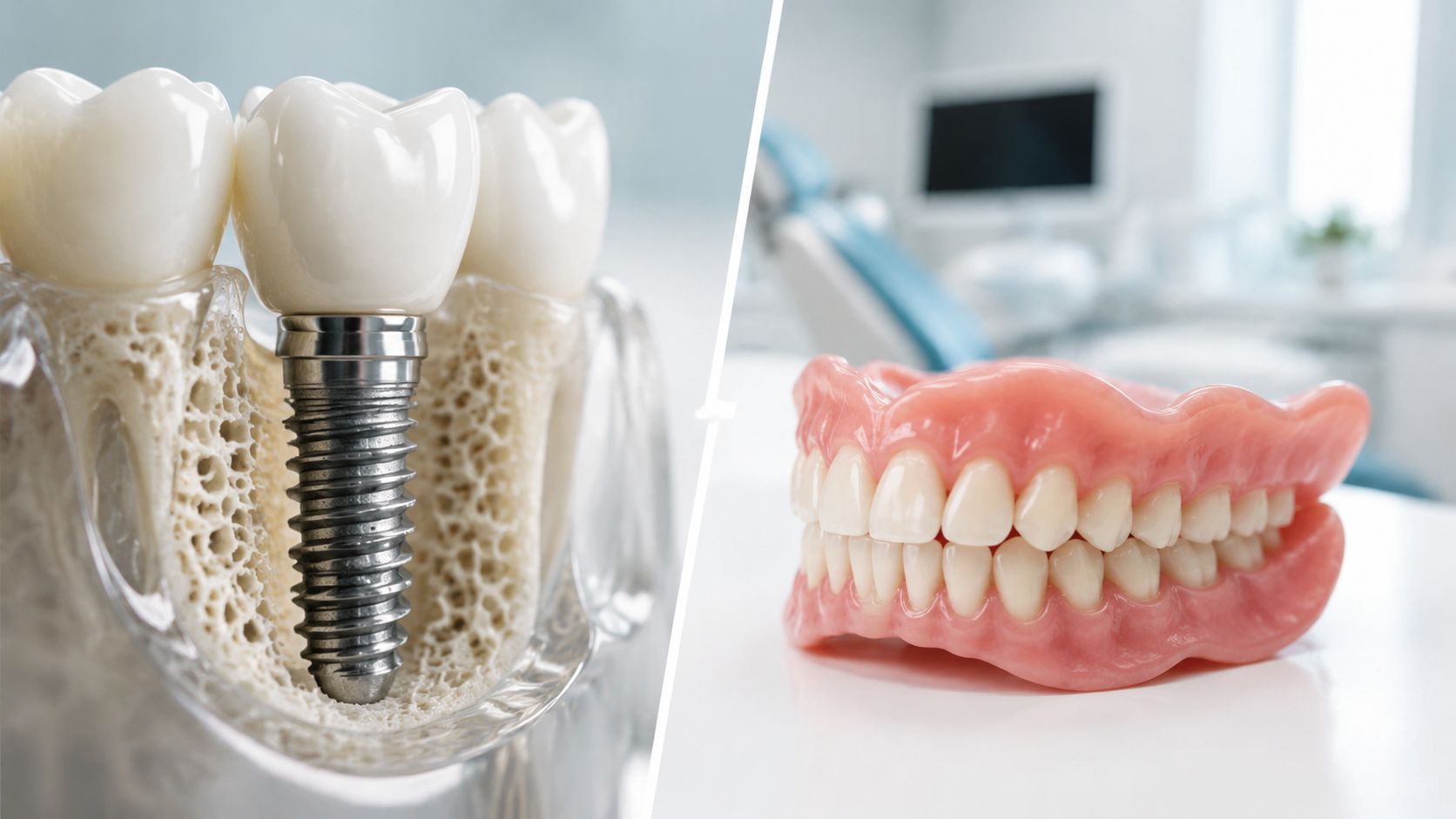
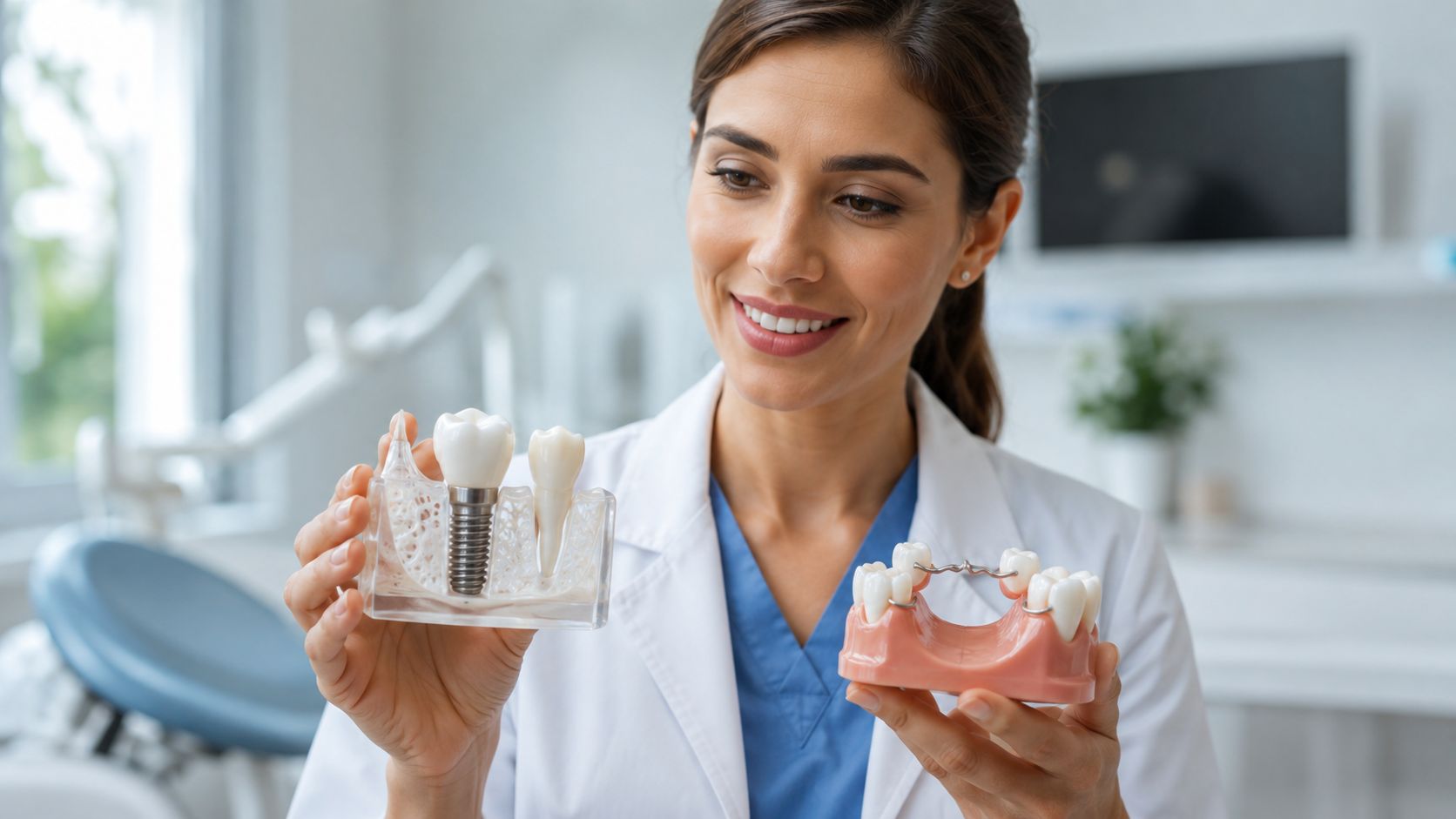
A dental implant replaces the root of a missing tooth. A small titanium post is placed into the jawbone, and once it heals, it can support a crown, bridge, or full arch restoration. The key point is that the support comes from bone, not from the gum surface.
That difference changes almost everything. It affects stability, bite strength, and the way forces are transferred into the jaw. If you're comparing this to a conventional bridge, this overview of crowns and bridges can help clarify where bridges fit in the broader picture.
For patients missing most or all teeth, implants can also support a full arch. A fixed option like All-on-4 is one example. If you'd like a broader look at how full arch options are planned and restored, this 2026 full arch implant guide gives useful background on that category of treatment.
Dentures
A denture is a removable prosthesis. Full dentures replace all teeth in an arch. Partial dentures replace some missing teeth and often use the remaining teeth for added support. Instead of being anchored in bone, they sit on gum tissue and the underlying ridge.
That makes dentures a valid option for many people, especially if surgery isn't suitable or budget is the main constraint. But the trade-off is mechanical. Because the appliance rests on soft tissue, movement and pressure points are common realities.
The hybrid option many people overlook
Some patients don't want a fully fixed solution, but they also don't want the instability of a conventional denture. That's where implant-retained overdentures can be a strong middle ground. These are removable prostheses that clip onto implants for added retention.
This category matters because marketing often blurs it with All-on-4. Recent Australian data shows All-on-4 has a 94.8% success rate at 10 years, whereas implant-supported dentures sit at 95% but with a shorter 10–15 year lifespan and higher maintenance. A key difference is that All-on-4 arches are fixed and cannot be removed by the patient for cleaning (Davinci Smiles comparison of All-on-4 and implant-supported dentures).
Patients often assume “more stable” and “removable” go together. Sometimes they do, but not always. Fixed and removable implant options solve different problems.
If you're trying to choose well, start by asking a simple question. Do you want teeth that rest on the gums, teeth that attach to implants and still come out, or teeth that are fixed in place?
Comparing Implants and Dentures Side by Side
The most useful dental implants vs dentures comparison is not abstract. It's practical. How will they feel at breakfast, during a conversation, on holiday, or ten years from now?
Function and feel
At this point, patients notice the difference fastest.
Dental implants restore 90–100% of natural bite force, allowing you to eat harder foods like steak or nuts. Traditional dentures typically provide only 20–30% of natural chewing power, which often pushes people toward softer foods (Townsville Dental implant vs denture comparison).
That gap doesn't just affect enjoyment. It affects confidence in social meals, comfort while chewing, and the range of foods you feel safe eating.
If you're interested in the middle-ground option discussed earlier, this article on implant-supported dentures explains how added implant support changes retention and everyday function.
Bone health
This is the part many quick comparisons miss.
Natural teeth stimulate the jawbone through their roots. Implants can take over that role because they integrate with the jaw. Conventional dentures can't. They sit on top of the gums, which means the underlying bone no longer receives the same functional stimulation.
Bone loss under a denture is not just a fit issue. It changes the shape of the jaw, affects facial support, and can make future treatment more complex.
Once that ridge shrinks, dentures often become looser. Patients then need adjustments, relines, or replacements to keep the appliance usable. In some cases, people who initially chose dentures for affordability later face a more involved transition to implant treatment because there is less bone available than there was at the start.
Appearance and speech
Both options can improve appearance dramatically compared with missing teeth. The main distinction is how natural they feel and behave.
Implants tend to feel closer to natural teeth because they stay stable when you talk, laugh, and chew. Dentures can still look attractive, but even good dentures may feel bulkier or less secure, especially in the lower arch.
Speech can also be easier to adapt to with fixed implant solutions because there is less movement. With removable appliances, some patients need a longer adjustment period, and some remain conscious of the prosthesis during conversation.
A quick summary helps:
| Daily reality | Implants | Dentures |
|---|---|---|
| Eating tougher foods | More reliable | Often limited |
| Movement in the mouth | Minimal | Possible |
| Jawbone support | Preserved | Ongoing shrinkage |
| Speech confidence | Generally steadier | Adaptation varies |
| Sleeping with teeth | Usually not relevant for fixed work | Appliance is typically removed |
Here's a patient-friendly walkthrough if you prefer a visual explanation:
Daily maintenance
Implants and dentures both require care, but not the same type of care.
- Implants: Cleaning is closer to caring for natural teeth. The routine depends on whether you have a single implant, bridge, or fixed full arch.
- Dentures: You remove them for cleaning, manage the appliance separately from your mouth, and monitor for changing fit.
- Hybrid options: Implant-retained overdentures still come out, so they combine the cleaning requirements of a removable prosthesis with the maintenance needs of the implants underneath.
The right question isn't “Which one is easier?” It's “Which maintenance routine are you willing to keep up with for years?”
The Treatment Process and Timeline Explained
Patients often assume dentures are simple and implants are complicated. A more balanced reality exists. Dentures are usually faster to deliver, but they still involve a fitting process and follow-up appointments. Implants take longer because healing matters, but the stages are very deliberate.
What implant treatment usually involves
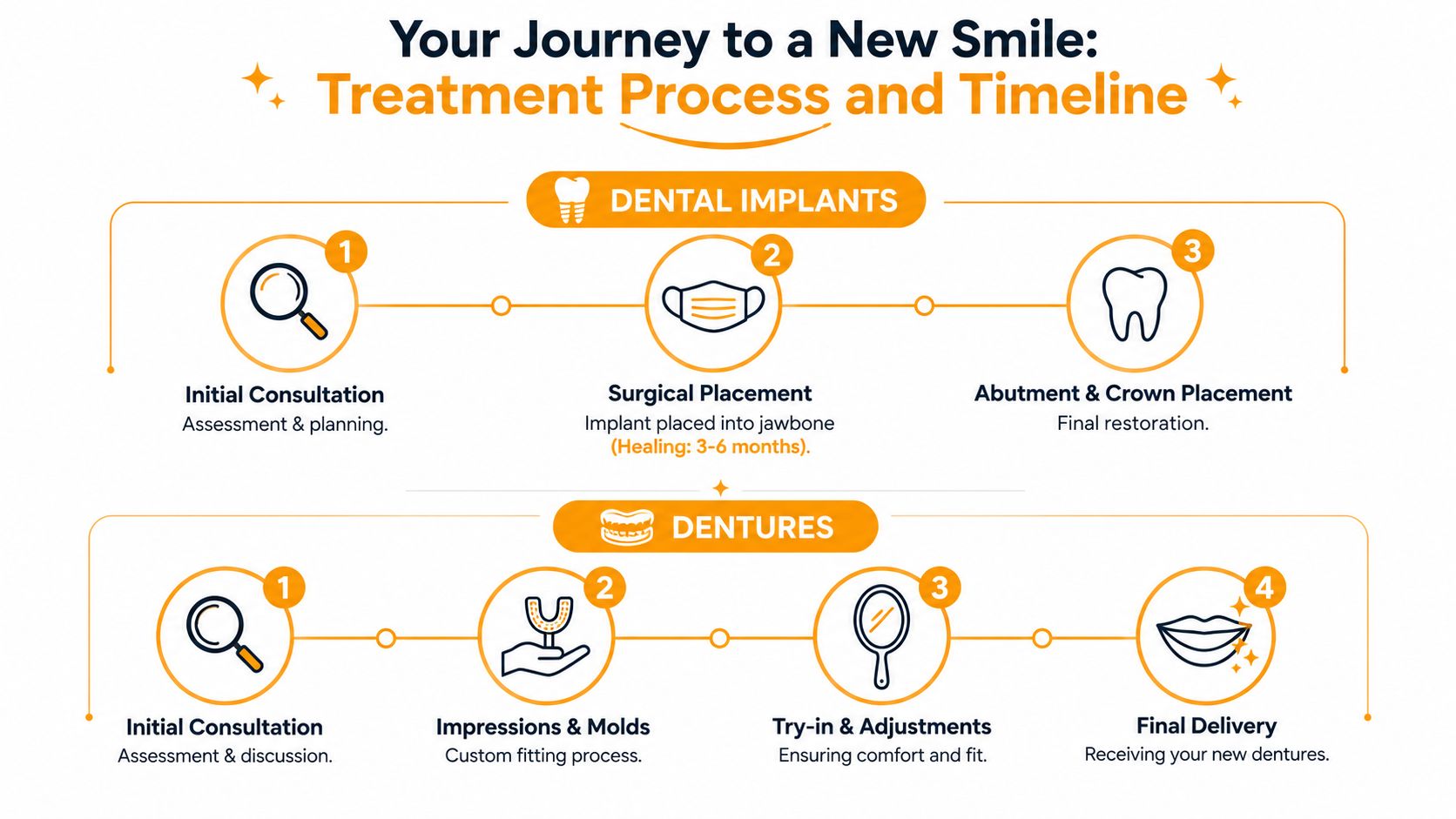
Implant treatment starts with assessment. We examine the mouth, review gum health, assess available bone, and use imaging to plan exact implant position. That planning phase decides whether a patient is suitable for a single implant, multiple implants, or a full arch approach.
The next phase is placement. The implant is inserted into the jawbone and then left to heal. During that period, the bone integrates with the implant surface. This is why implant treatment takes longer than denture treatment. It isn't delay for the sake of delay. It's biology doing its job.
Once healing is complete, the final restoration is attached. That may be a crown, a bridge, or a full arch prosthesis. If you'd like a closer look at each phase, this article on the dental implants procedure gives a more detailed walkthrough.
What denture treatment usually involves
Dentures begin with examination and discussion, but the practical process is different. We take impressions or digital records, establish the bite, and design the shape and position of the teeth. Then there is usually a try-in stage so fit, lip support, and appearance can be reviewed before the final denture is made.
After delivery, most denture wearers need adjustments. This is normal. Even a well-made denture may create pressure points at first, and muscles take time to adapt.
What patients usually notice
The treatment experience differs in three main ways:
- Speed: Dentures are generally quicker to provide because they don't require osseointegration.
- Surgery: Implants involve a surgical stage, while conventional dentures do not.
- Adaptation: Dentures often require more adaptation to movement and fit, while implants require more patience during healing.
A shorter treatment timeline doesn't always mean an easier long term experience. Sometimes it simply means the work is front-loaded differently.
For many patients, the timeline question comes down to what matters most right now. If you need the fastest non-surgical replacement, dentures may fit. If you want a more stable long term solution and can commit to treatment over several stages, implants often make more sense.
Analysing the Long Term Cost and Lifespan
Upfront pricing can be misleading. Dentures usually win that first comparison. Over a longer period, the picture changes.
A single implant may cost around $2,850 upfront, while dentures can accumulate $3,000 to $4,500+ over a 10-year period because of a 5–8 year replacement cycle and ongoing maintenance needs. That cost pattern can erode the initial price advantage, especially when future bone grafting becomes part of the conversation after denture-related jaw resorption (Melbourne implant vs denture cost comparison).
Why the 15 year view matters
Many people don't keep the same denture untouched for a decade and a half. Fit changes. Acrylic wears. The ridge underneath continues to change. What starts as “I'll just get dentures for now” can become a series of maintenance decisions.
Those decisions often include:
- Relines and adjustments: The denture may need modification as the jaw changes shape.
- Repairs or remakes: Wear and breakage aren't unusual over time.
- Replacement planning: A denture isn't a once-and-done appliance.
- Future upgrades: Some patients later move to implants because they can't tolerate instability any longer.
That's why I prefer a 15-year conversation rather than a same-day quote comparison. It more accurately reflects the full treatment journey.
Longevity is not just a number
With proper care, dental implants have a 10-year survival rate of 96.4% and can last a lifetime, while conventional dentures typically require replacement or major adjustment every 5–10 years due to jaw changes and material wear. If you want a deeper look at durability and maintenance expectations, this article on how long dental implants last is worth reading.
What matters clinically is not only whether a restoration survives, but how much intervention it needs along the way. A treatment can remain technically “in service” while still creating regular inconvenience, limited food choices, and repeat maintenance costs.
Cost rule: Compare the total ownership of the treatment, not just the invoice on day one.
For some patients, dentures are still the right answer. A lower initial spend can be the deciding factor, and that's completely understandable. But if you have the option to invest in implants, it's important to compare like with like. One treatment is usually cheaper to start. The other is often stronger on durability, function, and structural health over time.
Are You a Candidate for Implants or Dentures
Suitability is never based on one factor alone. Age by itself doesn't decide it. Neither does the number of missing teeth. The main question is whether your mouth, health, and priorities line up with the treatment.
When implants are often a strong fit
Implants tend to suit patients who want a stable, long term replacement and are prepared for surgery and healing. Bone quality matters because implants rely on the jaw for support. Gum health matters too. So does your commitment to cleaning and ongoing maintenance.
With proper care, dental implants have a 10-year survival rate of 96.4% and can last a lifetime, while conventional dentures usually need replacement or major adjustment every 5–10 years due to wear and jaw changes (Smile Solutions guide to implants, dentures and bridges).
If you like understanding the body before making medical decisions, a general complete guide to human anatomy can be helpful background, especially when you want to understand how bone and soft tissue support a restoration.
When dentures may be the better choice
Dentures often make sense for patients who want a non-surgical option, need tooth replacement sooner, or need a lower initial financial commitment. They can also be appropriate where medical factors make surgery less suitable.
That said, choosing dentures should be informed, not passive. You need to be comfortable with the maintenance, the removable nature of the prosthesis, and the fact that fit can change over time.
A practical self-check can help:
- Choose implants if: You want more stability, stronger chewing, and a solution designed around long term support.
- Choose dentures if: You need a removable option, want to avoid surgery, or need a lower entry cost.
- Pause and assess if: You have concerns about healing, smoking, gum disease, or medical conditions that could affect treatment planning.
If you're weighing risks and recovery, this article on dental implant side effects can help you ask better questions at your consultation.
A patient is rarely “good” or “bad” for implants in a simple sense. Most of the time, the real issue is whether the current mouth condition supports the plan, or whether preparation is needed first.
Making Your Choice at The Smile Spot in Dulwich Hill
The right choice usually becomes clearer when you strip away the sales language and focus on your own priorities.
If you want the lower upfront path and you're comfortable with a removable appliance and future maintenance, dentures may suit you well. If you want stronger day-to-day function, more confidence while eating and speaking, and better long term support for the jaw, implants are often the better investment.
Dr. Dimitrios Thanos has led care at The Smile Spot since 1996, and that experience matters when the decision isn't straightforward. Some patients are comparing a single implant to a partial denture. Others are deciding between conventional dentures, implant-retained overdentures, and full arch options. These aren't small differences. They affect comfort, maintenance, and long term planning.
The practice also places real emphasis on comfort. Gentle techniques, sedation options for anxious patients, and Biolase laser dentistry for minimally invasive treatment and faster healing can make treatment feel far more manageable than many patients expect.
What a good decision usually includes
A sound treatment choice usually considers more than one variable:
- Lifestyle: Do you want fixed teeth or are you happy with a removable option?
- Health: Is the jaw and gum support there now, or does it need preparation?
- Budget across years: Can you invest more now to reduce future intervention?
- Tolerance for upkeep: Are you happy to clean and manage a removable appliance long term?
Where to start
The best first step is a consultation with proper examination and imaging. That's where you can compare options based on your actual mouth, not a generic internet checklist.
If you already know you want to explore fixed replacement options, the clinic's dental implants treatment page is a useful starting point. If you're missing most or all teeth and want to understand fixed full arch alternatives, ask specifically about All-on-4 style solutions during your appointment.
A good plan should leave you knowing not just what each option costs today, but what it asks of you over the next 15 years.
If you're weighing dentures against implants and want advice that's practical, clear, and specific to your mouth, book a consultation with The Smile Spot. Dr. Thanos and the team in Dulwich Hill can assess your bone support, explain the trade-offs in plain English, and help you choose the option that fits your health, comfort, and long term budget.