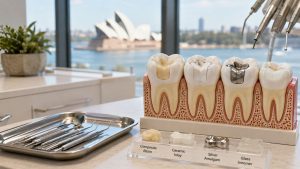
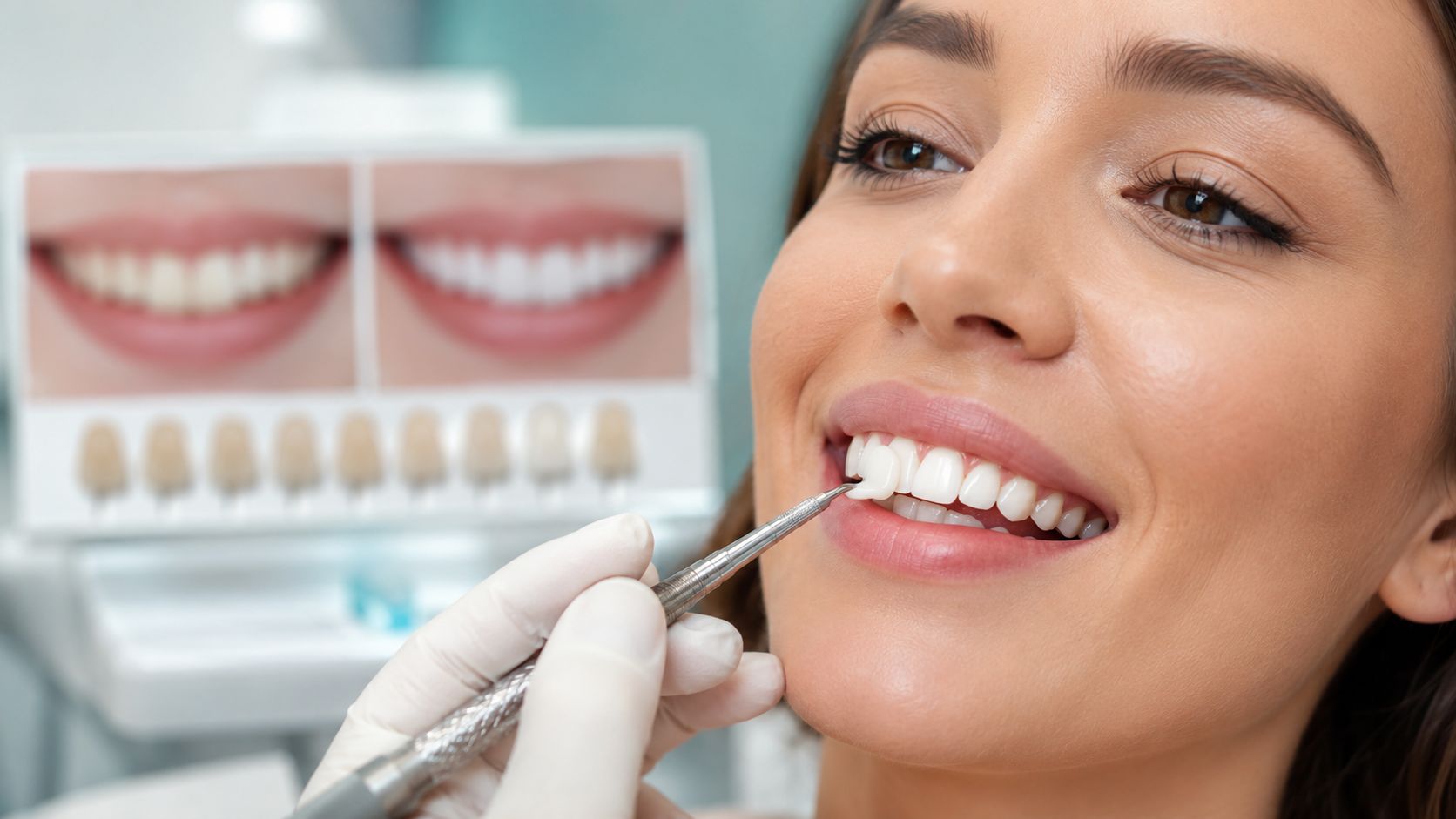
Composite bonding is a cosmetic dental procedure that uses a tooth-coloured resin to repair chips, close small gaps, reshape edges, and improve discoloured areas, usually in a single visit. In Australia in 2026, it typically costs AUD $250 to $600 per tooth, and treatment often takes 30 to 60 minutes per tooth.
If you're reading this, there's a good chance your teeth are healthy enough, but one small detail keeps catching your eye. It might be a chipped front tooth in photos, a little gap that wasn't there before, or edges that look uneven under bright light. These are the sorts of problems that can make people smile with their lips closed, even when the fix may be simpler than they expect.
Composite bonding is often the middle ground people are looking for. It isn't as involved as porcelain work, and it isn't limited to changing colour the way whitening is. It can make a subtle tooth look complete again, and when it's done well, it should blend in rather than look like dental work.
A Single-Visit Solution for a Confident Smile
A common story goes like this. Someone chips a front tooth on a glass, a fork, or during sport. The tooth isn't painful, but every mirror seems to magnify it. Another person has always had a small gap or one tooth that's slightly shorter than the one beside it. They don't want major treatment. They just want their smile to look even and natural.
That's where composite bonding often fits. It's a cosmetic treatment where a dentist applies and shapes a tooth-coloured resin directly onto the tooth to improve its appearance. For the right person, it can be a practical way to fix small chips, minor gaps, uneven edges, and worn corners without turning it into a large dental project.
Many people like it because it feels manageable. You're not usually committing to extensive drilling or a long series of visits. You're making a focused improvement to a detail that bothers you every day.
A smile change doesn't have to mean a dramatic makeover. Sometimes the most satisfying result is a small correction that makes your teeth look like your own, only more balanced.
If you've been comparing small cosmetic options, it can help to see how bonding fits within a broader smile makeover in Sydney. For some people, bonding is the whole answer. For others, it's one part of a larger plan.
The main reason patients find composite bonding appealing is simple. It can be conservative, fast, and visually effective when the issue is modest and the tooth underneath is healthy.
Understanding How Composite Bonding Works
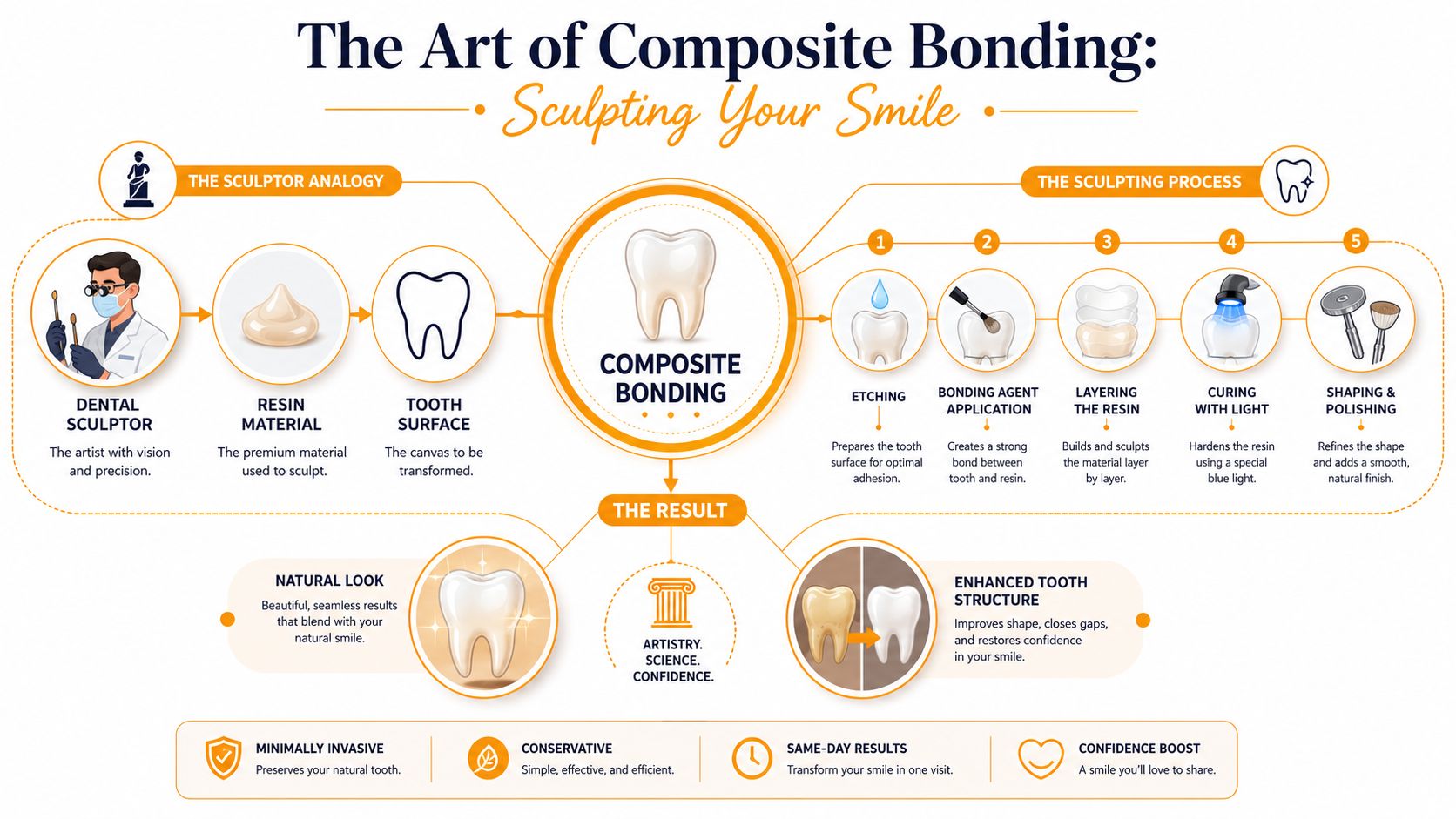
Composite bonding works a bit like detailed sculpture. A dentist doesn't place a ready-made shell over the tooth. Instead, they build the result directly on the tooth surface, adding small amounts of resin, shaping it carefully, and refining it until the tooth looks balanced with the ones around it.
That sculpting approach matters. Teeth aren't flat white tiles. They have curves, light reflections, small ridges, and edges that catch the eye. Good bonding isn't just about filling space. It's about recreating shape in a way that looks believable.
The material and the bond
The material used is a tooth-coloured composite resin. It's designed to be shaped while soft, then hardened with a curing light. The goal is a close visual match with your natural enamel so the repaired area doesn't stand out when you speak or smile.
The science behind the bond is more precise than many people realise. The procedure uses a phosphoric-acid etching protocol to create micro-porosity in the enamel, enabling a mechanical bond strength of 18–25 MPa. This allows the resin to adhere durably while preserving 0.0–0.5 mm of natural tooth structure, compared to 0.5–0.7 mm removed for porcelain veneers, as outlined in this clinical overview of dental bonding.
For patients, the practical meaning is reassuring. In many cases, little to no healthy enamel needs to be removed.
Why technique matters so much
Composite bonding looks simple when reduced to a short social media video. In real life, the result depends on planning, moisture control, layering, curing, shaping, and polish. Tiny errors can affect how the tooth catches light, how the bite feels, and how long the bond stays attractive.
This is one reason patients sometimes compare it with composite veneers in Dulwich Hill. The terms overlap in everyday conversation, but the central idea is the same. The dentist is using composite resin directly and artistically to improve the visible part of the tooth.
Practical rule: The material matters, but the operator's eye matters just as much. Bonding is both adhesive dentistry and cosmetic finishing.
Your Smile Transformation in One Appointment
A clear understanding of the procedure tends to ease anxieties. Composite bonding is usually straightforward from the patient's point of view, and in many cases anaesthesia isn't required because the treatment is so conservative.
Near the start of the visit, the dentist looks at your teeth, your bite, and the specific concern you're trying to fix. That might be a small chip, a narrow space between teeth, or an edge that looks uneven. The plan is usually very focused. The goal isn't to change everything. It's to improve what bothers you while keeping the smile natural.
To make the process easier to picture, this flow shows the usual sequence.
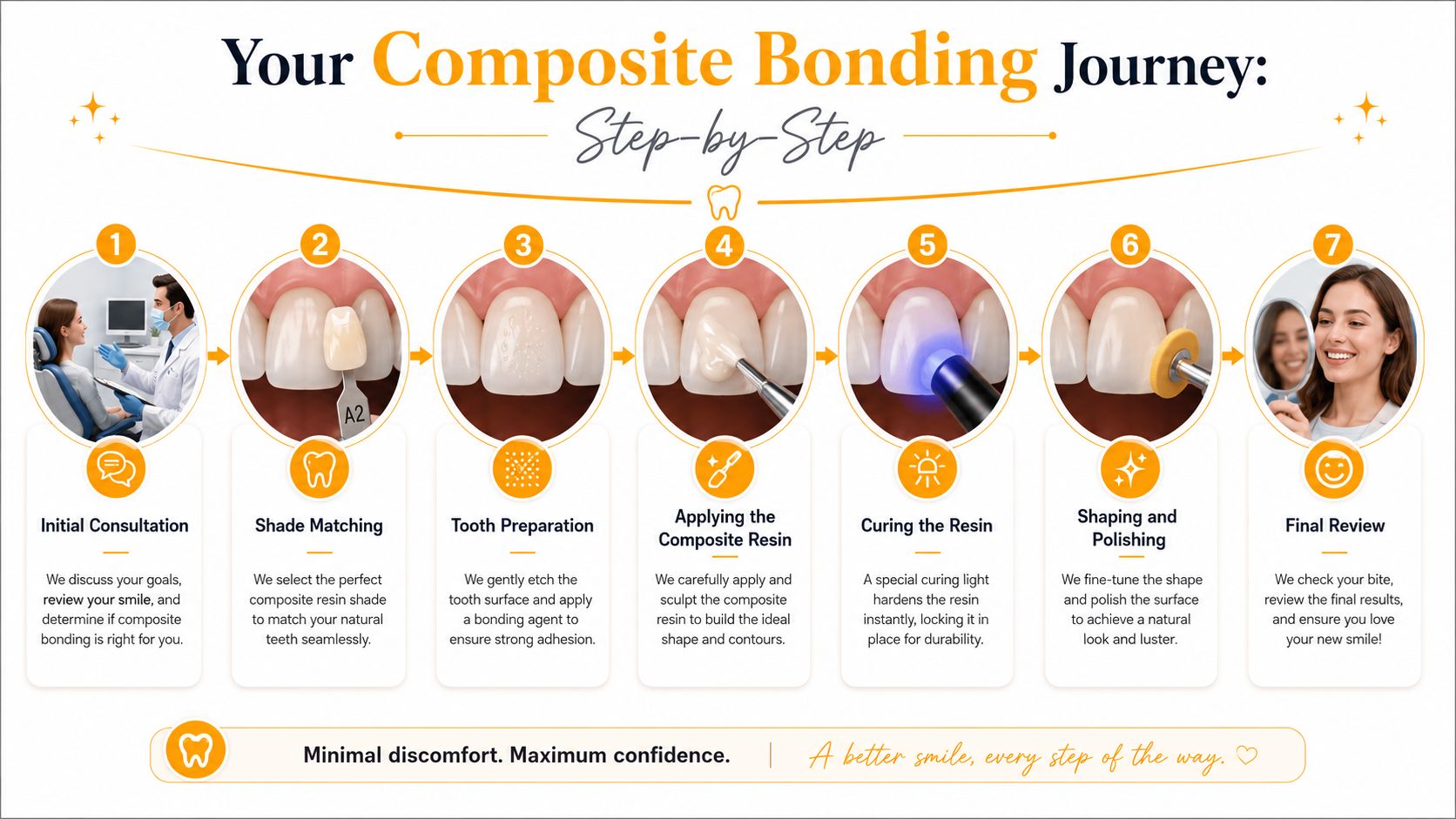
What the appointment usually feels like
A typical appointment often includes these stages:
Conversation and assessment
You explain what's bothering you. The dentist checks whether bonding is suitable, whether the tooth has enough healthy structure, and whether your bite will allow the result to last well.Shade selection
The resin is matched to the colour of your natural teeth. This step matters more than people expect, because a good match helps the final result disappear into your smile.Surface preparation
The tooth is gently prepared so the material can attach properly. This is usually a light, controlled step rather than heavy drilling.Layering the resin
The dentist places the composite in small increments and shapes it. At this stage, the artistic part takes place. Length, edge contour, symmetry, and surface texture all get adjusted gradually.
Later in the appointment, the resin is hardened with a curing light, then refined and polished so it feels smooth and reflects light more like enamel.
If you'd like to see the process in a more visual way, this short video gives a helpful overview.
What surprises patients most
Three things often stand out once treatment begins:
How little discomfort there is
Many people expect something more involved. In reality, bonding is often gentle enough that numbing isn't needed.How quickly the shape appears
Because the resin is placed directly, you can often see the tooth take form during the appointment.How polished the final step is
The finish isn't an afterthought. Smoothing and polishing help the bonded area look refined and feel comfortable against the lips and tongue.
Patients who are curious about visible results often find before-and-after examples helpful, especially when comparing subtle edge repairs and shape changes. This guide to dental bonding before and after shows the kinds of improvements bonding is commonly used for.
The Benefits and Realistic Limitations of Bonding
Composite bonding can be an excellent treatment, but it isn't magic and it isn't ideal for every tooth. A balanced view is the best way to decide whether it suits your goals.
The strongest advantages are practical. It's often completed in one visit, it usually preserves a great deal of natural tooth structure, and the upfront cost is lower than porcelain alternatives. For people who want a modest cosmetic improvement without committing to more extensive work, that's a meaningful combination.
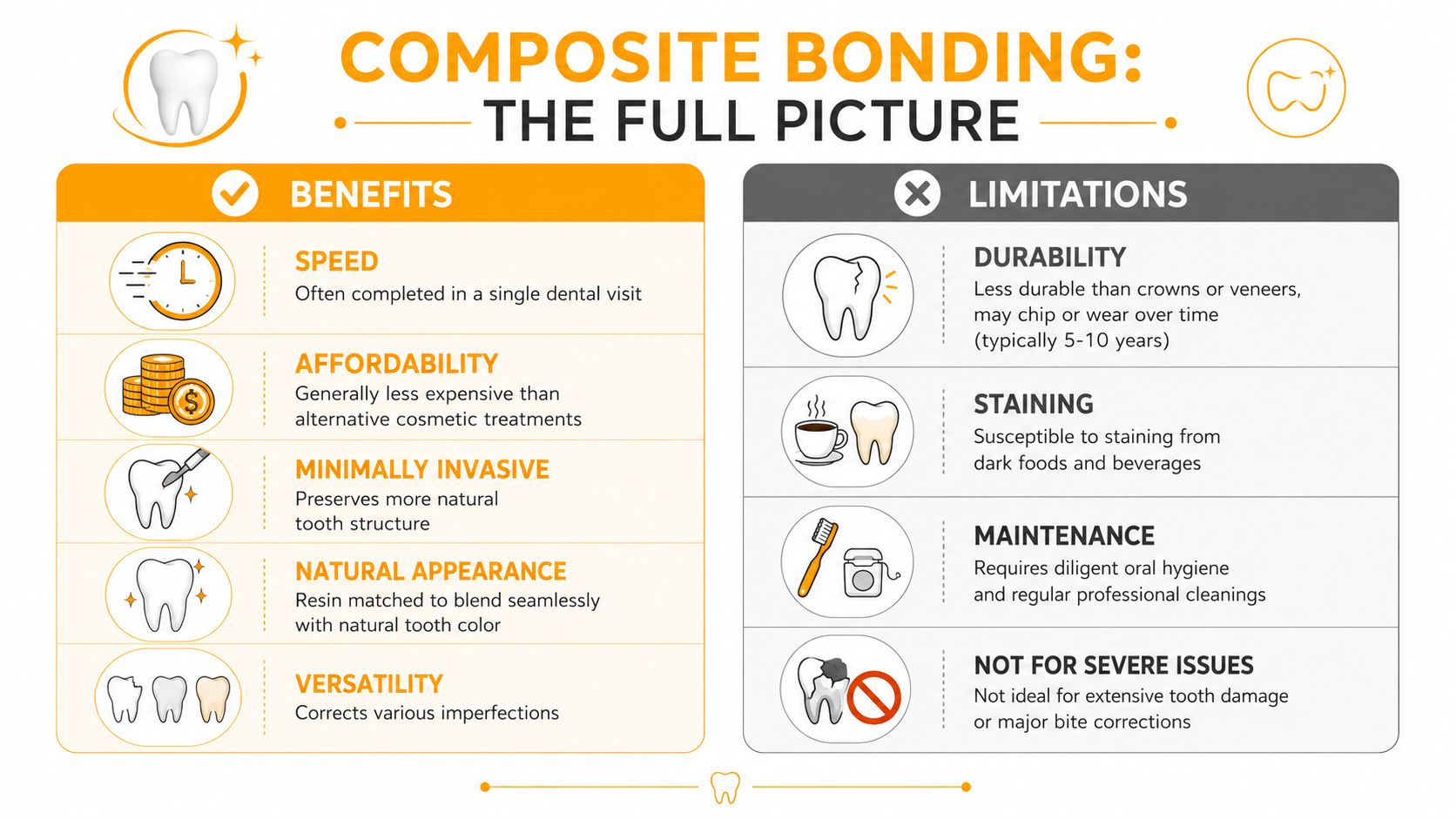
Where bonding shines
Bonding tends to work well when the issue is small to moderate and the tooth is otherwise healthy.
Chips and edge repairs
This is one of the most natural uses for bonding. A lost corner can often be rebuilt so the tooth looks whole again.Minor shape improvement
If one tooth looks shorter, narrower, or slightly irregular, bonding can add balance.Small gaps
In suitable cases, it can close a space without orthodontic treatment.A conservative approach
Many patients choose bonding because they want to improve appearance while keeping changes to the natural tooth minimal.
Where expectations need to be realistic
Composite resin isn't porcelain. It can stain more easily over time, and it isn't the right answer for every cosmetic concern. If someone wants a major colour change across the whole smile, whitening or veneers may make more sense. If a tooth is heavily broken down or the bite places too much force on the area, bonding may not be the most reliable choice.
A Sydney benchmark source notes that composite bonding in the Inner West commonly costs $350–$650 per tooth, and reports a 70–80% success rate for closing gaps of 2 mm or less and reshaping edges where enamel thickness is 0.5 mm or greater. The same source also notes that marginal discolouration can appear in 15–20% of cases within 3 years, despite good initial shade stability, in this Sydney composite bonding guide.
Bonding is best thought of as durable, repairable cosmetic dentistry. It isn't the longest-lasting option in every case, but it can be one of the most conservative.
Another limitation is maintenance. Composite can usually be repaired, polished, or refreshed, which is an advantage. It also means you should expect some upkeep rather than assuming the tooth will look untouched forever.
Bonding vs Veneers and Whitening
Most patients aren't really asking, "Is bonding good?" They're asking, "Is bonding better for me than veneers or whitening?" The answer depends on what you want to change.
Whitening changes colour. It doesn't repair a chipped edge or make a narrow tooth wider. Veneers can change colour and shape more dramatically, but they're a bigger commitment. Bonding sits between the two. It's often chosen when shape is the main issue, or when someone wants a conservative cosmetic fix.
In Australia, composite bonding costs AUD $250 to $600 per tooth, while porcelain veneers range from AUD $1,400 to $3,000 per tooth in cities like Sydney, according to this Australian cost comparison for bonding and veneers.
Composite Bonding vs. Veneers vs. Whitening
| Feature | Composite Bonding | Porcelain Veneers | Teeth Whitening |
|---|---|---|---|
| Best for | Chips, small gaps, uneven edges, minor reshaping | Bigger cosmetic changes to shape and colour | General brightening of natural teeth |
| Cost | AUD $250 to $600 per tooth | AUD $1,400 to $3,000 per tooth | Cost varies by treatment plan |
| Tooth preparation | Usually minimal | More tooth preparation is often needed | No reshaping of tooth structure |
| Time | Often completed in one visit | Usually takes multiple visits | Often quicker than restorative cosmetic work |
| Reversibility | More conservative and often largely reversible | Less reversible because tooth reduction is usually required | Doesn't alter tooth shape |
| Main limitation | Can stain and chip over time | Higher cost and more permanent commitment | Won't fix shape, cracks, or gaps |
How to choose the right option
If your main concern is that your teeth look yellow, whitening is the obvious starting point. If your main concern is shape, such as a chipped corner or slight asymmetry, bonding usually makes more sense.
Veneers enter the discussion when someone wants a broader transformation. That might involve multiple teeth, a more dramatic colour shift, or changes that need greater material strength and long-term stain resistance. The trade-off is that veneers generally cost more and involve more permanent preparation.
For many Inner West patients, the key decision isn't about the "best" treatment in general. It's about the least invasive treatment that can still achieve the result they want. If you're weighing those differences closely, this comparison of dental bonding vs veneers can help frame the conversation.
Longevity and Cost of Composite Bonding in Sydney
Two questions come up in nearly every consultation. How long will it last, and what will it cost me? Both are fair questions, and the honest answer is that bonding has a clear price range and a variable lifespan that depends heavily on the tooth, the bite, and how well it's maintained.
In Australia, composite bonding typically lasts 4 to 8 years, depending on the tooth's location, oral hygiene, diet, and the quality of the material and application. Some cases last longer with proper care and minor touch-ups, as explained in this Australian guide to how long composite bonding lasts.
What affects how long it lasts
Some bonded teeth are under very little stress. Others do much more work every day.
A few common factors influence longevity:
Where the bonding is placed
A small edge repair on a front tooth behaves differently from bonding on an area exposed to heavier biting pressure.Your habits
Nail biting, chewing ice, opening packets with teeth, and clenching can shorten the life of bonded areas.Diet and stain exposure
Dark drinks and strongly coloured foods can affect the surface appearance over time.Maintenance and touch-ups
One advantage of composite is that small problems can often be repaired rather than replaced completely.
What Sydney patients can expect to pay
Costs vary with the size and complexity of the repair. A small chip is very different from bonding several front teeth for cosmetic reshaping.
A 2026 Australian pricing guide reports:
- Small cosmetic repairs cost $250–$400 per tooth
- Larger restorations or gap closures cost $400–$600 per tooth
- Multi-tooth cosmetic bonding for 4–6 teeth ranges from $1,000–$3,000
Those figures come from this Australian dental bonding cost guide for 2026.
One part that often gets overlooked is long-term ownership. Composite restorations have reported annual failure rates ranging from 0.08% to 6.3%, and one reason many patients still choose bonding is that repairs can often be done chairside in a single visit rather than requiring full laboratory replacement, as discussed in this overview of Australia's cosmetic dentistry market and bonding maintenance.
If budget planning matters, it's worth discussing both the initial fee and the likely maintenance pathway. Patients comparing options often find it helpful to review dentists with payment plans near me when mapping out treatment costs.
Your Bonding Journey with The Smile Spot
The idea that bonding is only a short-term fix isn't the full story. In day-to-day practice, longevity often comes down to case selection, bite planning, surface preparation, careful layering, and finishing. In other words, the dentist's technique matters enormously.
An Australian case study showed that although many guides quote a lifespan of 3 to 8 years, a composite resin restoration remained intact for over 16 years when precise technique and maintenance were in place, as described in this Australian case study on long-lasting composite bonding. That doesn't mean every bonded tooth will last that long. It does mean patients shouldn't assume bonding is automatically temporary or poor value.
Why experience changes the outcome
A well-done bond should suit the face, the neighbouring teeth, and the bite. That's a clinical skill and an artistic one. Dr. Dimitrios Thanos has led care at The Smile Spot since 1996, and that long experience shows up in the details that patients notice later, such as symmetry, comfort, and a result that still feels like their own smile.
The practice also places strong emphasis on gentle care and modern treatment methods, including advanced technology such as Biolase laser dentistry where appropriate. While laser dentistry isn't the tool used to sculpt composite itself, the wider approach matters. Patients who are anxious, time-poor, or sensitive often do better in a clinic that values precision, comfort, and clear communication from the start.
A local practice with a patient-first approach
For many people in Dulwich Hill and the Inner West, trust comes from hearing how other patients felt about the process as much as seeing photos of the final result. If you're trying to judge any clinic's reputation carefully, this marketing guide for business reviews gives a useful explanation of why reviews matter and how to read them thoughtfully.
The most important step is still a proper consultation. Bonding can be an elegant answer, but only when the tooth, the bite, and your expectations all line up.
Frequently Asked Questions About Composite Bonding
Does composite bonding hurt
Usually, no. Because bonding is often very conservative, many patients don't need anaesthetic. You may feel the usual sensations of a dental appointment, but it generally isn't considered a heavy or invasive procedure.
Can bonded teeth be whitened later
The bonded material itself doesn't whiten the way natural enamel does. If you want a brighter overall smile, it's often best to discuss whitening before bonding so the composite can be matched to the shade you want.
If colour is your main concern, ask about whitening first. If shape is the issue, bonding may be the better starting point.
Who is a good candidate
Bonding tends to suit people with healthy teeth and gums who want to improve a modest cosmetic concern. It works best for small chips, minor gaps, slight edge wear, or shape refinements. It may be less suitable if you grind heavily, have significant decay, or want a major change in tooth colour or alignment.
What if the bonding chips later
One of the practical advantages of composite is repairability. Small chips can often be corrected directly in the chair without remaking the entire restoration. That doesn't mean every repair is identical in difficulty, but it is one reason bonding remains attractive for many patients.
Will it look natural
It should, if it's planned and polished properly. Natural-looking bonding depends on shade matching, contour, surface texture, and how the material reflects light beside the surrounding teeth. The best result usually isn't the whitest result. It's the one that blends in.
How do I look after it
Treat bonded teeth with the same care you'd want for natural enamel, plus a bit of extra common sense. Brush gently, floss regularly, avoid using your teeth as tools, and be mindful of strongly staining foods and drinks. If something feels rough, catches floss, or chips, have it reviewed early.
If you're thinking about improving a chipped, uneven, or slightly gapped tooth, The Smile Spot offers a gentle, practical approach for patients in Dulwich Hill and the Inner West. A consultation can help you find out whether composite bonding is the right fit for your smile, your budget, and the kind of result you want.