You've probably got a missing tooth, a loose old bridge, or a front tooth that just doesn't feel like you anymore, and someone has mentioned an implant. Then the question lands, what exactly is the dental implant crown, and what are you getting for the money and time you put into it?
That confusion is common because people often use “implant” to mean the whole system, but the parts do different jobs. The permanent part sits in the bone, the connector joins the pieces, and the crown is the visible tooth you chew with and smile with.
What a Dental Implant Crown Is
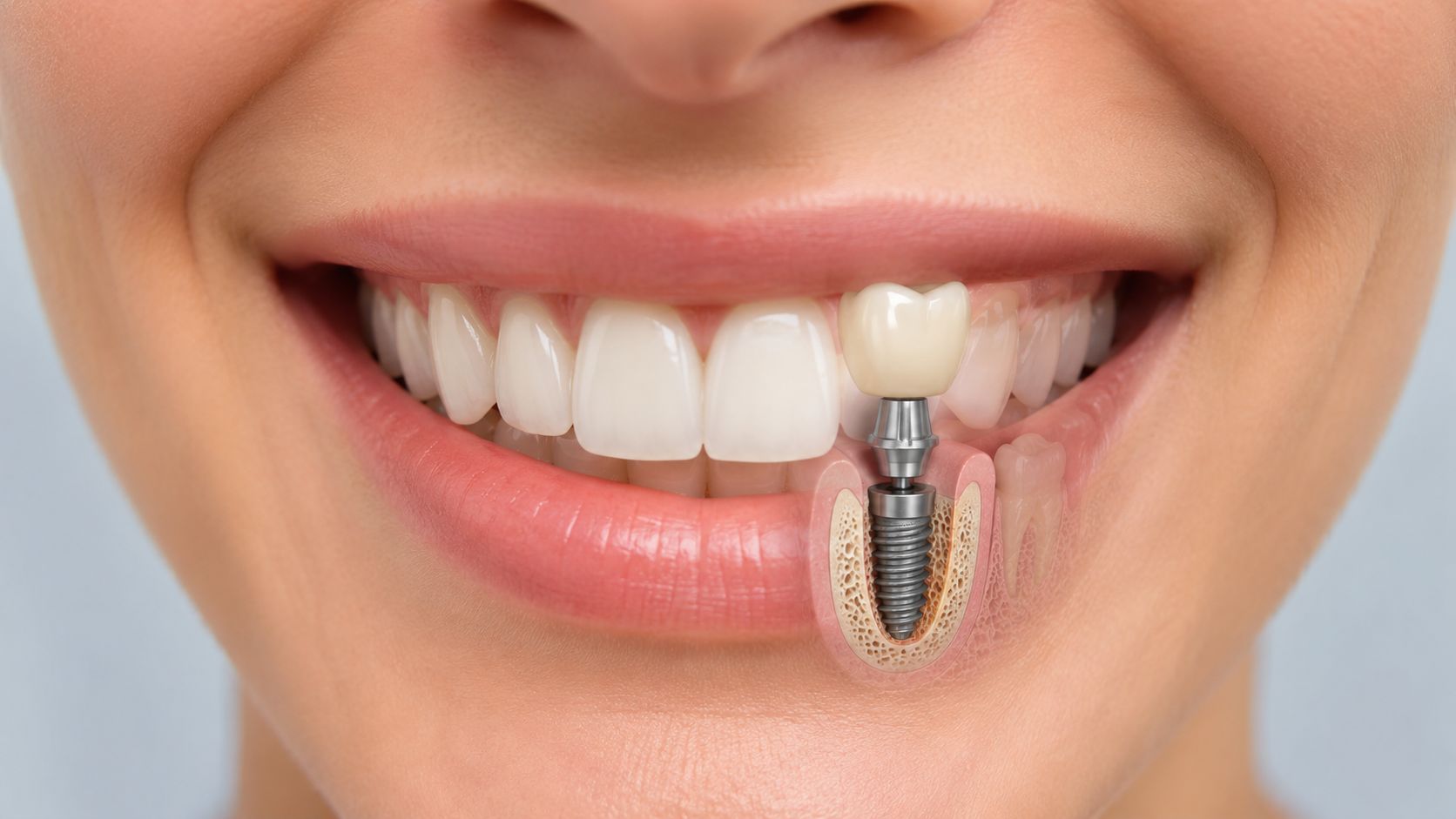
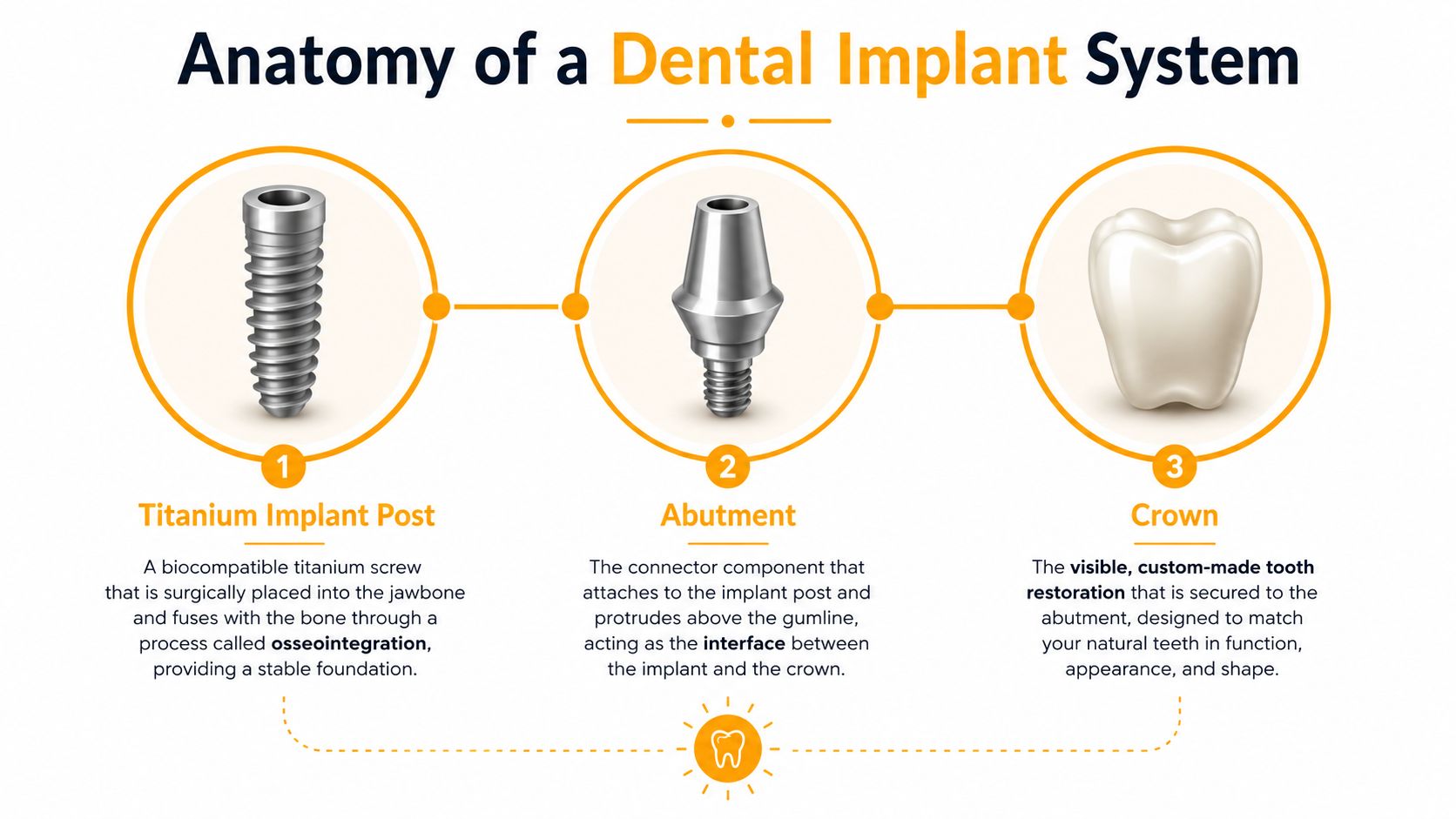
A woman might walk into the clinic saying she wants “a tooth implant” after losing a molar. What she usually needs is a system with three parts, the implant post, the abutment, and the crown. The post sits in the jawbone, the abutment links the post to the restoration, and the crown is the part everyone sees. The distinction matters, because the implant itself is meant to stay buried and stable, while the crown is the part that can be remade if it wears down or breaks.
The easiest way to separate them is this. The implant post does the anchoring, the abutment does the joining, and the crown does the chewing and showing. That same split is why a crown may need more attention over time than the implant beneath it, especially if the bite is heavy or the tooth is in a high-pressure spot.
Why the crown is the part patients notice
The crown is the reason the implant looks like a tooth rather than a screw. It shapes how you bite, how your tongue moves, and how the restoration blends with the teeth beside it. That is why a dental implant crown is not just a cosmetic add-on, it is the working surface you live with every day.
People often assume the whole implant is permanent in the same way a filling is permanent. The more accurate view is that the integrated implant can be long-lasting, while the crown is a replaceable prosthetic component that may need repair years later. The crown may also be chosen with bite force in mind, because different materials handle chewing pressure and wear differently.
Practical rule: if you're paying for an implant crown, you're paying for the visible tooth and the engineering that makes it work, not just a shell to sit on top of the gum.
That distinction also helps when you're comparing care providers. A family dental clinic may discuss the crown in the context of the whole mouth, while a broader digital workflow still needs the right front end and back end to work well, which is why a useful overview like the Hosted Telecommunications phone system guide can feel oddly familiar in structure. The pieces only make sense when you separate the visible layer from the support structure underneath.
If you want a clearer picture of how the parts come together in practice, the dental implant procedure overview gives that wider context without losing sight of the crown itself.
The Step by Step Implant Crown Journey
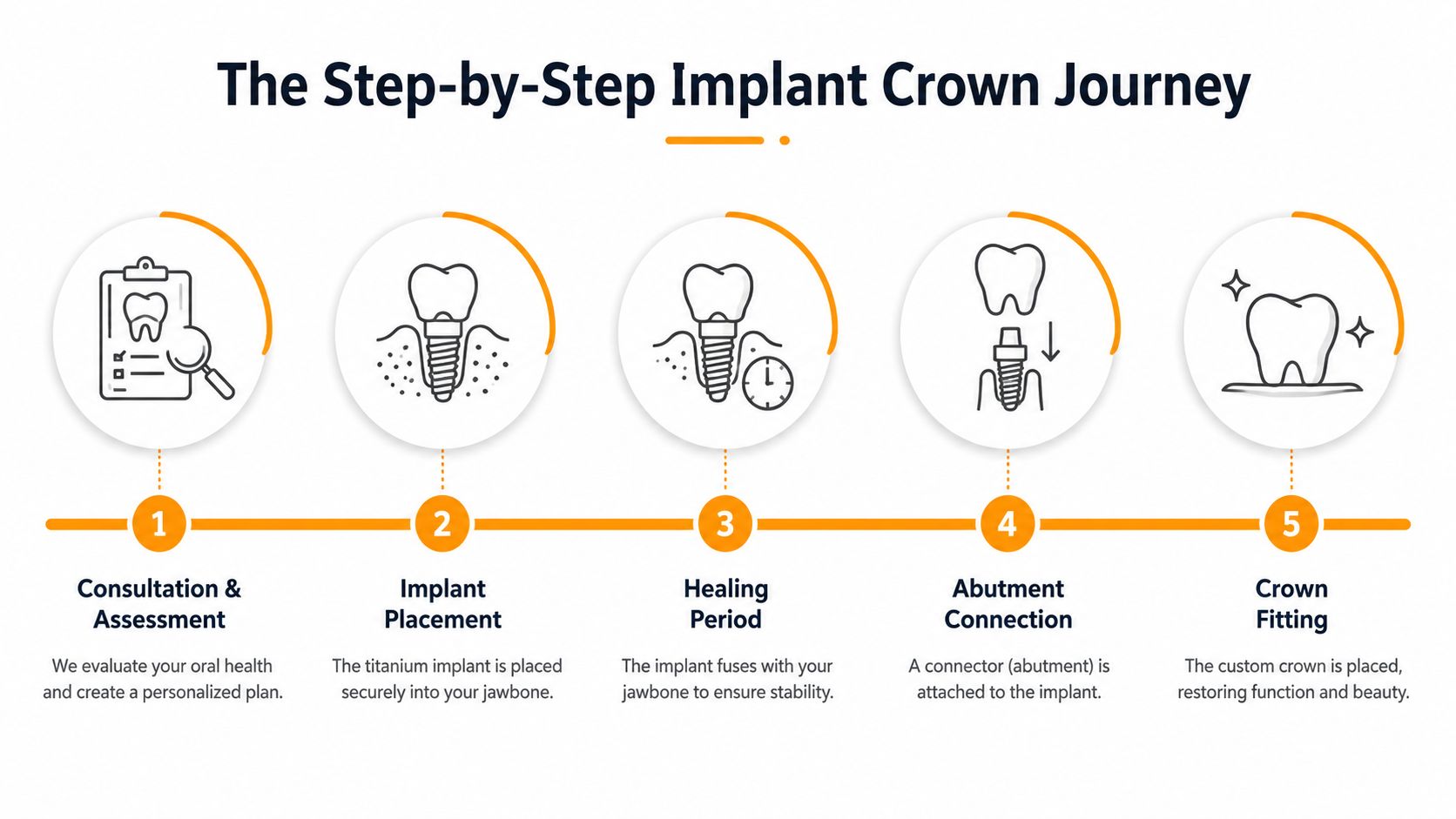
Most patients feel better once the treatment path stops being mysterious. The process usually begins with a consultation, then moves through planning, placement, healing, connection, and finally the crown fitting. The waiting periods are there because bone doesn't rush, and an implant crown only performs well when the support beneath it has settled properly.
From scan to placement
The first appointment usually involves an exam, digital X-rays, and often 3D imaging so the dentist can see bone shape, nerve position, and available space. That matters because a crown can only sit properly if the implant post is placed in the right spot from the start.
After the surgical placement, the bone needs time to integrate with the implant. This healing phase is commonly described in months, not weeks, because the implant has to become stable enough to support a crown without movement. If the case is suitable, a dentist may use minimally invasive methods and laser-assisted approaches to support comfort and healing, but the biological timetable still governs the final result.
Why the final crown fitting can't be rushed
Once healing is complete, the abutment is attached and impressions or scans are taken for the crown. Then the final restoration is checked for fit, bite, contact points, and colour. If the bite is off, even slightly, the crown can become a problem later.
A calm, well-planned timeline usually creates a better result than a faster one that has to be repaired twice.
If you want a broader clinical walk-through of the procedure itself, this dental implant procedure guide gives a useful overview of how appointments fit together. The main thing to remember is that each stage has a job, and skipping the sequence tends to create more trouble than it saves.
A crown that looks right but lands on an unstable foundation is still a compromised restoration. That's why the last appointment matters as much as the first one.
Choosing the Right Crown Material for Your Smile
Material choice is where many patients get caught between appearance and strength. The right dental implant crown material depends on where the tooth sits, how hard you bite, and how much of the restoration needs to disappear visually into your smile. A front tooth and a back molar don't ask the same thing of a crown, so they shouldn't wear the same material by default.
Comparing the main options
The practical trade-off is clear. Full-contour 4Y zirconia is used for anterior and posterior crowns and bridges when strength matters most, while IPS e.max monolithic lithium disilicate is valued for its translucency in anterior and bicuspid teeth. PFZ and PFM are options when higher esthetics are needed with strong support behind them, especially when the surrounding anatomy demands more masking or reinforcement. Those descriptions align with the published specifications from ROE Dental Lab, which also notes that peri-implant tissue thickness should be at least 2 mm to reduce mucosal colour show-through in the esthetic zone. ROE Dental Lab crown and bridge specifications
| Implant Crown Materials Compared | Strength | Aesthetics | Best For |
|---|---|---|---|
| Full-contour 4Y zirconia | High | Moderate | Back teeth, higher load areas |
| IPS e.max monolithic lithium disilicate | Moderate | High | Front teeth, visible smile zones |
| PFZ | High | High | Cases needing strong support with better appearance |
| PFM | High | Moderate to high | Restorations where reinforcement matters |
Why the connector details matter too
Material isn't just the crown shell. Hybrid abutment-crowns should use a cylindrical titanium base rather than a conical one to reduce debonding risk, and the same guidance recommends a 50 μm Al2O3 sandblast at 2.5 bar for 10 seconds on the titanium base. Zirconia is also sandblasted on the intaglio surface, while lithium disilicate is typically HF-etched before bonding.
That sounds technical, but the patient version is simple. Some crowns are chosen because they can take more force, some because they disappear better in the smile line, and some because the underlying anatomy leaves no ideal option. If you want a broader consumer-friendly discussion of crown longevity, this crown care guide is a helpful companion read.
The skill is matching the material to the mouth, not the other way around.
How Long Implant Crowns Really Last
Longevity is usually the first thing people ask, and for good reason. Nobody wants to go through implant treatment only to feel unsure a few years later. The evidence is reassuring, but it's also honest, because a strong result still comes with maintenance.
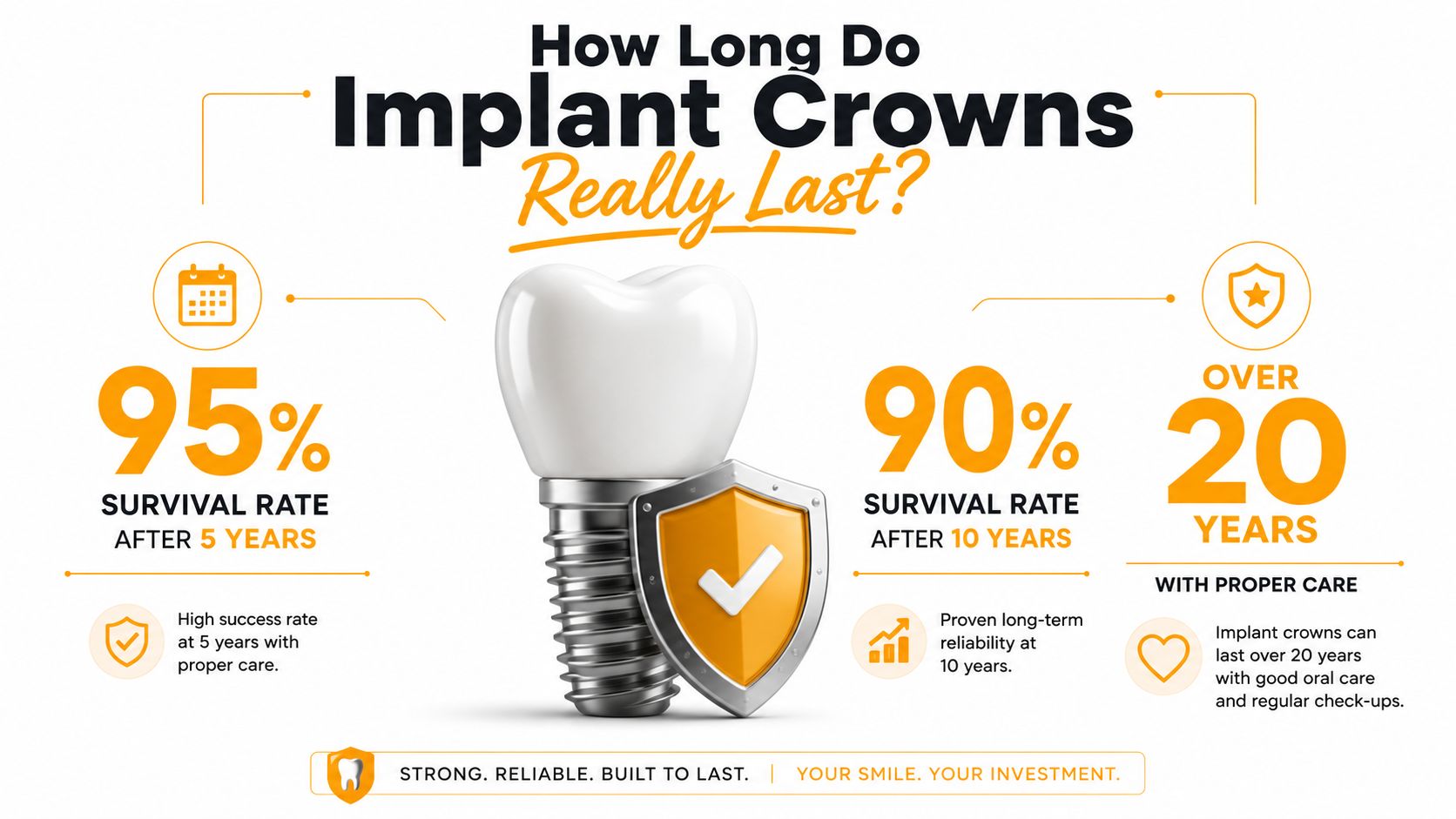
A major 5-year systematic review found 96.8% implant survival and 94.5% crown survival for implant-supported single crowns, with metal-ceramic crowns at 95.4% versus 91.2% for all-ceramic crowns after 5 years. The same review reported peri-implantitis and soft-tissue complications in 9.7% of single crowns, bone loss greater than 2 mm in 6.3% of implants, and screw or abutment loosening in 12.7% over 5 years. Those figures show that implant crowns are highly dependable, but not immune to technical or biological issues. 5-year systematic review of implant-supported single crowns
What the numbers mean in plain English
A later 5-year retrospective study reported 98.2% survival with a mean prosthetic time in function of 5.2 ± 1.5 years, along with 7.1% biologic complications, 6.5% veneer fracture, 4.3% loss of retention, 2.1% abutment screw loosening, and 0.4% abutment fracture. The overall trend in implant dentistry has also improved, with one review noting the survival rate for implant-supported single crowns rising from 92.6% to 97.2% over time. 5-year retrospective study of implant-supported single crowns
Those numbers don't mean the crown is fragile. They mean careful design, hygiene, and review appointments still matter. A person who attends check-ups and addresses early loosening or wear is giving the restoration the best chance to last.
Clinical takeaway: most problems are easier to manage when they're small, which is why routine reviews matter even when the implant feels fine.
If you want a patient-facing overview of implant longevity in a different context, this implant lifespan article is worth a look. The main point here is that an implant crown can be very predictable, just not “fit it and forget it.”
Why Implant Crowns Fail and How to Prevent It
A lot of people assume implant failure means the surgery itself did not succeed. In practice, the implant body can be stable and the visible dental implant crown can still chip, loosen, stain, or need replacement later.
Independent clinical guidance notes that the crown itself can chip, loosen, discolor, or require replacement, and that uneven bite forces or bruxism can cause porcelain chipping and screw loosening. That is the part of implant care many FAQs leave out, because once healing is finished, it is easy to assume the whole system is permanent. Independent guidance on implant crown questions
The bite is often the problem
A crown carries force every day. If the bite is heavy on one side, if the opposing tooth is worn, or if a patient clenches at night, the crown can be pushed harder than it was designed to handle. Small changes in how the teeth meet can matter over time, especially around screws and porcelain.
Food impaction can be part of the problem too. A contour that is too bulky or too flat can trap food near the gumline, and a restoration that looks fine in the mirror may still need adjustment because of that. It is a bit like a chair with one leg slightly off. It may still stand, but it does not distribute weight properly.
If you grind your teeth, tell the dentist early, not after the crown has already chipped.
A useful way to think about prevention
People who clench, grind, or have a history of fractured crowns may need an occlusal guard. Others need bite adjustment, material selection that suits the loading pattern, or a more conservative crown shape. The earlier those decisions are made, the less likely you are to correct the same problem twice.
For patients trying to compare replacement options, a plain-language look at dental implants versus dentures can help frame the bigger picture before treatment planning starts. For clinics that need practical support with patient education and visibility, partner with Transactional LLC can be a useful resource, but the clinical message stays the same. A crown is the working surface, and the working surface needs monitoring.
The main shift in mindset is simple. The implant may be the anchor, but the crown does the daily work.
Implant Crowns Versus Bridges and Dentures
A single missing tooth does not automatically mean a single implant crown is the only answer. The right choice depends on how many teeth are missing, what the bite is doing, how much bone is available, and how much maintenance you're willing to accept over time. Some patients need a standalone solution, others need a broader arch-based plan.
How the options differ
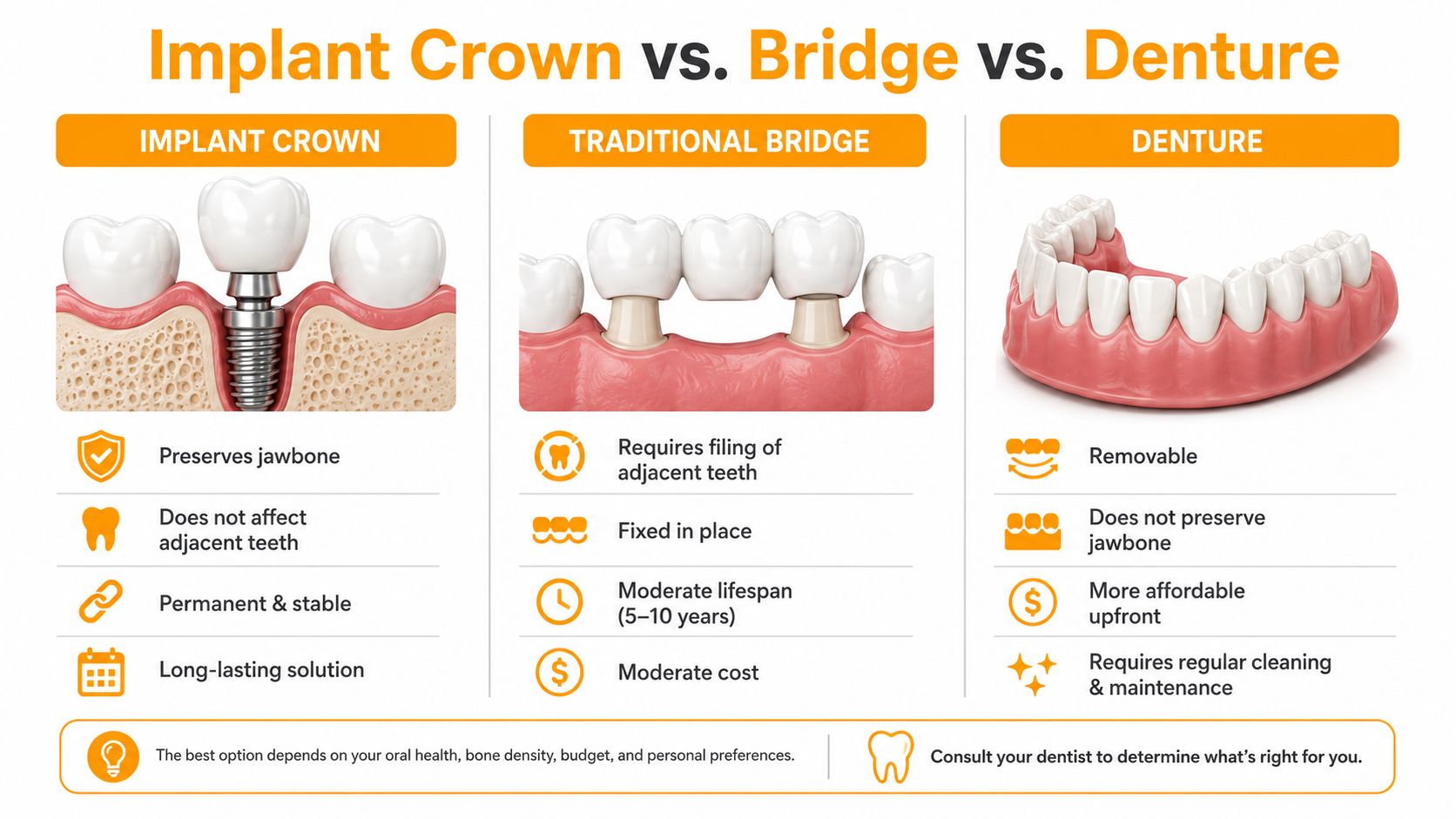
An implant crown replaces one tooth without reshaping the neighbours. A traditional bridge relies on adjacent teeth for support, while a denture is removable and usually easier to expand across multiple missing teeth. For full-arch situations, All-on-4 can be a path when many teeth are missing and the patient needs a more thorough reconstruction.
The important distinction is what each option asks of the rest of the mouth. Bridges involve the teeth beside the gap, dentures depend more on fit and adaptation, and an implant crown aims to stand on its own. A general patient guide on dental implants versus dentures can help people compare the broad categories before they sit down for a treatment plan.
A simple decision filter
- One missing tooth: an implant crown often preserves the teeth beside the gap.
- Several missing teeth in one area: a bridge or partial denture may be discussed depending on support and space.
- Many missing teeth or a full arch: All-on-4 or another full-arch approach may be more efficient.
- Strong desire to avoid filing adjacent teeth: the implant crown has a clear advantage.
The other practical issue is maintenance. Bridges and dentures each solve problems, but they solve them differently, and the cleaning routine changes with each option. If you're trying to protect adjacent teeth and keep the replacement self-contained, the implant crown usually fits that goal better.
Your Next Steps with The Smile Spot
A good implant crown plan should feel organised, not rushed. At The Smile Spot in Dulwich Hill, the approach includes implant and restorative care alongside other family dental services, and Dr Dimitrios Thanos has been practising since 1996. The clinic also uses Biolase laser dentistry for minimally invasive treatment where appropriate, and offers sedation options for anxious patients, which can make the early stages of care feel much easier. The Smile Spot dental implants in Dulwich Hill
That matters because the first appointment sets the tone. You can expect an initial assessment, relevant imaging, a discussion of tooth replacement options, and then a treatment plan that explains what needs to happen before the final crown can be placed. Patients often appreciate knowing whether a simple crown plan is enough, or whether bone, gum, or bite factors need attention first.
The practical details also help. The clinic accepts most private health funds, offers online booking, and keeps late evening and Saturday hours available for busy households and commuters. For nervous patients, having a clear phone call, a calm consultation, and a straightforward plan can make the difference between delaying treatment and starting it.
If you're trying to decide whether your missing tooth is a good fit for an implant crown, book a consultation and bring your questions with you. A careful plan now can save you from avoidable repairs later, and it gives you a clearer idea of how to keep the result working well for years.
If you're ready to replace a missing tooth with a restoration that's designed for long-term function, The Smile Spot can help you work through the implant crown process from assessment to final fit. Book a consultation, ask about materials and bite forces, and get a plan that matches your smile, your schedule, and the way you use your teeth.