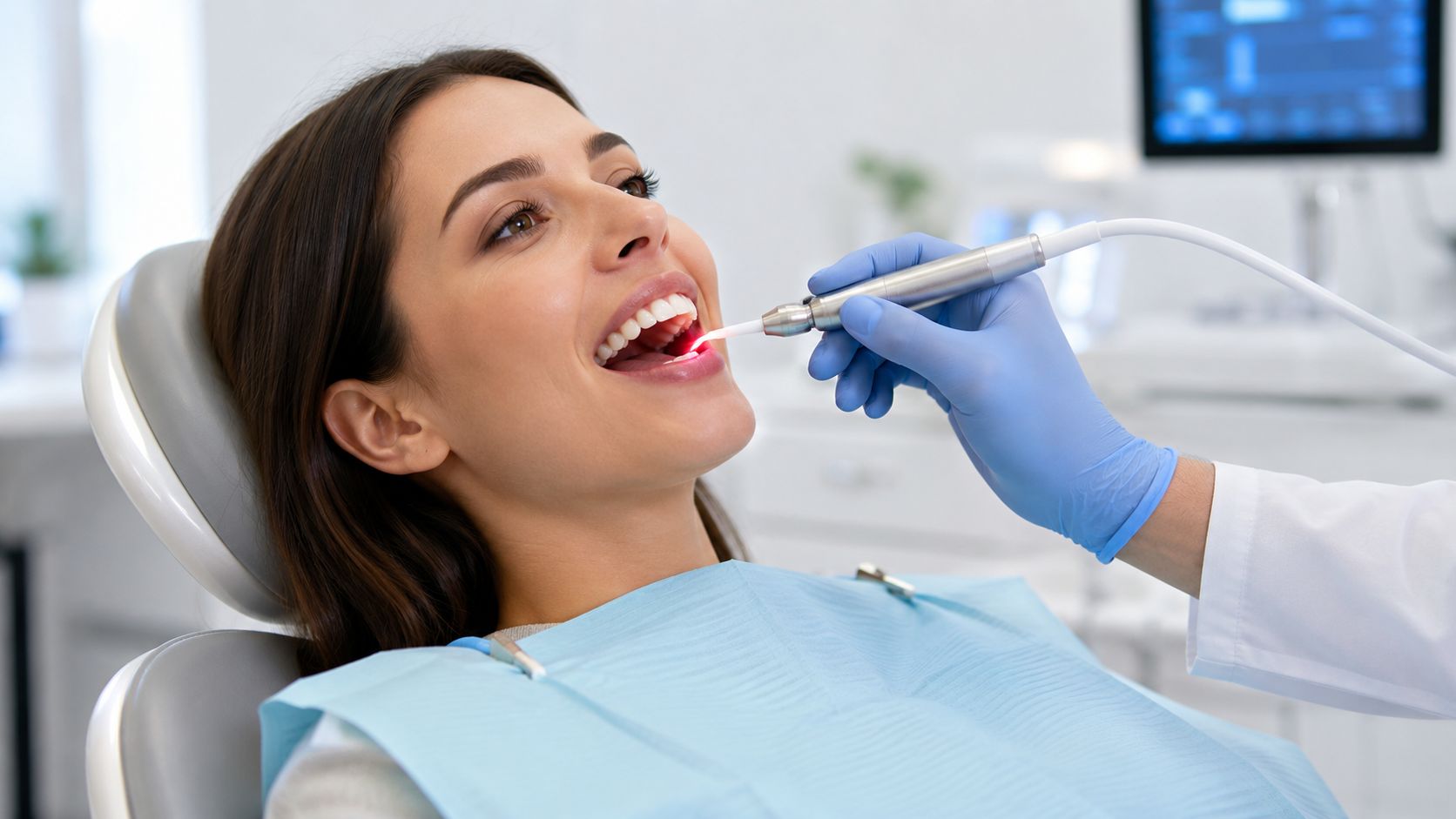
You're sitting back in the chair, the bib is on, and the dentist has just said, “We can use a laser for this.” For a lot of people, that sounds either wonderfully modern or a bit suspicious. The honest answer is simpler: laser in dentistry means a very focused beam of light used for a specific task, such as reshaping gum tissue, removing decay, disinfecting a pocket, or helping tissue heal more comfortably.
The key is that a laser isn't one magic tool. It's more like a set of specialist instruments in a dental toolbox, each tuned to a different job. Some wavelengths are absorbed strongly by water and hydroxyapatite, which is why Er:YAG and Er,Cr:YSGG systems are useful for hard-tissue work such as caries removal and crown debonding, while other wavelengths are better suited to soft tissue, bleeding control, and bacterial reduction Australian laser dentistry review, soft-tissue laser review.
That difference matters because patients often hear “laser” and assume it can do everything. It can't. But when the wavelength matches the tissue and the job is selected carefully, laser treatment can be a very precise way to work in a small area without disturbing as much healthy tissue around it.
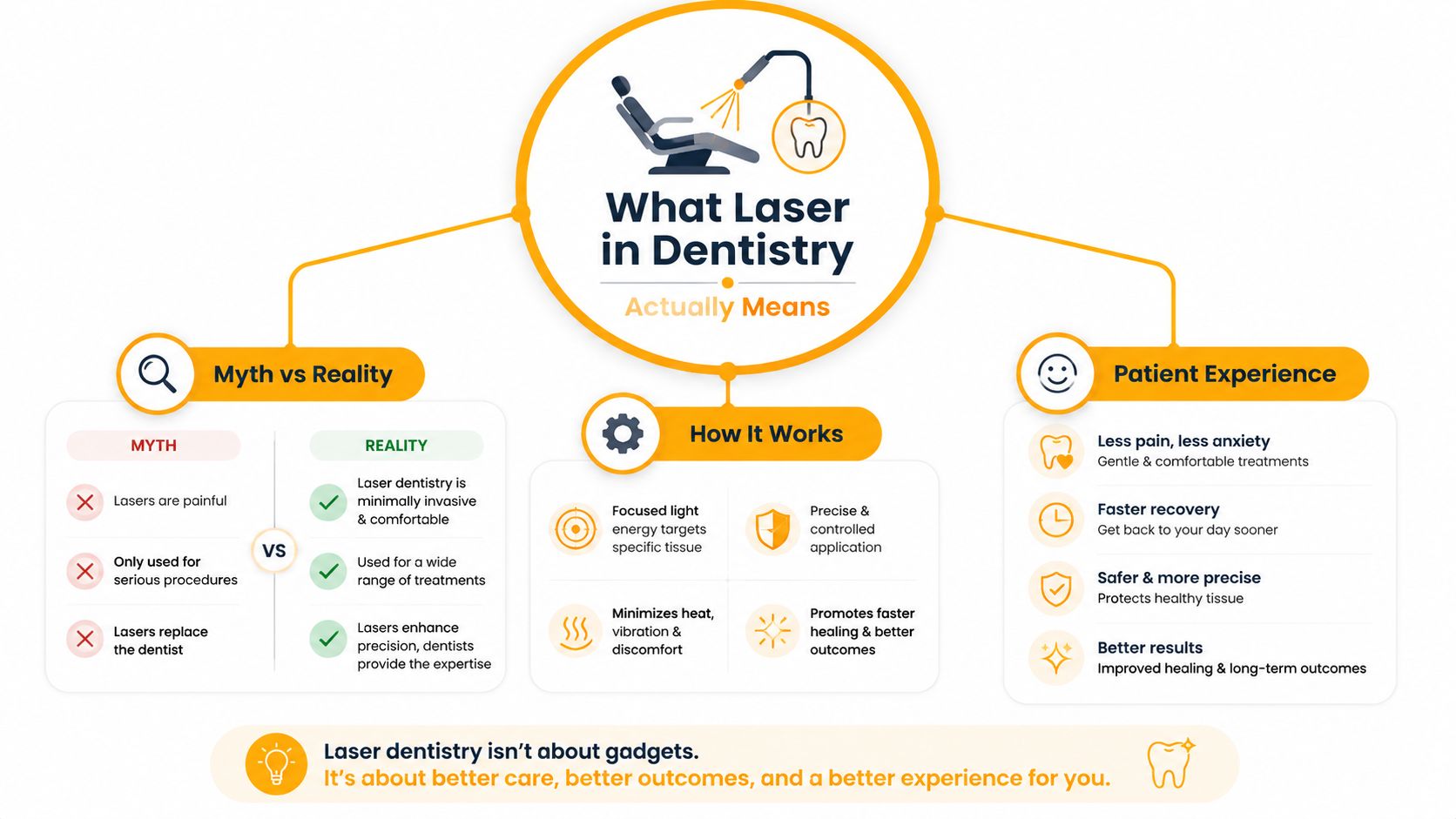
Practical rule: a good laser appointment should feel targeted, not dramatic. The point is precision, not spectacle.
For readers wanting a plain-language look at gum-focused laser care, this laser gum treatment guide is a useful companion.
How Laser Dentistry Reached Your Local Clinic
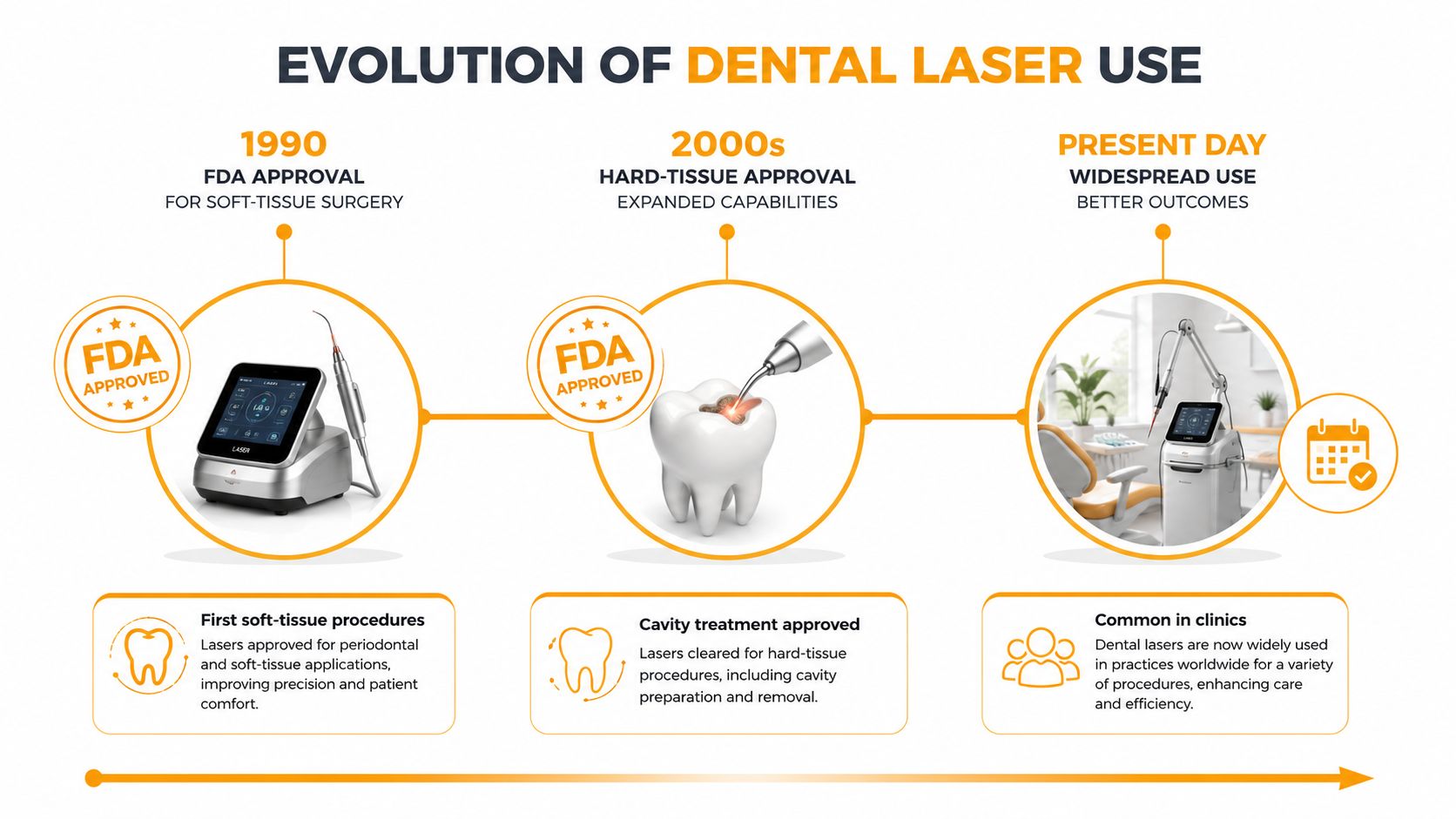
A laser in the dental chair may feel like a newer idea, but the path to everyday use has been unfolding for a long time. The turning point came in 1990, when the U.S. Food and Drug Administration approved lasers for intraoral gingival and soft-tissue surgery, which helped move the technology from experimental use into routine clinical dentistry timeline and review data. That history matters, because it shows lasers are not a passing trend. They have been in clinical dentistry long enough for dentists to understand where they help, and where they do not.
From soft tissue to broader care
Once early soft-tissue use was established, the technology broadened. Later reviews describe laser applications spreading into caries prevention, tooth bleaching, cavity preparation, wound healing, and photodynamic therapy review summary. In plain terms, dentists found that light could do more than trim gum tissue. It could support treatment in other parts of the mouth too, as long as the device, wavelength, and setting matched the job.
That wider evidence base is part of why lasers now sit inside some advanced family clinics rather than remaining an oddity. Analysts looking at the research record found steady growth in publication and citation activity over time bibliometric analysis. That does not tell you how treatment feels in the chair, but it does show that the topic has stayed under active study for years.
Why not every clinic uses it
The gap between research and the dental chair is still real. A recent review says a dental laser, especially higher-performance erbium or carbon dioxide systems, can cost between USD 10,000 and USD 80,000 equipment review. That is a major purchase, so many practices decide not to add one unless they already expect to use it often enough to justify the training and equipment.
A laser usually arrives in a clinic because the team already sees enough suitable cases to justify the training and equipment, not because it is fashionable.
If you are comparing practices, a local example is The Smile Spot's Dulwich Hill laser dentistry page, where the technology sits inside a broader family practice rather than as a standalone feature.
For readers who want a plain-language look at gum-focused laser care, this guide to laser gum treatment is a useful companion.
Common Procedures Lasers Handle Today
A useful way to understand dental lasers is to sort them by the job they do in the mouth. Some procedures involve soft tissue, where the aim is to cut cleanly, control bleeding, and let the area heal neatly. Others involve hard tissue, where the goal is to remove only what needs to come out, while keeping heat spread as low as possible.
Soft-tissue care
For gum disease and peri-implantitis management, diode lasers in the 800 to 980 nm range are widely used because they support antimicrobial treatment while reducing bleeding and helping healing along soft-tissue laser review. That is why many patients say the visit feels gentler than they expected. The effect is not mysterious. It comes from targeted tissue interaction and better haemostasis.
Laser use also extends to root-canal disinfection and photodynamic therapy, where laser-activated dye reactions can reduce bacterial load in periodontal pockets and cavity preparations soft-tissue laser review. For a patient, the simplest comparison is a controlled disinfecting pass rather than a broad mechanical scrape. That difference matters most when the job is localised and precision is the priority.
Hard-tissue work
For enamel and dentin, Er:YAG (2940 nm) and Er,Cr:YSGG (2780 nm) are the best-supported platforms because water and hydroxyapatite absorb those wavelengths strongly, allowing selective ablation with limited thermal diffusion Australian laser dentistry review. In everyday language, the laser can remove decay very precisely, almost like using fine craft tools instead of a larger cutting instrument.
Recent reviews note that these systems are used for caries removal, bone contouring, implant decontamination, and crown or veneer debonding, with water spray required to prevent heat buildup and protect surrounding tissue Australian laser dentistry review. That water spray is a big part of the safety story. It helps keep the treatment controlled, especially when the work is close to enamel or bone.
Cosmetic and healing support
Lasers also show up in tooth whitening, wound healing, and photobiomodulation, which is the use of light to support recovery and reduce discomfort after treatment historical review. One review also notes that low-energy irradiation can stimulate fibroblast activity, while higher doses can suppress it, with examples given at 2 J/cm² and 16 J/cm² historical review. That is a good reminder that dose matters as much as the device itself.
For readers curious about whitening specifically, see this explanation of laser dental bleaching.
Honest Benefits and Real Limitations
Laser dentistry earns its place when the clinical goal is precision, less bleeding, and a calmer tissue response. That's why many patients like it for gum work. It can reduce bleeding, sometimes reduce the need for stitches, and often feels less invasive than a scalpel-based approach. For anxious families, that quieter, more controlled experience is often the biggest benefit.
Patient-facing benefit: when the job is small and localised, a laser can make the mouth feel less “worked on” afterwards.
There's also a practical comfort advantage in some soft-tissue procedures. Fewer people need to sit through the vibration and pressure that come with conventional cutting or scraping, and that matters for patients who are already tense in the chair. For some procedures, that can mean less reliance on local anaesthetic, though that depends on the treatment and the person.
| Aspect | Soft-Tissue Lasers, e.g. diode | Hard-Tissue Lasers, e.g. Er:YAG |
|---|---|---|
| Main goal | Cut or reshape gums, reduce bacteria, control bleeding | Remove enamel or dentin selectively |
| Common feel | More like careful trimming than cutting | More like precision excavation |
| Typical advantage | Less bleeding, cleaner field, calmer healing | Conserves surrounding tooth structure |
| Main caution | Needs trained handling around soft tissue | Requires water spray and careful thermal control |
The limitations are just as important. Lasers don't replace every conventional tool, and outcomes depend heavily on the operator's training and case selection. Equipment cost is still significant, as noted earlier, and not every procedure is faster or cheaper with a laser equipment review, policy-based review.
That's why the fairest way to think about laser treatment is as an adjunct, not a universal upgrade. It's often a better fit for a specific job, not a better fit for every job.
For a gum-focused example from a clinical setting, this laser periodontal therapy overview is worth a look.
Safety, Candidacy and Who Lasers Suit Best
Safe laser dentistry starts with the basics. Everyone in the room should wear protective eyewear, the device should be set for the exact tissue and task, and the practice should use clear protocols for plume control, tissue handling, and calibration. Those things aren't optional extras, they're the difference between careful treatment and sloppy treatment.
A simple candidacy checklist
A laser often makes sense when the treatment area is small, the tissues are soft, or bleeding control matters. It can be a strong option for anxious patients, children who struggle with drills, and people taking blood thinners, because reduced bleeding can make treatment easier to manage. It also suits precise gum reshaping and some disinfection work.
Some patients still need a more conventional approach. A laser is not always the right choice for every filling, every surgical site, or every tooth structure problem. Certain medical conditions, specific medications, pregnancy considerations, and the exact position of the tooth or tissue can all change the plan.
Three questions worth asking
- What problem is the laser solving here? If the answer is clearer access, less bleeding, or better comfort, that's a good sign. If the answer is just “it's modern”, keep asking.
- What would you use if you didn't use the laser? That helps you compare the actual alternatives, not the marketing.
- Who's handling the settings and safety steps? A trained operator matters more than the brand on the machine.
If a clinic can't explain why the laser fits your case, it's reasonable to choose the conventional option.
For readers looking for a gentle, patient-first clinic approach, this Dulwich Hill family dental page is a useful example of how comfort and suitability should be discussed before treatment starts.
How The Smile Spot Uses Biolase Laser Dentistry
The Smile Spot uses Biolase laser dentistry inside a full family-dental setting in Dulwich Hill, led by Dr. Dimitrios Thanos and a long-standing team. That matters because laser care works best when it's part of a broader treatment plan, not a disconnected add-on. The laser becomes one tool among many, alongside preventive check-ups, cosmetic dentistry, implants, All-on-4, and sedation for patients who need extra support.
In practice, that can mean laser-assisted gum care when the priority is reducing inflammation and improving tissue comfort. It can also mean gentler frenectomy-style soft-tissue treatment for infants and children, or precise reshaping when a cosmetic case needs clean tissue margins before veneers or whitening. The point is not that every patient needs a laser, but that some patients benefit from a more controlled, minimally invasive option.
The clinic's appeal for busy families is practical as well as clinical. Late evening and Saturday hours, online booking, acceptance of most private health funds, and a $240 care package for adults help make care easier to plan. There's also a reduced rate for children, which makes it simpler for families to book check-ups without waiting for a crisis.
That combination suits the Inner West well. Dulwich Hill, Marrickville, Earlwood, Ashfield, Summer Hill, Lewisham, Petersham, and Hurlstone Park all sit within the clinic's service area, so patients can compare laser-assisted care with conventional care in one place instead of shopping for a gadget.
Cost, Recovery and Common Patient Questions
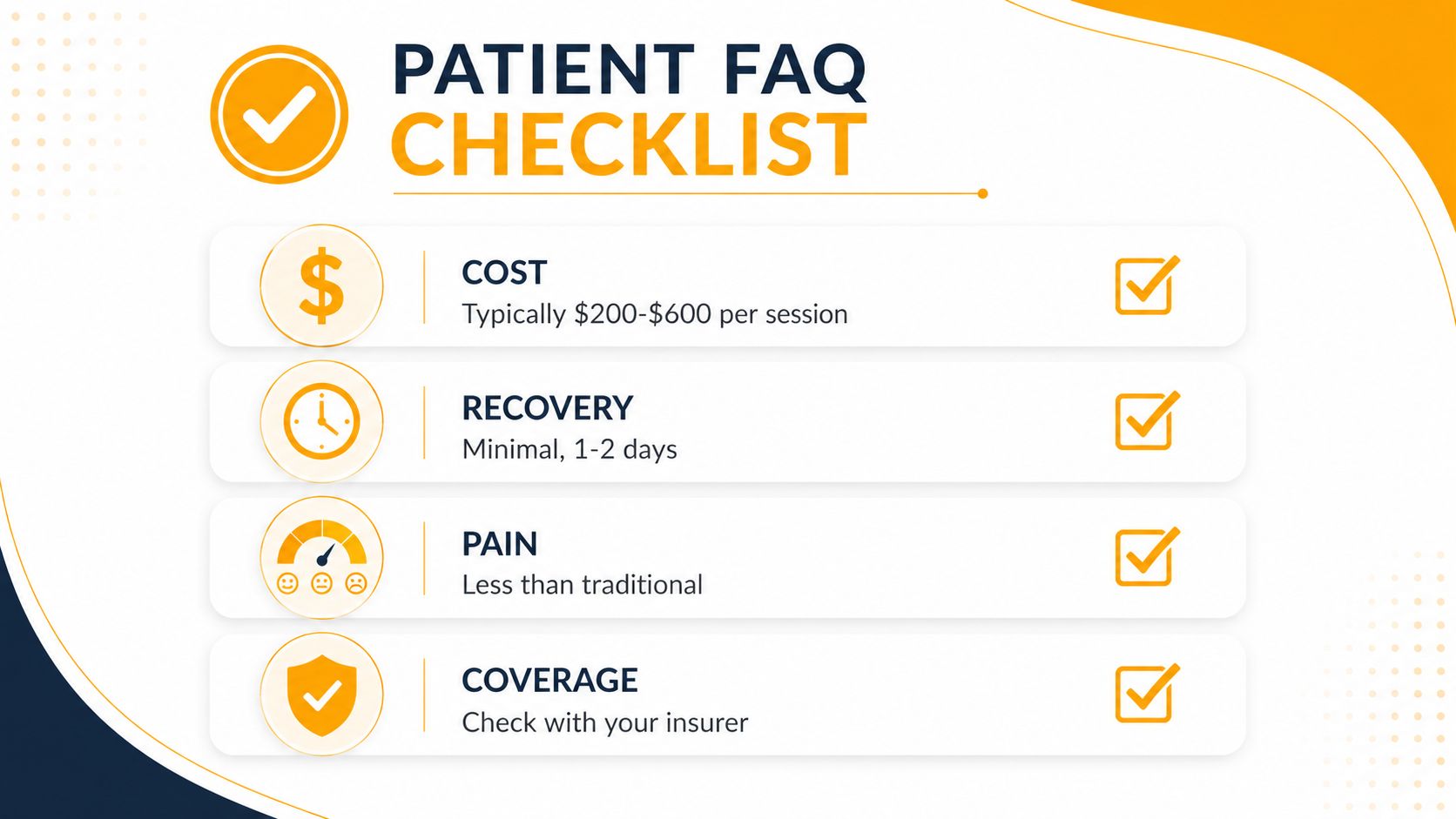
Cost is usually easier to understand when you think in terms of the procedure, not the machine. Laser treatment is often folded into the total cost of the visit rather than billed as a separate line item, and private health fund rebates may apply depending on your cover and the treatment. The main question is what the laser replaces, such as extra anaesthetic, stitches, or a follow-up visit.
Recovery and aftercare
Most soft-tissue laser procedures settle quickly, often within a few days, with simple aftercare such as gentle rinsing and avoiding very hot food straight away. Hard-tissue work behaves more like conventional dental treatment, so the aftercare depends on what was done. If your dentist gives you a specific plan, follow that instead of relying on general advice.
Questions families ask most
- Is laser dentistry safe for children? Yes, when the child is assessed properly and the clinic uses the right settings, eyewear, and supervision.
- Does it hurt? Many patients find it more comfortable than drilling or scalpel work, especially for soft tissue.
- Can it replace the drill for fillings? Sometimes for selected cases, but not always. Your dentist has to decide whether the tooth and the decay are a good match for laser work.
- How do I book at The Smile Spot? Use the clinic's online booking path or contact the team directly for an assessment if you want to discuss laser-assisted options.
The honest answer to most laser questions is “it depends on the case”. That's not a dodge, it's how good dentistry works. A careful exam should come first, then the technology follows the problem.
If you're in the Inner West and want a calm, practical discussion about whether a laser suits your treatment, book a visit with The Smile Spot. The team can talk through gum care, soft-tissue treatment, cosmetic work, and when a conventional approach is still the better choice.