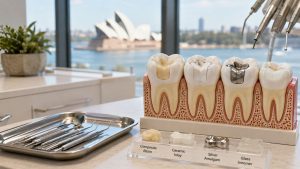

If you've just sat in a dental chair with a child who has crowded front teeth, you're probably doing the same maths every Sydney parent does. Is this just a cosmetic issue, or is there something about the bite that needs proper orthodontic care, and how on earth do you fit appointments, school, and the bill into family life?
That's the question behind orthodontics Sydney wide. For families in the Inner West, the practical issues are usually the same, whether the concern is a teenager's crooked teeth or an adult who never dealt with a bite problem earlier. The hard part isn't finding a clinic name. It's working out what treatment does, who should provide it, how much it's likely to cost, and whether the schedule will fit a normal week.
What Orthodontics Does for Your Family
A parent usually notices orthodontic problems in an ordinary moment. A routine check-up ends, the dentist points out crowding or a bite that does not sit quite right, and the conversation shifts from cleaning and fillings to braces, scans, and timing. That is when it helps to separate cosmetic straightening from functional correction.
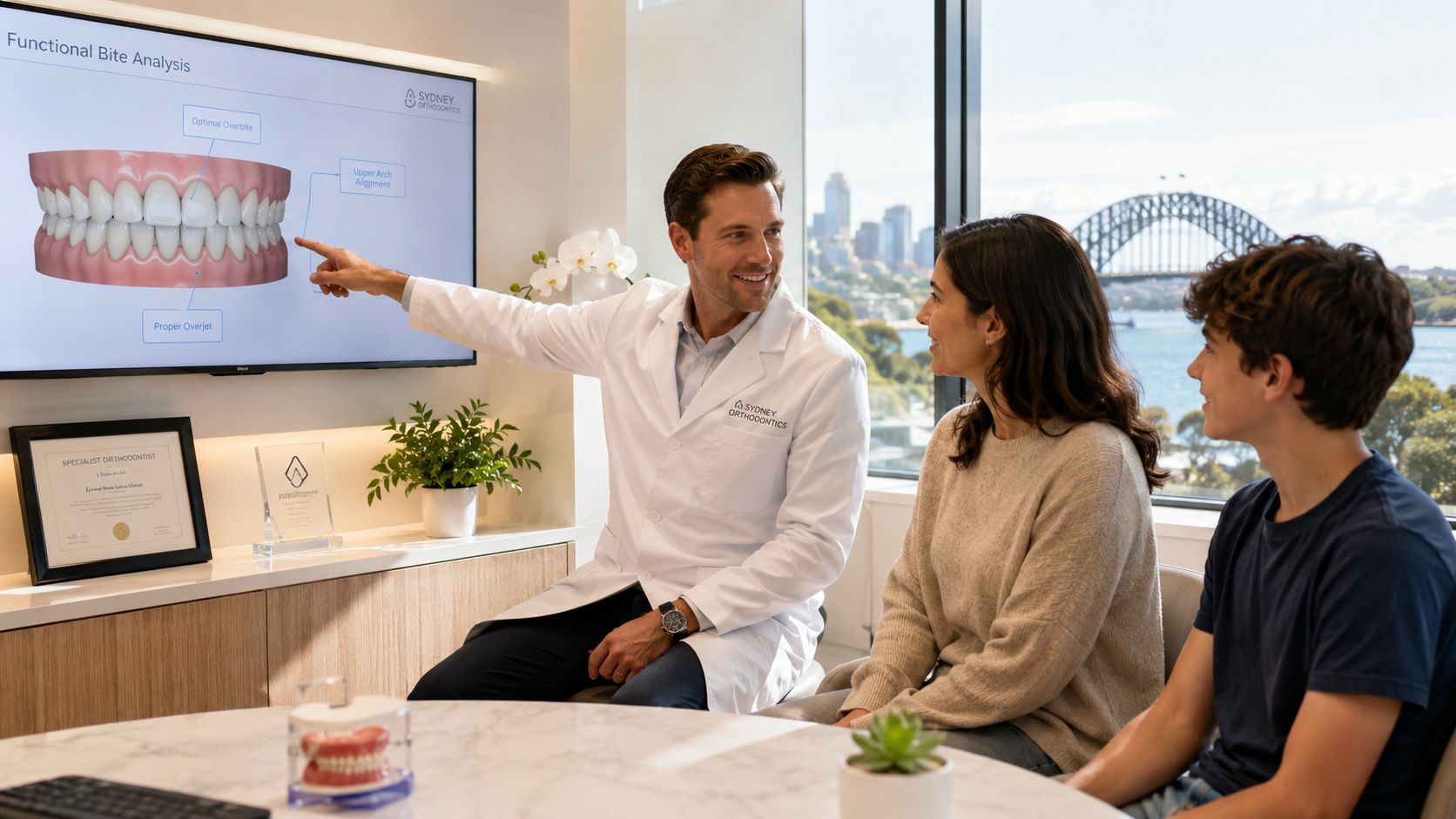
Orthodontic treatment uses braces, aligners, retainers, and headgear to straighten teeth and correct bite problems such as crowding, spacing, overbite, underbite, and crossbite (Healthdirect). That matters because the aim is not only a nicer smile. It is also getting the teeth to meet properly so chewing, cleaning, and long-term wear are managed more sensibly.
Why timing matters
The Better Health Channel notes that orthodontic treatment is usually started when all or most permanent teeth have come through, and treatment commonly continues for 18 months to 3 years (Better Health Channel). Early assessment still helps even when treatment does not begin immediately. A child's jaws are still developing, and a problem that looks minor now can become harder to manage later if the bite is left alone.
Practical rule: if a dentist has already mentioned crowding, spacing, or an uneven bite, do not wait until the teeth look worse. Ask whether the issue is just alignment, or whether the bite itself needs monitoring.
For parents, that distinction is the key. A child can have teeth that look fairly straight but still have a bite that does not function well. Another child may have visible crowding without a major functional problem yet. Either way, a timely orthodontic review gives you a clearer plan, which is far better than guessing.
If you are balancing general family care too, it helps to keep orthodontic decisions in step with routine prevention, not apart from it. The relationship between the two is explained well in this family dental care guide, especially for parents trying to coordinate check-ups, cleans, and specialist treatment.
Comparing Braces, Clear Aligners and Retainers
A family usually starts here with one practical question, what will fit into school runs, work hours, and the budget without creating more stress than the orthodontic problem itself. Braces are fixed scaffolding, clear aligners are a series of guided nudges, and retainers are the maintenance crew that keeps the result stable once the active movement has finished. Each option has a place, but they behave very differently in a busy household.
What each option really feels like day to day
Traditional braces are often the most workable choice when teeth need substantial correction. Because they are fixed to the teeth, they do not rely on a teenager remembering to put them back in after lunch or a parent chasing a tray that has been left on a school desk. That makes them a practical option when compliance is a concern or the case is more complex.
Ceramic braces work in the same general way, but the brackets are less obvious. The trade-off is cost, which sits higher than standard metal braces in the Australian fee data cited later in this article (Australian orthodontic fee report).
Clear aligners, including Invisalign-style treatment, suit people who can follow instructions consistently. They are removable, which makes eating and brushing easier, but that same feature creates risk if the trays are not worn enough. Families often like the convenience, yet convenience only works when the patient is disciplined. If you want a practical overview of how aligners are used, this clear aligners guide is a useful starting point.
Retainers are not an optional extra. They preserve the work already done, and skipping them is a fast way to let teeth drift again. That applies to teenagers and to adults who assume the job is finished once the last active appliance comes off.
| Orthodontic Treatment Options Compared | Best For | Typical Duration | Visibility | Removable |
|---|---|---|---|---|
| Traditional braces | More complex alignment and bite correction | Varies by case | Noticeable | No |
| Ceramic braces | Patients who want a less visible fixed option | Varies by case | Less visible than metal braces | No |
| Clear aligners | Motivated teens and adults with suitable cases | Varies by case | Low visibility | Yes |
| Retainers | Keeping results stable after active treatment | Ongoing as advised | Low visibility | Yes |
For families trying to choose between options, the question is not which treatment sounds nicer. It is which one the patient will wear, attend, and maintain without constant reminders. A fixed appliance can be the sensible choice for one child, while an adult with mild crowding may do very well in aligners if they are willing to wear them properly.
Understanding Orthodontic Costs and Timelines in Sydney
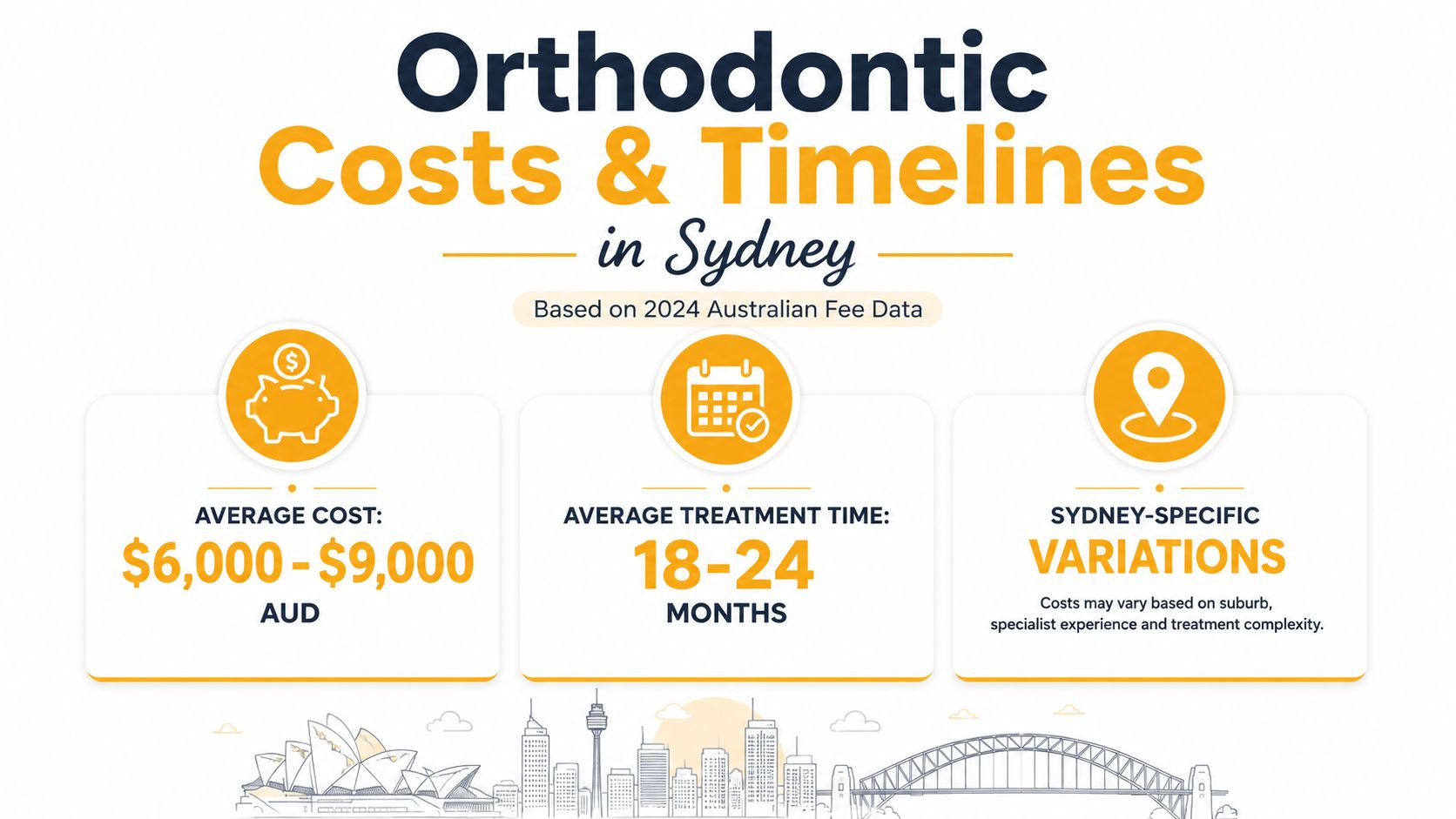
Orthodontic budgeting is where many Sydney families get caught out, because the quote on the first visit rarely tells the whole story. The full cost usually depends on the appliance, the complexity of the bite, the length of review visits, and whether retainers are included at the end. A separate Australian fee report summarised typical treatment bands for different appliance types, and an infographic used in Sydney orthodontic discussions shows how costs and timelines are often presented in practice. An infographic showing orthodontic treatment costs of 6,000 to 9,000 AUD and 18-24 month timelines in Sydney.
What changes the fee
Case complexity is usually the first driver. A simple alignment case tends to need fewer adjustments and less chair time than a bite problem that needs more detailed planning and longer follow-up. The appliance matters too, because fixed braces, ceramic braces, lingual braces, and aligners do not sit in the same price band.
Where the clinic is located also affects the quote. Practices in the CBD or North Sydney often present fees differently from clinics in outer-west or south-west areas, and that is why families comparing orthodontics Sydney wide need written quotes rather than broad “from” pricing. An Inner West clinic may be easier to get to for repeat visits, but that convenience still needs to be weighed against the full treatment plan, not just the consultation fee.
What to ask before you commit
Ask for the total, not the teaser price. Retainers, review appointments, emergency visits, and extended treatment can change the actual total cost.
That matters for Sydney families balancing school fees, sport, and everyday health spending. Payment plans can help with cash flow, especially when treatment runs across a long period, and health fund rebates may soften part of the bill, but they rarely remove the need for clear out-of-pocket planning. If a clinic will not say whether retainers are included or what happens if treatment goes longer than expected, treat that as a warning sign.
For a practical view on staged payments, this Invisalign payment plan article is worth reading alongside any quote you receive. The right budget check is straightforward. Get the full treatment scope in writing, ask what is included, and compare like with like across clinics.
Choosing Between a Specialist Orthodontist and a General Dentist
Sydney families often assume any clinic offering braces or aligners offers the same level of orthodontic care. It doesn't. A specialist orthodontist has completed extra postgraduate training beyond dental school, while a general dentist may include orthodontic services as part of broader dental care. That difference matters most when the case is more than simple alignment, or when the bite needs careful planning over time.
When the specialist matters most
NSW has the largest orthodontic workforce nationally, with 310 orthodontists out of 1,021 in Australia as of May 2025, or about 30.4% of the national total (national workforce analysis). Even with that concentration, access is not evenly spread across Sydney, so families often travel farther than they expected for specialist care. A classic national analysis also found a national ratio of 1,723 12-year-olds to one orthodontist, with sharp geographic variation across Australian Statistical Divisions.
That uneven spread explains why referral questions come up so often. Orthodontics is a specialist service in NSW public oral-health information, so some families arrive through a dentist referral, while others self-refer after noticing a bite problem. The question is whether the clinic can handle the bite issue properly, not whether it can squeeze you in quickly.
If the bite problem is mild and the plan is simple, a general dentist may be a reasonable starting point. If the bite is more complex, a specialist orthodontist is usually the safer place to begin.
For families weighing referral pathways and treatment supervision, this dentistry and orthodontics guide gives a useful overview of how the two roles fit together.
How to check credentials without the jargon
Ask for clear wording about training, registration, and the exact appliances used. If a clinic offers aligners, that does not tell you whether the clinician is a specialist or a general dentist with orthodontic experience. Ask directly who will oversee the treatment from start to finish, and who you will see at review visits.
A practical way to compare clinics is to ask how they handle cases that drift off track. Some families only need straightforward alignment, while others need a plan that accounts for growth, bite correction, broken appliances, and the reality of missed appointments during school terms or holidays. The right provider is the one whose training matches the complexity of the bite, not the one with the slickest brochure or the easiest sales pitch.
Questions to Ask at Your First Orthodontic Consultation
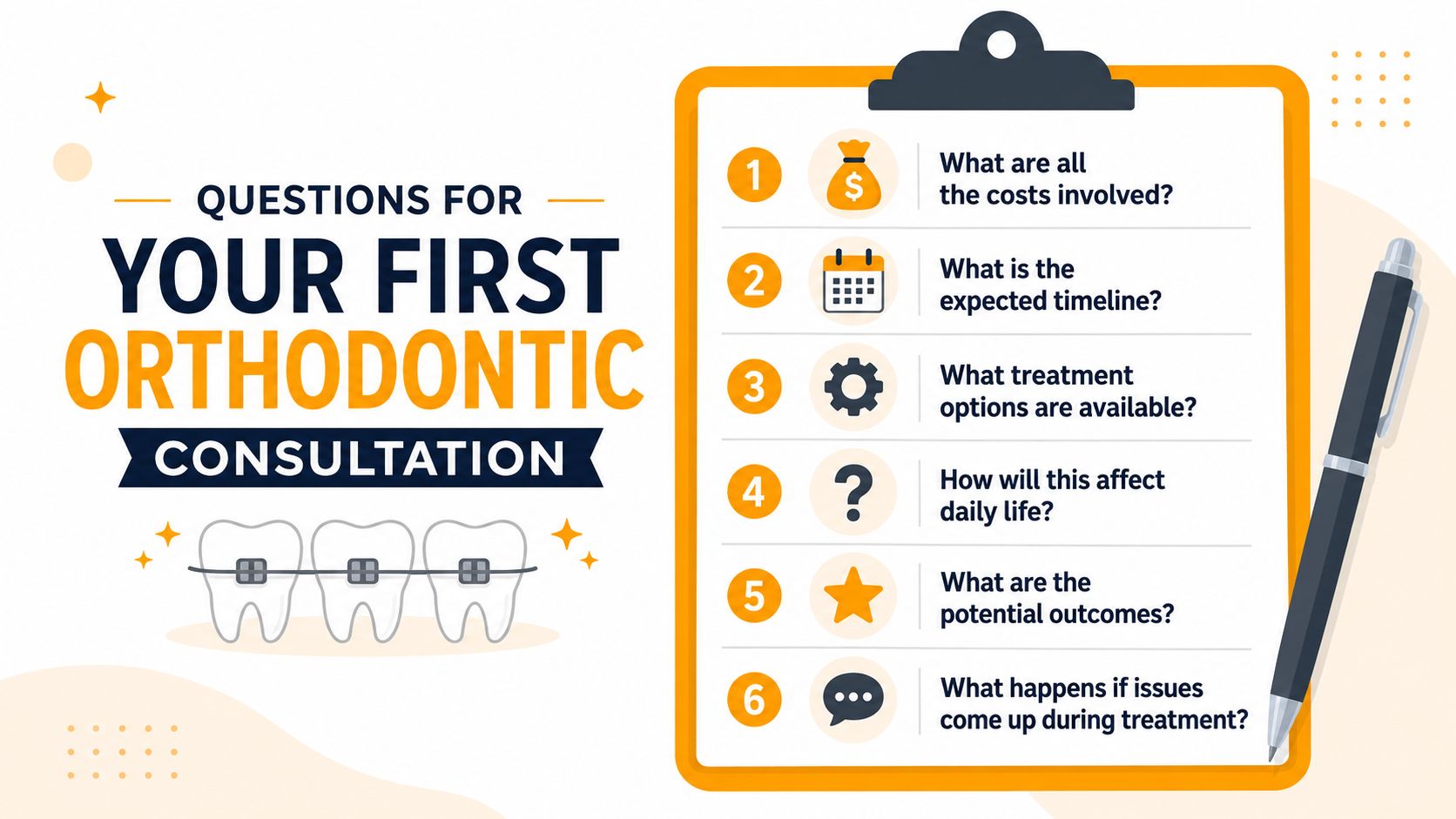
The first consultation should feel like a planning session, not a sales pitch. You're trying to work out whether the clinic can explain the problem clearly, whether the plan fits your family's routine, and whether the fees still make sense once retainers, review visits, and any extra appliances are included. A good clinician should answer those questions without rushing, and without handing over a quote without explanation.
The questions worth asking
- What is the full cost? Ask whether the quote includes retainers, review visits, emergency appointments, and any extra appliances.
- How long is the likely treatment? You want the clinician's estimate, plus what happens if the case runs longer than expected.
- What are the treatment options? A sensible clinic should explain why braces, aligners, or another appliance suits the bite.
- How will this affect daily life? Ask about school, sports, eating, brushing, and speech adjustment.
- What happens if something breaks? Broken wires, lost aligners, and failed attachments happen, so you need a clear response pathway.
- Who manages the treatment? Make sure you know whether a specialist orthodontist or a general dentist is doing the work.
What should happen at the visit
Standard first consultations should include photographs, scans or X-rays, and a discussion of the bite problem in plain language. The point is not to overwhelm you with technical terms. It is to show you what the teeth are doing now, what the goal is, and how that goal will be reached.
The appointment should also leave room for practical questions about timing and access. Parents juggling work, school pickup, and siblings need to know whether the clinic can handle schedule changes without making every review visit a hassle. Adults often face the same issue around shift work and commuting, which is why orthodontist care for adults has to be judged on fit as much as on the treatment itself.
A clinic that explains the plan slowly and answers follow-up questions clearly is usually easier to live with for months, sometimes years, than one that just hands over a quote.
How Digital Technology Is Changing Orthodontic Care
A few years ago, orthodontic records relied much more on plaster models, manual measurements, and the clinician's judgement at the chairside. Care has now shifted toward a digital workflow built around CBCT, intraoral scanning, CAD/CAM, and digital treatment planning. The Australian Society of Orthodontists says these tools have “significantly reshaped” orthodontics over the past decade (ASO digital age paper).
Why digital planning matters in real life
Three-dimensional imaging helps clinicians assess tooth position, root morphology, bone limits, and airway-adjacent anatomy before treatment begins. That matters because it reduces blind spots that old-style models could miss, especially in cases where the bite is crowded, asymmetrical, or moving within tight biological limits. When the clinician can see the case more clearly, the appliance choice and treatment sequence are more likely to fit the mouth, not just the smile.
Remote monitoring is also changing what appointments look like. Sydney Local Health District reported a pilot at Sydney Dental Hospital using a smartphone app to remotely monitor orthodontic treatment, with a clear aim to cut travel and wait times (Sydney Local Health District pilot). That kind of system helps when a family does not want to cross the city for every minor review, or when school pickups and work shifts leave little room for extra travel.
What busy families gain
App-based monitoring can help the clinician spot alignment issues, poor aligner seating, or attachment problems earlier. In practical terms, that can mean fewer unnecessary in-chair reviews and quicker responses when something goes off track. For parents and commuters, that is not a gimmick. It is a scheduling advantage, and in Sydney it can make the difference between keeping treatment on track and falling behind because appointments keep slipping.
The test of a “digital” clinic is simple. Ask what technology they use, how it changes diagnosis, and whether it changes the appointment pattern for your family. If the answer sounds like marketing language, keep asking. If the clinic can explain the workflow in plain English, it is more likely using the tools properly.
Your Next Steps for Orthodontic Care in the Inner West
For families in Dulwich Hill and nearby suburbs, local access matters because orthodontic care stretches over time. When a treatment plan lasts months rather than weeks, convenience stops being a luxury and becomes part of whether the plan gets finished. That's why appointment hours, travel time, and emergency access all matter as much as the appliance itself.
The Smile Spot in Dulwich Hill offers family dentistry with late evening and Saturday hours, online booking, and acceptance of most private health funds. That makes it easier to coordinate orthodontic reviews with school runs, work shifts, and routine dental care, especially when treatment needs repeated adjustments rather than one-off visits. The clinic also provides orthodontic care as part of a broader family dental service, so the same team can help keep routine check-ups moving alongside active treatment.
A sensible way to start
Bring a list of questions to the first appointment. Ask what problem needs fixing, whether you need a referral, how the clinic handles emergencies, and what the total cost includes. If you've got an adult in the family considering treatment too, ask how the schedule and appliance choice would differ from a child or teen case.
The best orthodontic plan is the one your family can actually maintain, not the one that sounds easiest to sell on a brochure.
For Inner West households, that usually means choosing a clinic that's close enough for follow-up care, clear enough about fees, and organised enough to make appointments manageable. If that's what you're looking for, book a consultation with The Smile Spot and ask for a straightforward orthodontic review that covers costs, timing, and the next practical step for your family.