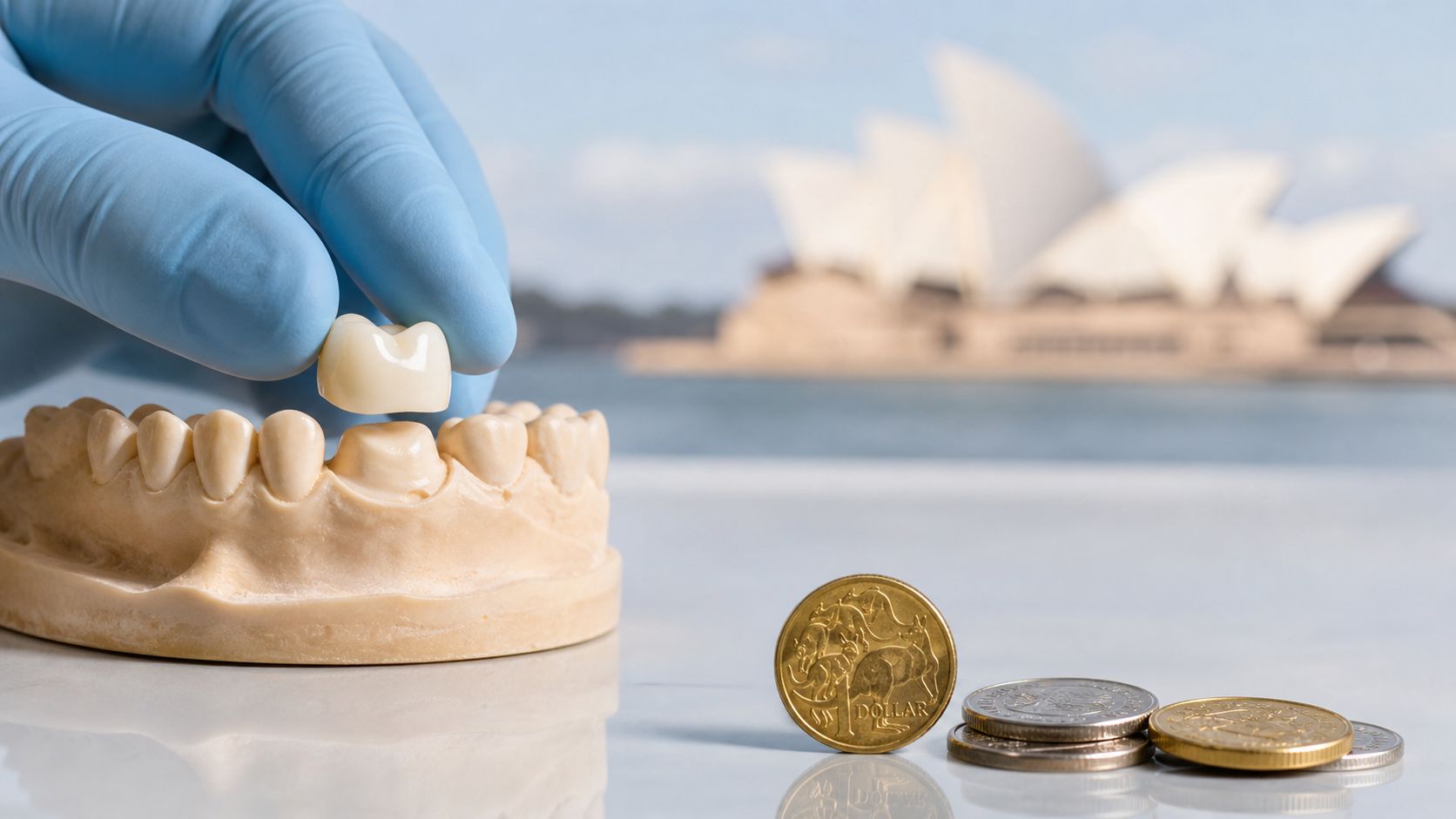
A single dental crown in Sydney in 2026 usually costs $1,500 to $2,800 per tooth. If the case is more complex or you choose a premium material, the fee can be higher, and if a clinic uses cheaper materials the price can sit closer to the low end.
If you're reading this after being told you need a crown, you're probably trying to answer two questions at once. First, what will it cost. Second, why do quotes vary so much from one Sydney clinic to another.
That confusion is common. A crown sounds like one item, but the final bill often reflects the condition of the tooth, the material chosen, the lab making the crown, and whether extra treatment is needed before the crown can even go on.
For patients in Dulwich Hill and across the Inner West, the useful question isn't only “What's the cheapest crown?” It's “What am I paying for, what will my health fund contribute, and what result am I likely to live with for years?” That's the part that makes dental crown cost in Sydney feel opaque.
Understanding Dental Crown Costs in Sydney
One doesn't typically begin by shopping for a crown. They come in because a tooth cracked, a large filling failed, or a dentist found a tooth that won't hold up well without full coverage.
That's when the numbers suddenly matter. A realistic guide for Sydney is that a standard dental crown in 2026 sits in the $1,500 to $2,800 range per tooth, while complicated cases at higher-end clinics may reach $3,500, and budget providers using the cheapest materials may come in near $1,000, according to this Sydney 2026 crown price guide.
The wide spread isn't random. Crowns aren't a commodity. Two teeth can both “need a crown” and still be very different jobs clinically.
Why one quote can differ from another
A quote often reflects more than the crown itself. It may reflect:
- The condition of the tooth. A heavily broken-down tooth takes more work than a tooth with a simple fracture.
- The material selected. Some options are chosen for aesthetics, others for strength.
- The workflow used. Digital scanning, lab processes, and precision finishing all affect cost.
- The level of planning. Bite assessment and long-term fit matter more than many patients realise.
Practical rule: If two quotes are far apart, ask what each one includes before comparing the price alone.
A good crown should protect the tooth, restore chewing function, and fit comfortably with your bite. If you want a straightforward explanation of how crowns and bridges restore damaged teeth, this overview of dental crowns and bridges is a helpful starting point.
Sydney Dental Crown Price Ranges by Material
Material choice is one of the biggest reasons dental crown cost in Sydney varies. Some materials are selected because they look more natural. Others are chosen because they handle heavy biting forces better.
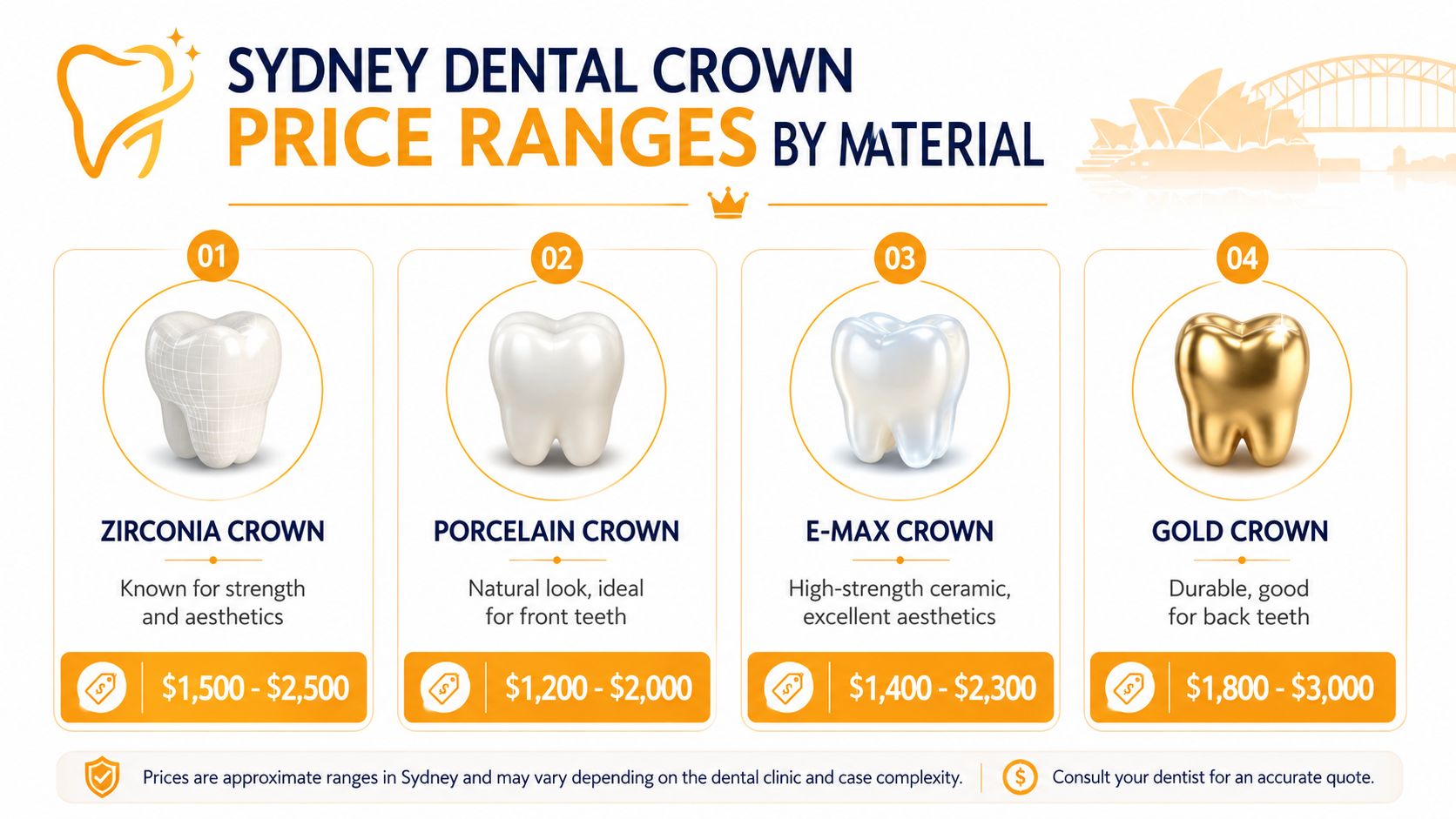
One Sydney pricing guide states that zirconia crowns cost $1,500 to $2,800, PFM crowns cost $1,000 to $2,000, and composite resin crowns cost $600 to $1,500 per tooth, as outlined in this Australian crown material cost breakdown.
Dental Crown Cost and Feature Comparison in Sydney 2026
| Material Type | Typical Sydney Cost Range | Best For | Key Benefit |
|---|---|---|---|
| Zirconia | $1,500 to $2,800 | Back teeth, heavy bite loads, patients wanting strength with good appearance | Strong and durable |
| Porcelain-fused-to-metal | $1,000 to $2,000 | Patients wanting a middle-ground option | Balance of strength and cost |
| Composite resin | $600 to $1,500 | Short-term or budget-conscious situations | Lower upfront cost |
| All-ceramic / porcelain | Higher end of the market qualitatively | Front teeth and cosmetic zones | Natural appearance |
| E.max | Often grouped with premium all-ceramic choices qualitatively | Visible teeth where aesthetics matter | Excellent translucency |
Zirconia and all-ceramic options
Zirconia is popular because it handles force well and still looks tooth-like. For molars and patients who clench or grind, it's often a practical discussion point because function matters as much as appearance.
All-ceramic crowns, including E.max-style restorations, are usually chosen when aesthetics take priority. They can produce a very natural finish, especially in the smile zone, but suitability depends on bite, tooth position, and the amount of remaining tooth structure.
PFM and composite resin options
PFM stands for porcelain-fused-to-metal. It's often a middle-ground choice. You get a crown with metal support underneath and porcelain on top, which can make it a sensible option in some back-tooth situations.
Composite resin crowns are usually the lower-cost option. The trade-off is that lower upfront cost often comes with lower durability and more maintenance over time.
The right material depends on where the tooth sits, how you bite, and how much of the natural tooth is left. The cheapest material isn't always the cheapest solution once repairs and replacement are considered.
What actually works in practice
Patients often assume front teeth should always get the most aesthetic material and back teeth should always get the strongest. Real treatment planning is more specific than that.
A heavily loaded premolar might need a more durable material than a patient expects. A visible front tooth might need a material chosen for shade matching and translucency rather than brute strength alone. That's why a meaningful crown quote starts with examination, not with a menu board.
What Your Quoted Crown Fee Typically Includes
One reason patients feel blindsided is that a crown quote may refer to the restoration itself, while the total treatment cost also includes assessment, imaging, preparation, provisional work, and fitting.
A broader Australian cost summary notes that associated crown expenses can include initial consultations of $100 to $250, X-rays of $50 to $200, and temporary crowns of $300 to $1,500, as explained in this Australian dental crown statistics overview.
The usual treatment sequence
A standard crown process commonly involves these stages:
Assessment and diagnosis
The dentist checks the tooth, the bite, surrounding gums, and whether the tooth is restorable.Imaging and records
X-rays are often needed to assess the root, bone support, and any decay or cracks below the surface.Tooth preparation
The damaged tooth is shaped so the final crown can fit precisely.Temporary crown or provisional phase
A temporary restoration protects the tooth while the final crown is being made.Final fit and cementation
The permanent crown is checked for fit, bite, contact points, and appearance before it's bonded or cemented.
What a transparent quote should make clear
A proper quote should tell you whether it includes only the final crown fee or also the related appointments and components. That matters because a crown is a treatment process, not just a finished object.
If a clinic uses digital workflows, the planning and design process may also affect the fee. Modern methods such as scanning and fabrication technologies have changed how restorations are produced, and articles on dental 3-D printing show how that broader digital shift is affecting restorative dentistry.
Ask one simple question before you agree to treatment: “What is included in this figure, and what could still be added later?”
That question won't eliminate every variable, but it will reduce unpleasant surprises.
Key Factors That Influence the Final Cost
Two crowns can look similar when they're done, yet one costs notably more because the clinical work behind it was more demanding.
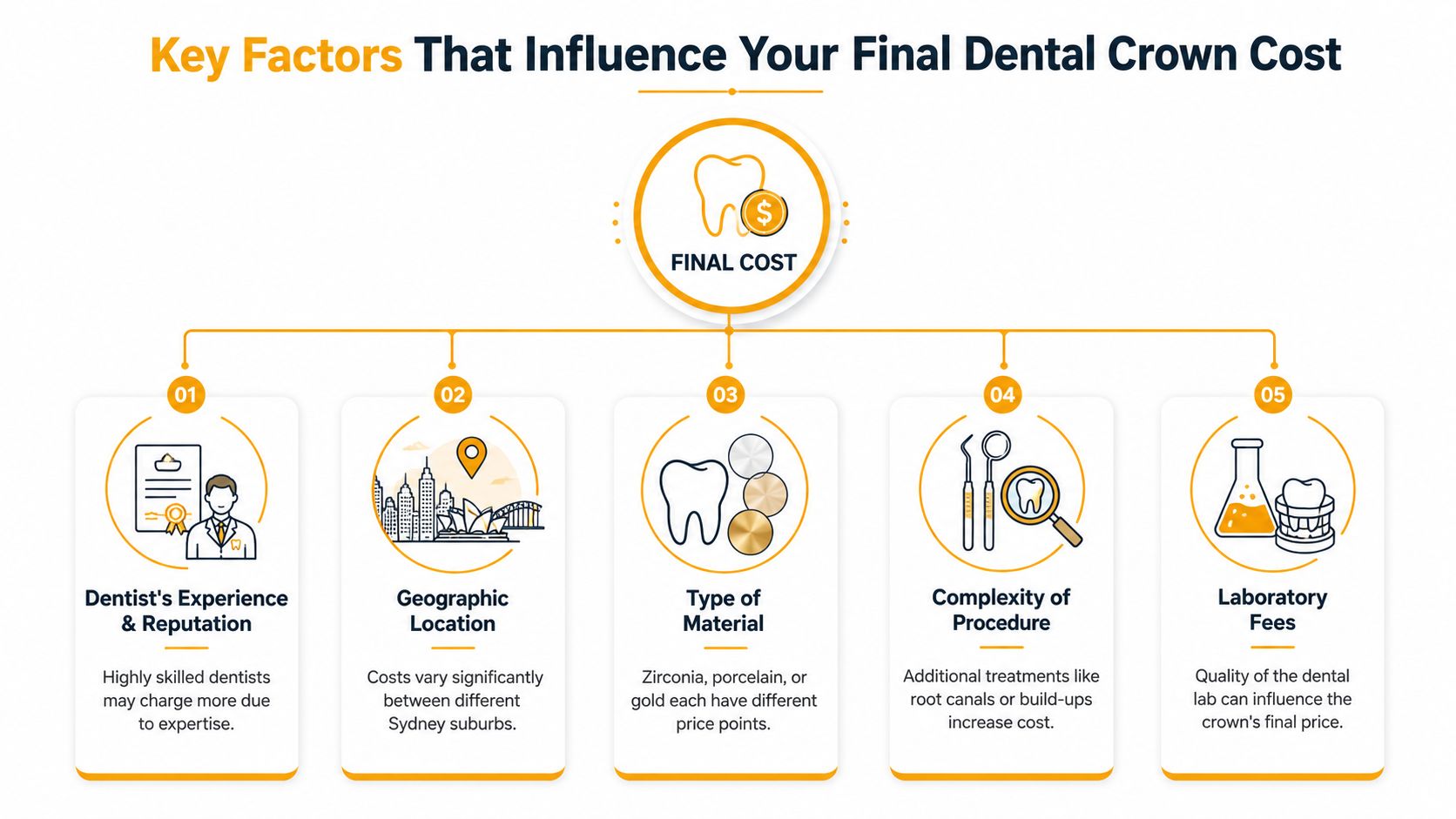
Sydney crown pricing varies based on the tooth's position, the need for preparatory procedures such as core build-ups or root canals, and the specific laboratory used for fabrication, according to this Sydney crown cost factors guide.
Tooth position changes the job
Front teeth and back teeth place different demands on a crown. Front teeth usually require more attention to appearance, shade, and translucency. Molars and premolars need to tolerate stronger biting forces.
That means the same material won't suit every tooth. It also means prep design and laboratory work can vary even when the patient only hears the word “crown”.
Preparatory treatment often explains the bigger bill
The crown itself may not be the most complicated part. Often, the key factor is whether the tooth is healthy and strong enough to support it.
Common examples include:
- Root canal treatment first. If the nerve is infected or the tooth is painful, the crown has to wait until the tooth is treated internally.
- Core build-up. When a tooth has lost a lot of structure, the dentist may need to rebuild the foundation before a crown can be retained properly.
- Crack management. Some cracked teeth need careful stabilisation and monitoring before final restoration.
These steps are not upsells when they're clinically necessary. They're what make the crown viable.
A crown placed on a weak foundation won't perform like a well-planned crown on a stable tooth.
Lab quality and workflow matter
Many patients don't think about the laboratory, but dentists do. The fit, margins, contacts, anatomy, and finish of a crown all depend partly on the quality of the lab work.
A cheaper crown can look attractive on price alone, but poor fit or poor bite design can create a new problem. Patients may notice food trapping, sensitivity, or discomfort when chewing. Those issues aren't always caused by the material. They can come from rushed planning or lower-quality fabrication.
A practical way to judge value
When you compare quotes, look at more than the bottom line.
Consider these points:
- How damaged is the tooth already
A simple case and a heavily broken-down tooth shouldn't cost the same. - What prep work is expected
If a build-up or endodontic treatment is likely, budget for a staged process. - Who is making the crown
Local lab quality and communication with the dentist can influence the end result. - How long you need it to last functionally
The more heavily a tooth is used, the less sensible it is to choose purely on upfront cost.
If you're also weighing durability and maintenance, this article on how long crowns last helps frame the longer-term value question.
Navigating Health Funds and Payment Options
For many patients, the hardest part of dental crown cost in Sydney isn't the sticker price. It's the uncertainty after private health insurance gets involved.
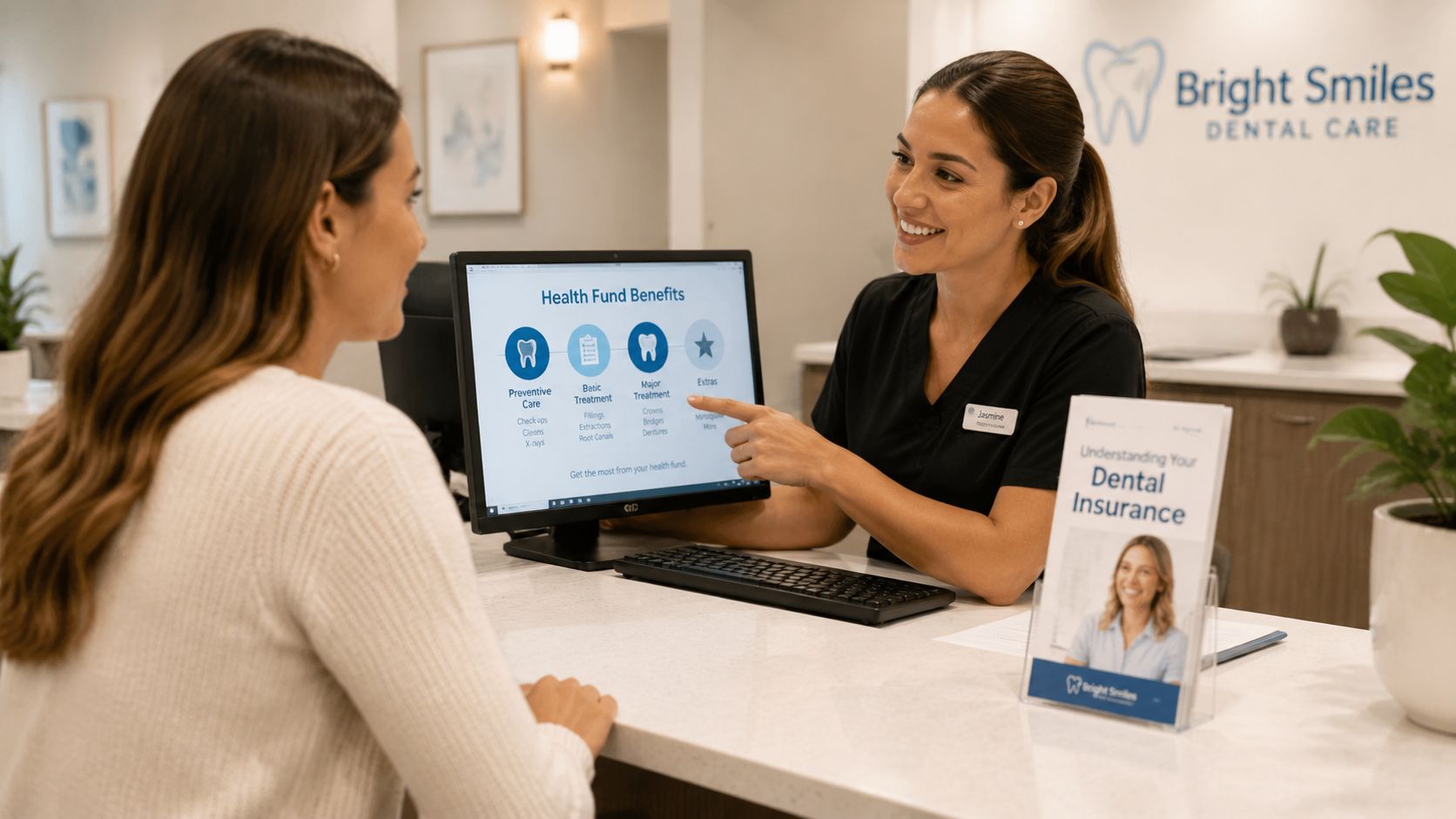
It's important to understand that “covered by health fund” rarely means fully paid for. Real-world patient reports in this Reddit discussion about what Australians paid for crowns show out-of-pocket costs from $1,900 to $3,500, with one user reporting $2,260 for a molar crown. That tells you how substantial and variable the gap fee can be.
What the gap fee actually means
The gap fee is the amount left for you to pay after your health fund rebate is applied. Patients often expect this to be small. For crowns, it often isn't.
Why? Because crowns are major dental treatments under many policies, and rebates can depend on:
- Your level of extras cover
- Annual limits
- Waiting periods
- Recognised item numbers
- Whether the treatment meets the fund's specific criteria
Some patients also hear “no-gap” and assume that applies broadly. In practice, no-gap arrangements for crowns are often limited and may not suit complex cases, premium materials, or heavily damaged teeth.
Why transparency matters more than promises
If a clinic advertises a no-gap crown, read the conditions carefully. Sometimes those offers apply only to straightforward cases or narrower material choices.
That doesn't automatically make them bad options. It just means you should check:
- Which crown material is included
- Whether the quote excludes build-ups or root canal treatment
- If a temporary crown is charged separately
- What happens if the case proves more complex at the preparation appointment
A clean, low headline price can stop being low once exclusions surface.
Worth asking at the front desk: “Can you give me the item numbers and an estimate of my likely gap before I commit?”
For a broader explanation of how private cover interacts with treatment fees, this article on dental health insurance in Australia is useful background reading.
Payment options can make timing easier
Even when insurance helps, many patients still need to budget for a meaningful out-of-pocket amount. That's why staged payment arrangements matter. A payment plan doesn't reduce the fee itself, but it can make treatment easier to start before a tooth breaks further or becomes painful.
This matters most with crowns because delay often narrows your options. A tooth that might have been restored with a crown can become a more complicated problem if it fractures deeper or develops infection.
How to Choose the Right Dentist in Sydney
Price matters, but a crown is one of those treatments where poor value can be expensive later. If the fit is off, the bite isn't balanced, or the underlying tooth wasn't managed properly, the “cheap” option can become the costly one.
What to look for beyond the quote
A better way to choose is to assess the practice on decision-quality, not just price.
Look for:
- Clear explanations. The dentist should tell you why a crown is recommended and whether there are realistic alternatives.
- Modern diagnostic tools. Digital scanning, imaging, and careful bite assessment improve planning.
- Experience with restorative cases. Crowns are technique-sensitive, especially when teeth are heavily restored or cracked.
- Comfort-focused care. For anxious patients, gentle techniques and options such as sedation can make treatment manageable.
- Thoughtful technology use. Practices using tools like Biolase laser dentistry may support more conservative, minimally invasive care in suitable situations.
A practice's online presence can also tell you how seriously it takes patient communication. If you're curious how healthcare clinics present information clearly and ethically online, Pait Digital's guide to medical SEO offers useful context on what trustworthy digital communication should look like.
Questions worth asking before you book
Don't be shy about asking direct questions such as:
- How do you decide which crown material suits my tooth
- Will I likely need any prep work before the crown
- Do you use a local lab or an offshore lab
- How do you handle patients who are nervous
- What is included in the quoted fee
Seeing how a clinic answers often tells you more than the answer itself.
For patients comparing affordability as well as quality, it also helps to review options from dentists offering payment plans near me.
A short video can also help you get a feel for how a practice communicates before you make contact.
Your Next Step to a Strong and Healthy Smile
A crown can be a straightforward investment or a frustrating surprise. The difference usually comes down to how clearly the case is assessed and explained.
The main things that shape dental crown cost in Sydney are the material chosen, the condition of the tooth before treatment starts, and the amount your health fund contributes. The gap fee is often where patients get caught off guard, especially when a quote looked simple at first.
A good decision balances cost with function, comfort, and long-term reliability. If a tooth needs a crown, delaying too long can make the job more complicated and reduce your options. That's why a personalised assessment matters more than a generic price range pulled from search results.
If you want certainty, ask for a written treatment plan, ask what is and isn't included, and ask for the likely health fund rebate before treatment begins. That gives you a clearer sense of the true out-of-pocket cost and whether the proposed crown represents good value for your situation.
If you'd like a personalised assessment and a transparent quote, book a consultation with The Smile Spot. The team in Dulwich Hill offers restorative care with clear fee discussions, online booking, and convenient late and Saturday appointments for Inner West patients who want to fix a damaged tooth without guesswork.