You know the moment. You take the first sip of coffee, breathe in cold morning air, or bite into something sweet, and a sharp zing shoots through a tooth. It's brief, but it makes you pause, and once it happens a few times, you start changing how you chew, sip, and brush. That pattern is common enough that sensitive teeth should be treated as a real symptom, not a nuisance to ignore, especially because dentin hypersensitivity is frequently linked with enamel wear, gum recession, and exposed dentin in adults (systematic review and epidemiologic review).
For many people, the confusing part is that the tooth can look fine. There's no swelling, no obvious chip, no dramatic emergency, just that flash of pain when cold air hits or a spoon touches the wrong spot. A good dentist for sensitive teeth starts by sorting out whether this is a simple exposed-root problem, a whitening-related flare, a cracked tooth, or something that needs deeper treatment.
When Coffee or Cold Air Hurts More Than It Should
A patient in Dulwich Hill sits down for breakfast, picks up a mug of tea, and gets that familiar jolt in one upper tooth. Outside, the air is brisk, and even breathing through the mouth feels uncomfortable. By lunchtime, they've started chewing on the other side and avoiding cold water without really meaning to.
That kind of pattern usually points to dentin hypersensitivity, not a “weak teeth” problem. The symptom is often short, sharp, and stimulus-linked, which is different from a deep toothache that lingers on its own. In clinical terms, sensitivity is common rather than rare, with a best estimate of 11.5% in one systematic review and an average prevalence of 33.5% across studies (PubMed review). Adult prevalence is often reported around 25% to 30%, and short-term adult prevalence commonly falls in the 10% to 30% range in epidemiologic review data (PubMed review).
What makes it worth taking seriously
The important shift is to treat the pain as a triage question. Some teeth only need a change in brushing technique and a desensitising toothpaste, while others need an exam because the pain is coming from decay, a cracked tooth, a leaking filling, or inflamed pulp. That's why a calm, structured assessment matters more than guesswork.
Practical rule: if a tooth keeps reacting to cold, sweet, hot, or biting, it deserves a proper dental look instead of repeated trial and error.
A family dentist isn't only trying to make the symptom stop. The job is to work out what the tooth is telling you, then choose the least invasive treatment that fits the cause.
Why a Healthy Tooth Can Still Feel Painful
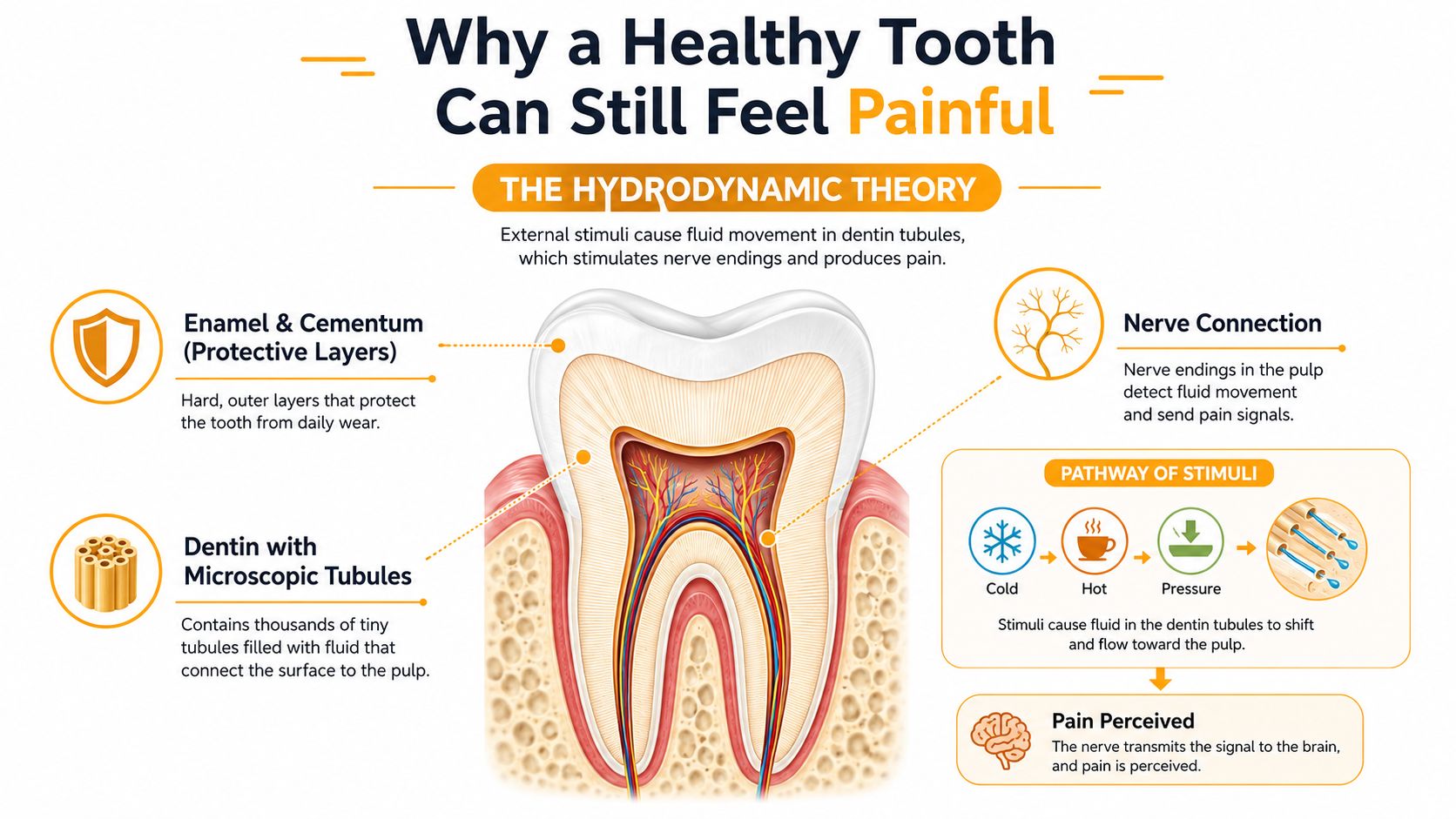
A tooth has a layered structure, with a protective shell on the outside and a sensitive core inside. Enamel on the crown and cementum on the root are the barriers that usually keep the inner layers calm. When those barriers wear away or the gumline recedes, the next layer, dentin, is exposed.
The plumbing-in-a-tooth idea
Dentin contains microscopic tubes called dentinal tubules. Those tubules connect the outer surface of dentin to the nerve area deeper inside the tooth, so a hot drink, a cold breeze, or a sweet snack can trigger the same sharp feeling. The fluid movement in those tubules activates the pain pathway. Dentists call this the hydrodynamic theory of sensitivity, and treatments aim to either block the tubules or calm the nerve response (Canadian Dental Association review).
That also explains why sensitive teeth do not always need dramatic treatment. If the problem is exposed tubules, then a desensitising toothpaste, fluoride varnish, or bonding agent makes sense because each one tries to reduce fluid movement or seal the surface. If the problem has moved deeper into the pulp, the same symptom can eventually call for root canal therapy, because the source is no longer just exposed dentin.
Sensitivity is not the same as toothache
Timing helps separate the two. Sensitivity usually comes on fast and fades fast, while a toothache often lingers, throbs, or wakes you up. That difference matters because it helps sort routine care from a tooth that needs urgent diagnosis.
A simple way to judge the symptom is to ask what happens after the trigger is gone. Does the pain stop quickly, or does it keep going? That answer often changes the treatment path completely.
For more on one of the common reasons the protective covering is lost, see the practical guide on gum recession causes.
Everyday Causes You Can Spot at Home
Sensitive teeth usually don't come from one dramatic event. More often, they come from a stack of small issues, and each one opens the door a little wider. A person can have mild gum recession, brush hard, sip acidic drinks, and only notice the problem when whitening or grinding pushes the tooth over the edge.
The common drivers
Aggressive brushing with a hard brush can wear enamel and irritate the gumline, especially if the bristles are frayed or the strokes are heavy. Over time, that can expose dentin and make cold drinks or brushing itself sting.
Gum recession exposes root surfaces that aren't covered by enamel. Once the root is visible, the tooth often reacts more quickly to cold and touch. This is a frequent reason patients start seeking conservative care rather than urgent treatment.
Acidic food and drink can erode enamel and leave the surface thinner and rougher. Acidic habits don't always hurt right away, which is why people are sometimes surprised when sensitivity arrives later.
Cracked teeth are different because the pain may be sharper on biting, especially if the crack opens and closes under pressure. The symptom can be localised, and it often feels less like general sensitivity and more like one stubborn tooth that keeps acting up.
Watch the pattern: if the pain is one-sided, localised, or clearly linked to biting, a simple toothpaste fix may not be enough.
Recent dental work can cause short-term sensitivity while the tooth settles, particularly after fillings, crowns, or cleaning around the gumline. If it eases, that's one thing. If it persists or worsens, it needs reassessment.
Post-whitening sensitivity often appears as temporary zings after bleaching, especially when the product opens tubules or the protocol is too aggressive for that person's enamel.
Leaky or failing restorations can let stimuli reach dentin around the edges of a filling or crown. That can feel like a cold spot, a biting ache, or sensitivity that keeps returning in the same tooth.
For people who grind or clench, the best next step is often a guard discussion rather than guesswork. A practical summary on night guard for grinding can help frame that conversation.
What a Dentist Does During a Sensitivity Assessment
A proper exam starts with questions, not treatment. The dentist will ask when the pain appears, what triggers it, whether it is cold, hot, sweet, or pressure, and how long it lasts after the trigger is gone. That history matters because two people can say “my tooth hurts” and need completely different care.
The exam usually checks the whole picture
The next step is a clinical exam. The dentist may use a cold test, air, and bite tests to isolate the tooth, then check the gums for recession and look for exposed root surfaces. X-rays help rule out decay, abscesses, bone loss, and problems under old restorations.
A clear visual exam can also make hidden problems easier to show and explain, especially when a tooth looks normal but still keeps reacting. You can see how that kind of photo-assisted review works in this article on intraoral camera dentistry.
Why the same symptom can mean very different things
A brief zing from cold usually suggests exposed dentin. Pain that lingers after the stimulus is gone can point to deeper inflammation in the pulp, and biting pain can point to cracks or failing restorations. That is why the assessment matters so much. Without it, people often keep trying the wrong toothpaste while the actual problem stays untouched.
The Adelaide practice sheet notes that dentine hypersensitivity represented 9.1% of the weekly patient load of private dental practitioners in Australia, with an average of 2.3 teeth per person and 1.2 affected surfaces per tooth. It also advises avoiding vigorous brushing, hard-bristled brushes, and frequent acidic foods or drinks, and waiting at least 30 minutes after an acidic challenge before brushing. Those points are practical because sensitivity is often a triage question. The job is to sort a surface problem from a deeper one, then choose the next step in order.
A short appointment can prevent a long treatment path, especially when the tooth is trying to say the problem is more than surface sensitivity.
Evidence-Based Treatments From Toothpaste to Root Canal
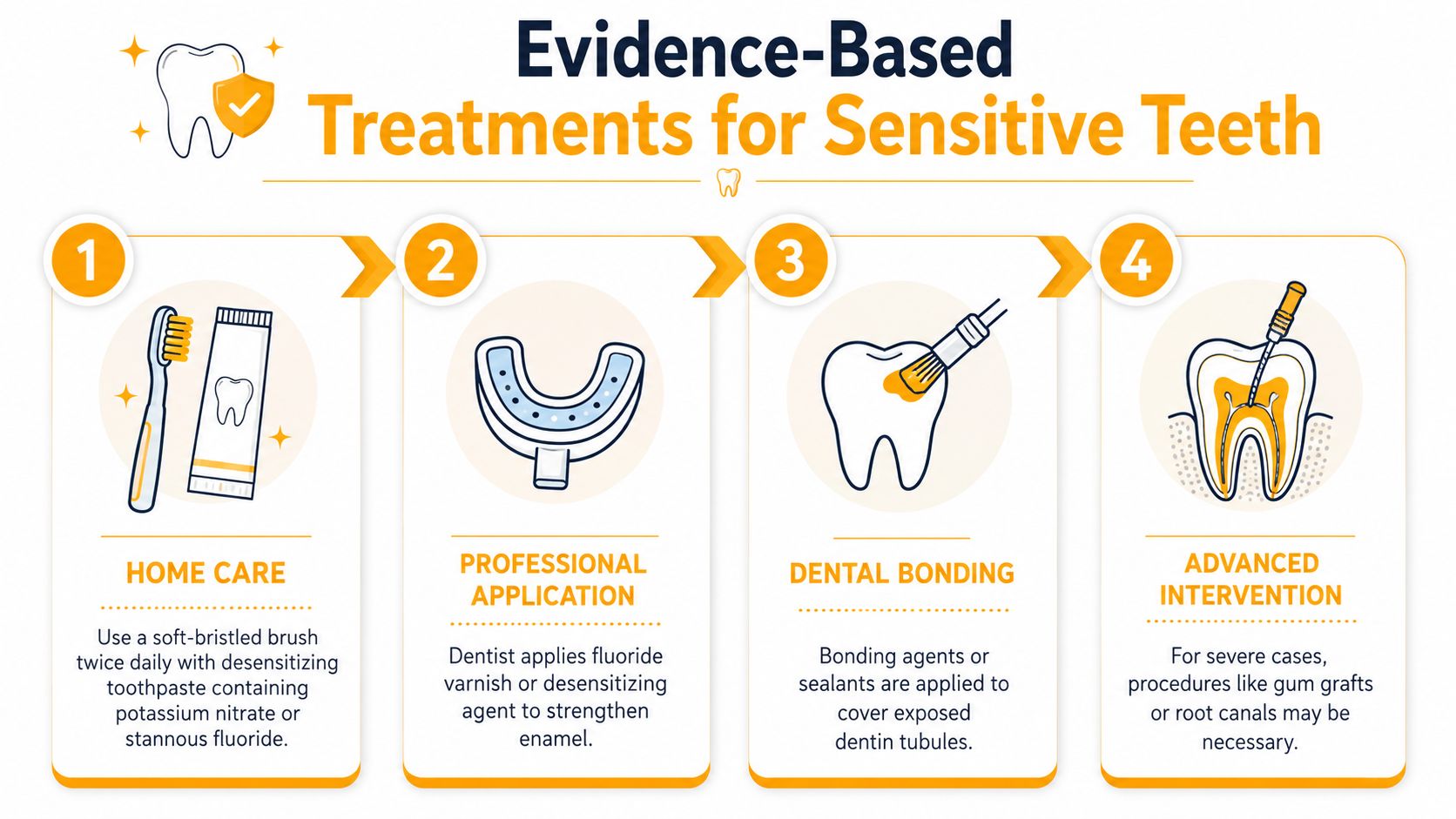
A sensitive tooth is usually handled in stages. If the pain is mild and tied to cold, brushing, or sweet foods, home care is the first step. If the same tooth keeps flaring up, a dentist may need to seal exposed areas or apply a desensitising agent. If the pain is coming from the pulp, a crack, or a deep infection, the answer can be gum treatment or root canal therapy.
Home care that actually fits the evidence
The first step is twice-daily brushing with a desensitising toothpaste. Used properly, it can reduce discomfort by helping block the tubules in exposed dentin, which is the pathway that lets temperature and touch reach the nerve. A soft-bristled brush and fluoride toothpaste with at least 1450 ppm fluoride are also commonly recommended in Australian guidance, because rough brushing can keep the area irritated while the tooth is trying to settle.
The detail that many people miss is timing. If you have just had something acidic, it is better to wait before brushing, because brushing too soon can drag acid across the surface and make sensitivity worse. The same guidance recommends reassessment after 2 to 4 weeks if the pain is still there, because that is long enough to see whether home care is helping or whether the tooth needs a closer look.
Desensitising products work in two main ways. Some occlude dentinal tubules, including stannous fluoride, arginine, calcium sodium phosphosilicate, and strontium salts. Others reduce nerve conduction and blunt the pain response. In practice, that is why one toothpaste may work for one person and do little for another.
In-chair options when home care isn't enough
If the tooth keeps reacting, the next step is often something the dentist can do in the chair. A fluoride varnish, APF gel, or another desensitising agent can calm the exposed surface and give it a chance to settle. Bonding materials, resin sealers, glass ionomer, or composite can cover exposed root areas and act like a protective cap over the sensitive spot.
Some cases need more than a surface coating. Laser-based treatment, including Biolase laser dentistry, may be used to help seal tubules and reduce sensitivity when the problem does not respond well to home care alone. The point is not to chase every symptom with a different product, but to match the treatment to the layer of tooth that is causing the pain.
When gum treatment or root canal enters the picture
If gum recession is the main cause, gum surgery such as a connective tissue graft or a coronally advanced flap can cover the root and reduce exposure. That approach is different from treating the tooth surface, because the aim is to protect the root by moving gum tissue back where it belongs.
If the pain is longer-lasting, throbbing, or tied to a crack that has reached the nerve, the problem may no longer be simple sensitivity. At that point, root canal therapy can be the right treatment because it addresses the source inside the tooth instead of trying to quiet the surface. For a quick check on those warning patterns, see root canal warning signs.
Sensitivity also matters when whitening is part of the plan. A practical guide to how to choose bleaching gel can help patients understand why lower-intensity whitening plans are often easier to tolerate, especially when the teeth already react easily.
Whitening, Veneers, and the Sensitive-Tooth Trade-Off
Sensitivity doesn't always mean cosmetic treatment is off the table. In many cases, it means the protocol needs adjusting so the teeth can tolerate the procedure without paying for it afterwards. That's especially true for whitening, where peroxide can temporarily increase sensitivity by making dentinal tubules more reactive.
Whitening without guessing
People often hear that whitening causes zings and assume that means they should avoid it. A more useful way to think about it is that whitening is a risk-management issue, not an automatic no. Pre-treatment desensitising toothpaste, lower-peroxide regimens, shorter cycles, or clinician-supervised treatment can often keep the result and reduce the discomfort.
The same logic applies after the fact. If a bleaching plan leaves teeth too reactive, the answer is often to modify the protocol rather than abandon the goal. That's especially helpful for adults who want a brighter smile but also know their teeth have a history of sensitivity.
Veneers and other cosmetic options
Veneer preparation can expose dentin briefly, which is why bonding cement and desensitising gel matter after preparation. A clinician can plan around that exposure so the tooth is protected while the cosmetic work settles.
The Smile Spot's veneer options include Zirkonzahn Skin, E.max, and composite, which shows how cosmetic planning can be tied to the tooth's sensitivity profile instead of being treated as a separate problem. For a patient comparing cosmetic pathways, that's often a more practical way to think than asking whether whitening or veneers are “bad” for sensitive teeth.
If you're trying to understand the whitening side more, the clinic's article on teeth bleaching for sensitive teeth is a useful companion read.
Red Flags and the Questions Worth Asking Your Dentist
Some sensitivity is routine. Some isn't. Spontaneous pain, swelling, a bad taste, a loose restoration, or pain after trauma should move you out of self-care mode and into an appointment.
When to book urgently
Pain that lasts more than 30 seconds after a cold stimulus is a warning sign, especially if it's getting worse instead of easing. Pain on biting that doesn't settle, swelling, or a bad taste can mean the tooth is dealing with infection or a crack, not just surface sensitivity. Cleveland Clinic's patient guidance also treats sensitivity as something worth assessing when it's persistent or tied to other symptoms (Cleveland Clinic symptom page).
Questions to bring to the appointment
Bring these to the chair if you want a clearer answer:
- What is causing my sensitivity?
- Is this exposed dentin, recession, decay, a crack, or a failing restoration?
- Which tooth or teeth are affected?
- Do I need home treatment first, or should we treat it here today?
- What toothpaste, brush, or rinse should I use?
- How long should I try the home protocol before we reassess?
- What in-office treatment fits my case, fluoride, bonding, varnish, laser, or something else?
- Could whitening or grinding be making it worse?
- Do I need X-rays or bite tests before we decide?
- What would make root canal therapy the right option?
That checklist turns a vague complaint into a useful conversation. It also helps the dentist explain why one tooth needs a simple seal and another needs something more involved.
If the pain is one-sided, worsening, or wakes you up, don't wait for it to “settle down on its own.”
How The Smile Spot in Dulwich Hill Can Help
For families in the Inner West, a dentist for sensitive teeth needs to do more than hand over a tube of paste. The Smile Spot in Dulwich Hill handles sensitive-teeth care with a full exam, X-rays, hygiene care, desensitising and fluoride treatments, Biolase laser dentistry, bonding and restorations, gum treatment, and root canal therapy when the diagnosis calls for it. The practice also offers cosmetic options, so a patient with both sensitivity and aesthetic goals can be assessed in one place instead of piecing care together across multiple clinics.
The clinical setup matters, but so does the way people are treated. Gentle techniques and sedation availability help anxious patients stay calm through the exam and treatment. The clinic also keeps the process practical with late evening and Saturday hours, online booking, and transparent fees, including a $240 care package that covers exam, X-rays, scale, and fluoride, plus a reduced child rate.
Dr. Dimitrios Thanos, a University of Sydney graduate and principal dentist since 1996, leads the practice, which gives local patients a single point of contact for routine, restorative, and cosmetic care. That continuity is helpful when a tooth needs reassessment after home care, because the same team can compare findings and decide whether to escalate.
Household and cosmetic routines can affect sensitivity, so it also helps to think carefully about product choices and aftercare. For patients comparing practical oral-care products, a resource like House of Glam can be useful in a broader self-care routine, but the dental diagnosis still belongs in the chair.
If you live in Dulwich Hill, Marrickville, Earlwood, Ashfield, Summer Hill, Lewisham, Petersham, or Hurlstone Park, book a sensitive-teeth assessment and get the cause checked before it turns into a bigger restorative problem.
If your teeth keep flaring with cold, sweet, brushing, or biting, book an appointment with The Smile Spot and get a proper assessment instead of guessing at the cause. The team can check for exposed dentin, recession, cracks, failing restorations, and nerve-related pain, then guide you to the right level of care.