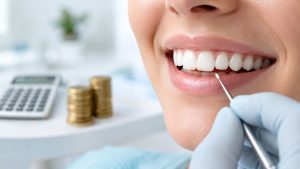
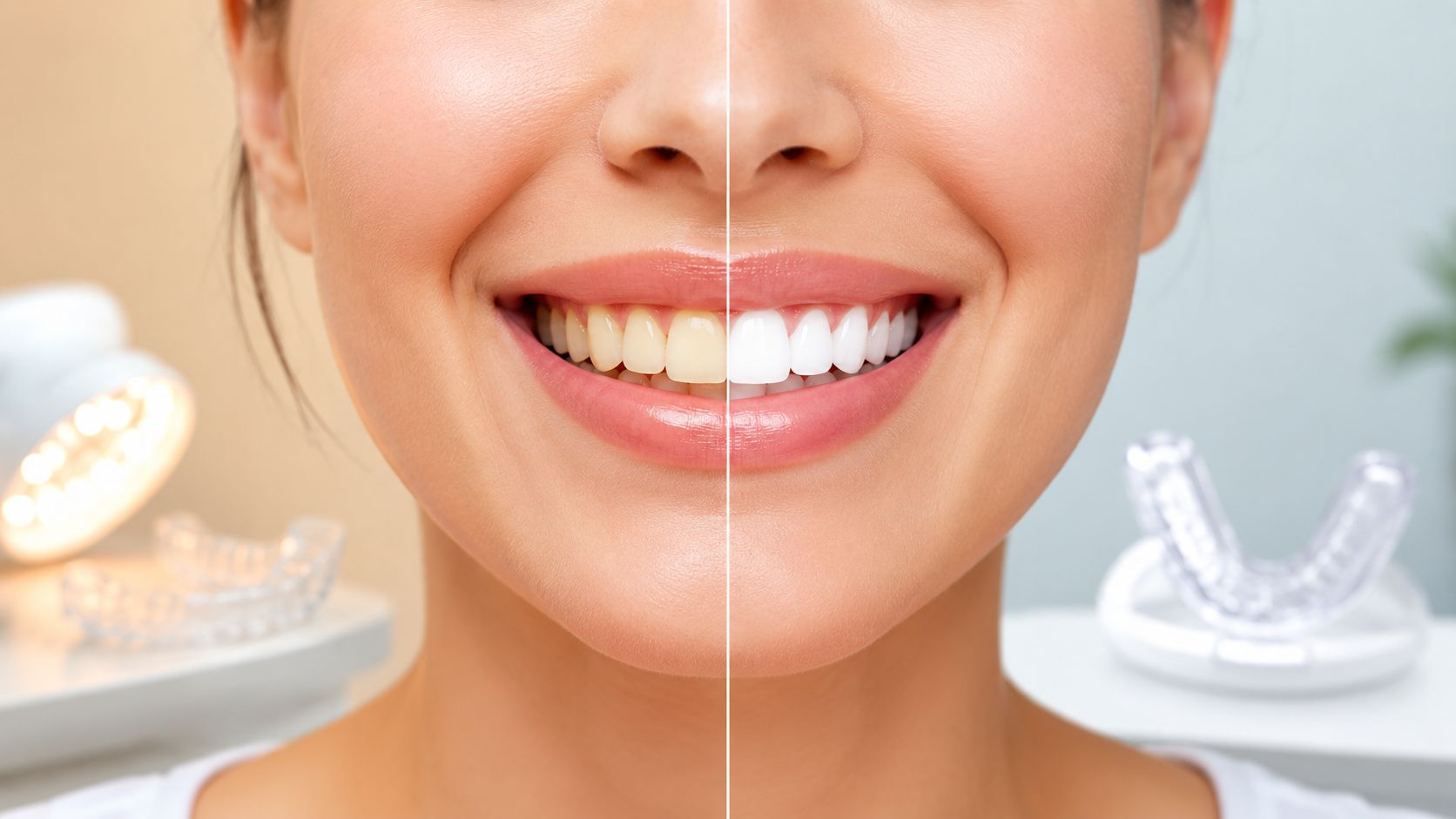
What can professional teeth whitening achieve when the photos look dramatic but the fine print is missing? Most teeth whitening before and after galleries show a brighter smile, but they rarely explain whether the images are comparable, whether restorations were present, or how long the result is likely to last. That gap matters, because warm versus cool lighting can change how white teeth appear, and trustworthy comparisons should use near-identical shooting conditions and shade guides rather than a photo alone as the photo-analysis guidance notes.
A good whitening result is more than a lighter shade. It should also make sense clinically, with the right candidate, the right method, and a realistic maintenance plan. Whitening is not permanent, temporary sensitivity and mild gingival irritation are common, and touch-ups may be needed because results can fade within weeks to months depending on diet and habits as dental guidance explains. The best galleries show that reality instead of hiding it.
1. Teeth Whitening Dulwich Hill
This is the kind of whitening service that makes sense for families who want clinical care, not just a flashy photo. The Smile Spot in Dulwich Hill offers professional whitening in a long-established family practice led by Dr. Dimitrios Thanos, a University of Sydney graduate and principal dentist since 1996. That kind of continuity matters when you're judging teeth whitening before and after results, because the outcome depends on assessment, tooth condition, and whether any restorations will remain unchanged.
Why this practice stands out
The practical appeal is simple. The clinic offers late evening and Saturday appointments, online booking, and acceptance of most private health funds, so whitening doesn't have to be squeezed into an inconvenient slot. For anxious patients, the combination of gentle techniques and sedation availability adds another layer of comfort, which is often overlooked in cosmetic dentistry pages that focus only on the reveal.
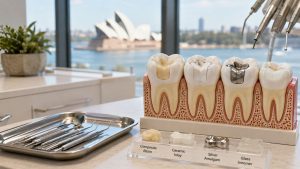
Clinical rule: if crowns, bridges, veneers, or fillings are part of the smile, whitening won't change their colour the way natural enamel can.
That boundary is important here, because a professional exam helps confirm whether the visible colour change will look even across the whole smile. The Smile Spot's approach is personalized and transparent, which is exactly what patients need before expecting a shade jump from a single session or a home kit. The clinic's own guidance on how much teeth whitening costs is a useful starting point, but the page itself also makes it clear that the right plan depends on the mouth in front of the dentist.
Best fit and limitations
This option suits patients who want a personalised plan and honest advice about suitability. It's also a strong fit for people who want the practical side explained before they commit. The limitation is that the specific service page doesn't provide a step-by-step breakdown or fixed pricing, so an initial exam is still the right way to confirm timelines, sensitivity risk, and whether existing restorations will affect the final look.
2. Philips Zoom official AU
Philips Zoom is one of the clearest examples of how professional whitening is marketed with both speed and structure. The Australian site presents in-chair WhiteSpeed light-activated treatment alongside dentist-supervised take-home kits, which gives patients two very different ways to reach a brighter result. That matters for teeth whitening before and after decisions, because some people want a fast reveal for an event, while others want slower change with more control.
In-chair versus take-home
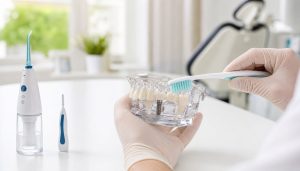
The in-chair WhiteSpeed format is built for patients who want a quick cosmetic shift under professional supervision. The take-home route is better suited to gradual brightening and ongoing maintenance, especially when the initial treatment has already done the heavy lifting. Used well, those two paths aren't rivals, they're complementary.
The best whitening plan is the one that matches the patient's staining pattern, tolerance for sensitivity, and willingness to maintain the result.
Philips Zoom also matters because it gives people a recognised benchmark for how much visible change they can expect from a dentist-managed system. The trade-off is straightforward. Results are predictable under supervision, but temporary sensitivity can still happen, and pricing varies by clinic because the product isn't sold directly to consumers. The clinic conversation, not the brochure, decides the final plan.
What the gallery teaches
The gallery on the official site helps patients see that whitening isn't just about “white” versus “not white”. It's about shade transition, degree of contrast, and how natural the final smile looks against the face. For patients comparing systems, that's more useful than an overfiltered image. For a deeper clinical overview, the related professional teeth whitening guide is a practical next read.
3. SDI Pola Whitening Australian manufacturer
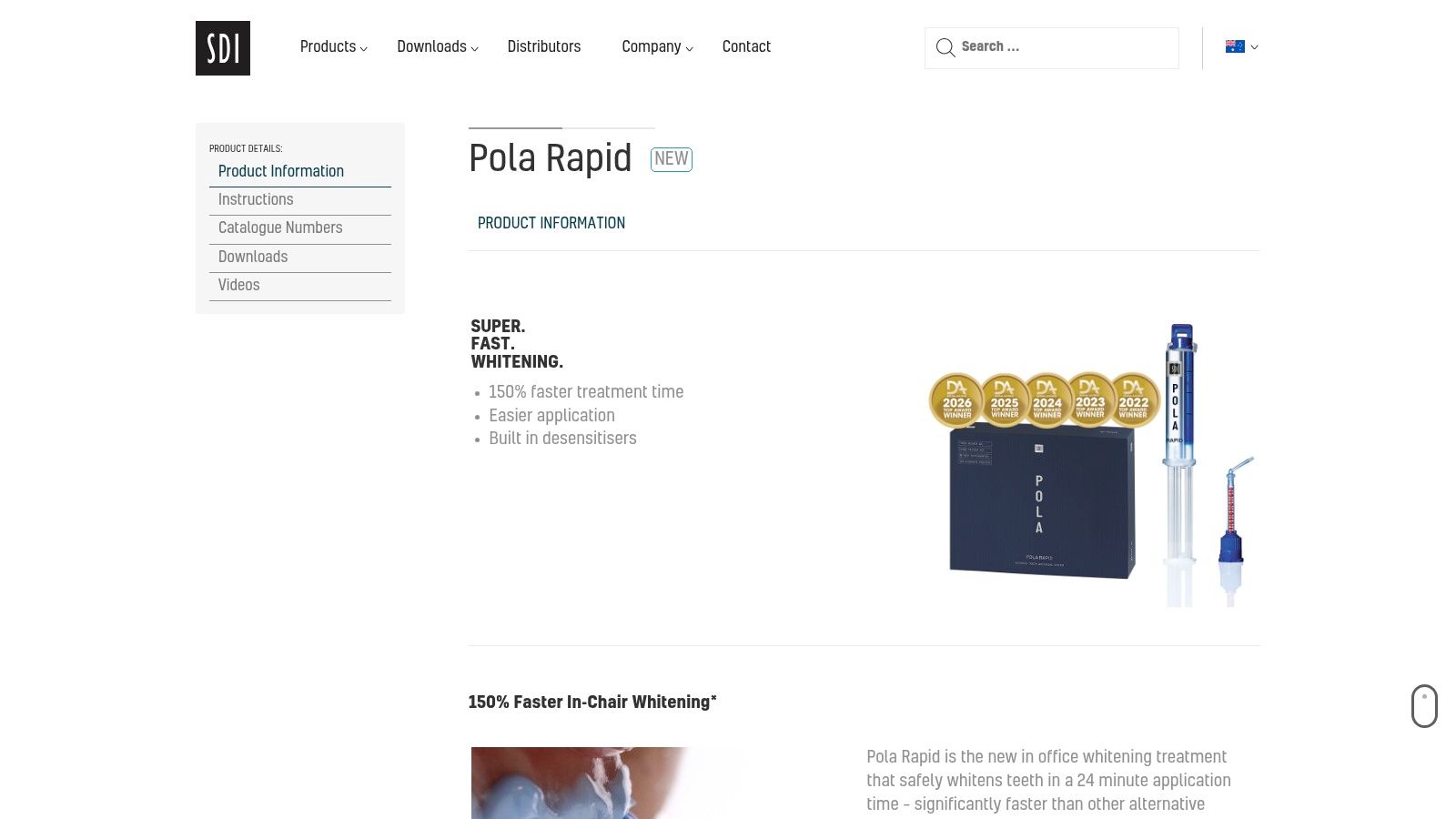
SDI's Pola range is useful because it shows how one manufacturer can support multiple clinical pathways without forcing every patient into the same protocol. The line includes in-surgery Pola Rapid plus dentist-dispensed at-home systems such as Pola Day, Pola Night, and Pola Light. For teeth whitening before and after comparisons, that variety matters because different staining patterns and sensitivities need different approaches.
Comfort and control
The neutral pH gels are designed to improve comfort, which is especially relevant for people who worry about sensitivity. Multiple concentrations and formats let the dentist tailor treatment rather than guessing with a one-size-fits-all approach. In practical terms, that makes the whitening conversation less about a single product and more about a controlled clinical process.
The strength of this brand is its professional flexibility. In-chair whitening suits patients who want rapid change under supervision. Tray-based take-home systems suit patients who are happy to build colour gradually and reinforce their results over time.
Where the trade-offs sit
The downside is that stronger gels must be supplied and used by registered dental practitioners, so this is not a consumer retail solution. Results also depend on compliance, which is a polite way of saying that home whitening only works if the patient follows the tray instructions properly and wears them for the recommended period. The clinic still sets the standard, but the patient determines how closely that standard is followed.
For sensitive patients, the teeth bleaching for sensitive teeth discussion is worth reading because it aligns with the same core point. Whitening can be effective without being aggressive, but comfort and consistency have to be planned from the start.
4. Smile Concepts Sydney CBD
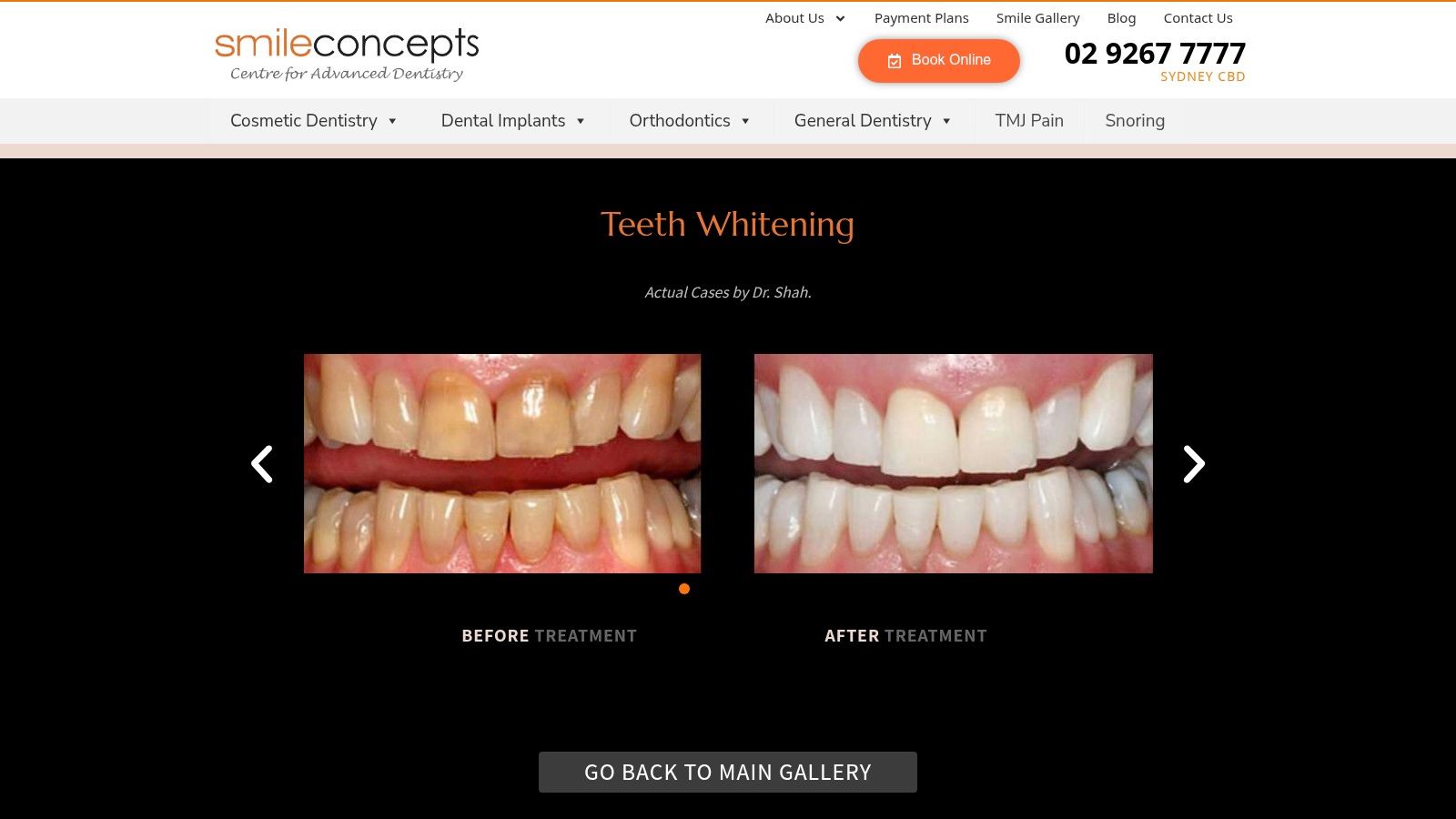
Smile Concepts is valuable because it treats the gallery itself as part of the consultation. Their dedicated whitening before-and-after page gives real patient visuals, which helps readers judge how much of the transformation came from whitening alone and how much from the overall smile design. That distinction is central to any honest teeth whitening before and after review, because cosmetic dentistry often works best as a sequence, not a single treatment.
Gallery first, treatment second
The clinic offers dentist-supervised in-chair and take-home whitening, with the brand chosen according to the case. That flexibility is useful if the goal is subtle brightening before other cosmetic work, or a stronger change before aligners, veneers, or other restorative planning. Seeing whitening in the context of broader cosmetic dentistry also helps patients understand why a result may look more balanced than “whiter”.
The main strength here is transparency. A clinic-owned portfolio is often more informative than a polished stock image because it shows real outcomes in a real practice setting. The main limitation is that pricing isn't listed on the gallery page, so the consultation remains essential.
A strong before-and-after gallery should tell you what changed, what stayed the same, and what still needed restoration.
That's where Smile Concepts is useful for comparison shopping. The Sydney CBD location also means it can be busy at peak times, so patients who want a quick appointment may need to plan ahead. For readers comparing clinic types, the teeth whitening clinics guide adds a helpful local perspective on what to ask before booking.
5. Edward St Dental Brisbane CBD dentistry
Edward St Dental gives one of the clearest examples of whitening as part of a staged cosmetic workflow. Their smile gallery includes dedicated whitening cases and combined whitening-plus-restorative examples, which is especially helpful for patients whose teeth need more than a colour change. In real life, the best teeth whitening before and after result often comes from whitening first, then matching restorations to the new shade.
Sequencing matters
That sequence is not cosmetic trivia, it's planning. If whitening happens after a crown, veneer, or other restoration is placed, the natural tooth may brighten while the restoration stays the same. That can create a mismatch instead of a harmonious smile. The gallery shows why many dentists prefer to bleach first and then finish the smile design.
The other strength is documentation. Multiple cases with captions and slider images help patients see the difference between a whitening-only result and a combined treatment outcome. That makes the gallery useful not just for inspiration, but for expectation-setting.
The limitation is also important. Some cases include restorative work, so patients looking only for whitening should read the captions closely. A combined case can look impressive without telling you how much of the visible change came from the whitening stage alone.
For patients comparing services, that detail is exactly what separates a genuine clinical gallery from a marketing page. The teeth bleaching services overview is a good companion read if you want to understand where whitening sits among other cosmetic options.
6. Gorgeous Smiles Melbourne CBD
Gorgeous Smiles keeps its whitening content easy to scan, which is exactly what many patients want before committing to a consultation. Their dedicated before-and-after page focuses on real cases and explains both Philips Zoom and dentist-supervised at-home kits. That combination makes the page useful for comparing speed, convenience, and expected visual change in one place.
Fast treatment or gradual change
Philips Zoom in-chair whitening suits patients who want a more immediate cosmetic shift, while the take-home kits suit those who prefer controlled, gradual whitening. The practical difference is not just timing, it's also how the result is maintained. Many patients use take-home trays as a follow-up to in-chair treatment, especially if they want to preserve brightness without repeating a full appointment each time.
The gallery is particularly helpful because it shows that whitening results are not all identical. Some smiles need a subtle lift, others need a more noticeable change, and the treatment choice should match that starting point. That is better than assuming every patient should pursue the brightest possible shade.
The main drawback is that costs are discussed generally rather than as fixed online fees, so a consultation is still the best way to confirm the plan. The CBD location may also limit short-notice availability, which matters for anyone booking around work or travel.
For people comparing cosmetic pathways, the lesson is consistent. A good whitening gallery should help you visualise the result, but it should also tell you what kind of patient benefited from that result.
7. The Dentist at 70 Pitt Street Sydney CBD
The Dentist at 70 Pitt Street stands out because its gallery and service page don't stop at the reveal. The whitening content includes real patient photos, Philips Zoom protocol details, sensitivity considerations, and post-treatment support such as Tooth Mousse. That makes it one of the more clinically complete teeth whitening before and after presentations in the Sydney CBD.
Sensitivity and maintenance are part of the story
That maintenance angle matters. Whitening can produce a very pleasing short-term result, but the aftercare determines how well the colour holds up once normal eating and drinking resume. A clinic that discusses sensitivity management openly is doing patients a favour, because it sets expectations before they sit in the chair.
The gallery is also useful because it reflects the dental workflow. Whitening is not treated as a standalone beauty service, it's part of a broader cosmetic offering where aftercare and comfort are built in. For patients who have experienced sensitivity before, that extra attention can be the difference between avoiding whitening and feeling comfortable enough to do it again later.
The limitation is still the same as with many cosmetic pages, pricing isn't posted, so the consultation is where the treatment plan is finalised. That said, the practical detail on sensitivity is a strong sign that the clinic understands how people experience whitening, not just how it photographs.
For readers comparing providers, that's a smart filter. Choose the practice that talks about the result and the recovery, not just the smile photo.
Before & After: 7 Teeth Whitening Providers
| Service / Provider | Implementation Complexity (🔄) | Resource Requirements (⚡) | Expected Outcomes (⭐ 📊) | Ideal Use Cases (💡) | Key Advantages |
|---|---|---|---|---|---|
| Teeth Whitening, Dulwich Hill (The Smile Spot) | 🔄🔄 Medium, in‑practice protocols, exam often required | ⚡ Moderate, clinic equipment, clinician time, sedation option | ⭐⭐⭐⭐ · 📊 Tailored, predictable improvements; sensitivity possible; restorations unaffected | 💡 Busy families, anxious patients, those wanting personalised clinic care | Experienced long‑running practice, patient‑centred, convenient hours |
| Philips Zoom (official AU) | 🔄🔄🔄 Variable, in‑chair light‑activated or take‑home workflows | ⚡ Moderate, specialised in‑chair system or supervised kits via dentists | ⭐⭐⭐⭐ · 📊 Consistent shade gains with clinical guidance; sensitivity risk exists | 💡 Fast in‑chair whitening or dentist‑supervised maintenance | Wide availability, choice of fast vs gradual protocols |
| SDI Pola Whitening (Australian) | 🔄🔄 Medium, multiple product formats and professional protocols | ⚡ Moderate, gels, trays/LED; higher strengths require practitioner | ⭐⭐⭐⭐ · 📊 Good results with emphasis on comfort (neutral pH) | 💡 Patients prone to sensitivity; clinics needing flexible options | Local brand, range of concentrations, comfort‑focused gels |
| Smile Concepts (Sydney CBD) | 🔄🔄 Medium, clinic‑based whitening integrated into cosmetic plans | ⚡ Moderate, clinic resources plus cosmetic dentistry capability | ⭐⭐⭐⭐ · 📊 Transparent real‑case results; integration with smile makeovers | 💡 Patients wanting to visualise outcomes or combine treatments | Dedicated before/after gallery, easy to compare cases |
| Edward St Dental (Brisbane CBD) | 🔄🔄 Medium, staged workflows (whiten then match restorations) | ⚡ Moderate, photographic documentation and restorative coordination | ⭐⭐⭐⭐ · 📊 Clear photographic outcomes; useful for restoration planning | 💡 Those planning restorations (veneers/crowns) after whitening | Demonstrates treatment sequencing and colour‑matching context |
| Gorgeous Smiles (Melbourne CBD) | 🔄🔄 Medium, offers in‑chair Zoom and dentist‑supervised kits | ⚡ Moderate, clinic delivery, educational resources | ⭐⭐⭐⭐ · 📊 Gallery sets realistic expectations; explains option differences | 💡 Patients comparing in‑chair vs take‑home approaches | User‑friendly gallery and explanatory content |
| The Dentist at 70 Pitt Street (Sydney CBD) | 🔄🔄 Medium, Zoom protocol with focused after‑care | ⚡ Moderate, in‑chair system plus sensitivity management products | ⭐⭐⭐⭐ · 📊 Good visual results with emphasis on sensitivity control | 💡 Patients concerned about post‑whitening sensitivity and maintenance | Detailed clinical notes, strong after‑care (e.g., Tooth Mousse) |
Ready for Your Own Smile Transformation?
As these before-and-after examples show, professional teeth whitening can deliver safe, predictable, and impressive results when it's planned properly. The strongest galleries don't just show a brighter smile, they explain candidacy, treatment method, maintenance, and the limits of whitening when restorations are present. That's the standard to look for, whether you're comparing in-chair systems, take-home trays, or a clinic's own portfolio.
The evidence also keeps expectations grounded. Whitening is not permanent, touch-ups may be needed, and temporary sensitivity or gum irritation can happen. A well-run consultation should cover all of that before treatment starts, along with whether your teeth are suitable and whether existing crowns, bridges, veneers, or fillings will affect the final look as the ADA notes. The best outcome is a smile that looks brighter and still looks like you.
At The Smile Spot in Dulwich Hill, that personalised process is the point. Dr. Dimitrios Thanos and the team focus on careful assessment, clear advice, and treatment options that fit real family life, including late appointments and support for anxious patients. If you're ready to explore teeth whitening before and after results that are clinically planned, not just filtered, visit The Smile Spot and book a consultation with a team that will guide you from first exam to final shade.
The Smile Spot offers professional in-chair and take-home whitening for patients who want a brighter smile with a plan that suits their teeth, not a generic template. If you're comparing teeth whitening before and after results and want honest advice about suitability, restorations, and maintenance, their Dulwich Hill team can help. Visit The Smile Spot to book your consultation and take the next step with confidence.