It usually starts at the worst possible time. You bite down and feel a sharp crack. A dull toothache turns into throbbing pain after dinner. A child comes in from sport holding a tooth in their hand. In those first few minutes, you aren't thinking clearly. You want the pain to stop, you want to know if it's serious, and you want to avoid making it worse.
That's where a calm plan helps. The right first steps can reduce pain, protect the tooth, and give your dentist a much better chance of fixing the problem cleanly. If you're looking for an emergency dentist in Sydney, it helps to know what to do before you even make the call.
What to Do When a Dental Emergency Strikes
A dental emergency rarely feels organised. One minute things are normal. The next, you're standing in the bathroom rinsing your mouth, checking for blood, and wondering whether this can wait until morning.
The most useful response is a simple one. Slow down, check the problem, and protect the area. Panic leads people to do things that make treatment harder, such as poking at the tooth, taking repeated doses of pain relief, or putting heat on a swollen face.

Start with three quick checks
Before anything else, work through these questions:
- Is there bleeding that won't stop? Apply gentle pressure with clean gauze or cloth.
- Has a tooth been knocked out or broken? Save any pieces and handle them carefully.
- Is there swelling, especially in the face or jaw? Swelling can signal infection or deeper trauma.
If the problem involves significant swelling, a knocked-out adult tooth, severe pain, or ongoing bleeding, treat it as urgent and contact a dentist straight away. What works best in real life is fast triage, not waiting to “see how it feels later”.
Practical rule: If the problem is getting worse by the hour, don't wait for convenience. Get advice that day.
What helps in the first few minutes
Simple first aid often makes a real difference before you leave home. Rinse gently with warm salt water if the mouth is sore or there's debris. Use a cold compress on the outside of the cheek if there's swelling or recent trauma. Keep the area clean and avoid chewing on that side.
For people in Dulwich Hill and the Inner West, that first hour matters. A local clinic can often guide you by phone, tell you whether you need immediate care, and help you avoid the common mistakes that complicate treatment later.
Immediate First Aid for Common Dental Emergencies
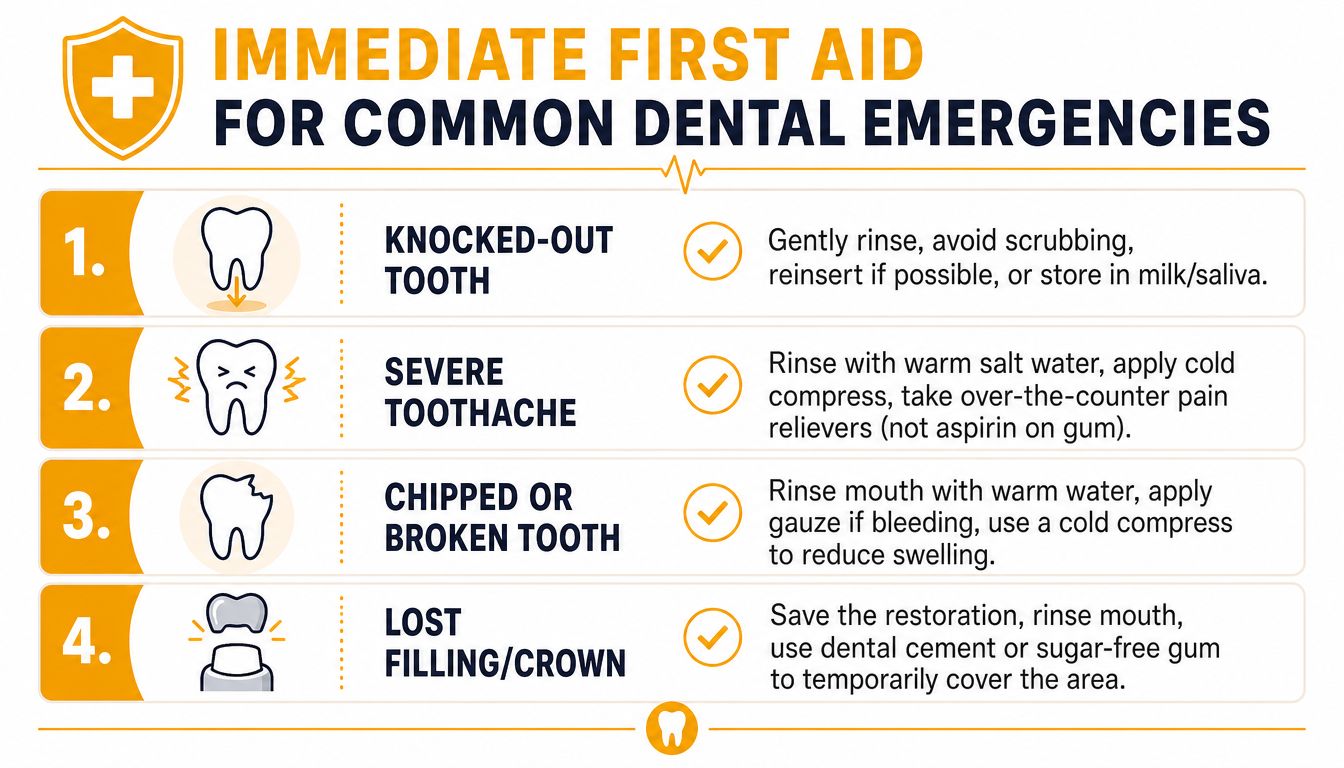
The first job is to stabilise the situation, not solve it at home. For genuine dental emergencies in Sydney such as severe pain, a knocked-out tooth, swelling spreading to the face, or uncontrolled bleeding, patients must contact their regular dentist first, as most clinics maintain dedicated after-hours emergency contact numbers rather than relying solely on hospital triage, as noted in this Sydney emergency dental guidance.
If you need a broader overview of urgent care options, this guide to emergency dental clinics near me is a useful next step.
Severe toothache
A strong toothache often means inflammation, decay, a crack, or infection. The pain can feel deep, sharp, throbbing, or worse when you lie down.
- Do rinse gently: Warm salt water can clear trapped debris and soothe irritated tissue.
- Do use a cold compress: Place it on the outside of the face if there's swelling.
- Do take over-the-counter pain relief as directed on the packet: That can take the edge off while you arrange care.
- Don't place aspirin on the gum or tooth: It can irritate or burn soft tissue.
- Don't apply heat: Heat can make swelling feel worse.
A short visual guide can help if you're trying to act quickly under stress.
Knocked-out tooth
This is one of the few dental problems where handling really matters.
- Pick it up by the crown: That's the chewing end, not the root.
- Rinse it gently if dirty: Use water briefly. Don't scrub.
- Try to place it back in the socket if it goes in easily: Don't force it.
- If you can't reinsert it, store it in milk or saliva: Keep it moist and get to a dentist immediately.
- Don't wrap it in tissue and let it dry out: Dry storage reduces the chance of saving the tooth.
A knocked-out tooth is a “move now” problem, not a “book when convenient” problem.
Chipped or broken tooth
Not every broken tooth looks dramatic. Sometimes the crack is small but the pain is severe because the nerve is exposed.
- Rinse with warm water: This clears debris and lets you see the area better.
- Use gauze if there's bleeding: Gentle pressure is enough.
- Cold compress outside the cheek: Helpful for swelling and tenderness.
- Save any broken pieces: Bring them with you if possible.
- Avoid chewing on that side: A small crack can spread fast.
Lost filling or crown
A lost filling or crown can leave the tooth very sensitive, especially to air and cold drinks.
- Keep the crown if it has come off: Bring it to the appointment.
- Rinse the mouth and the restoration gently: Clean is better than repeatedly touching it.
- Use temporary dental cement or sugar-free gum only as a short-term cover if needed: It can reduce irritation until you're seen.
- Don't use super glue or household adhesive: That creates a bigger problem than the one you started with.
Dental abscess
An abscess often causes pressure, swelling, pain on biting, and sometimes a bad taste in the mouth.
- Rinse with warm salt water: This won't cure the infection, but it may help you feel cleaner and more comfortable.
- Cold compress for swelling: Keep it external.
- Call urgently if swelling is spreading: Especially if it's moving into the face or jaw.
- Don't try to drain it yourself: That can drive infection deeper and delay proper treatment.
Is It a True Emergency or Can It Wait
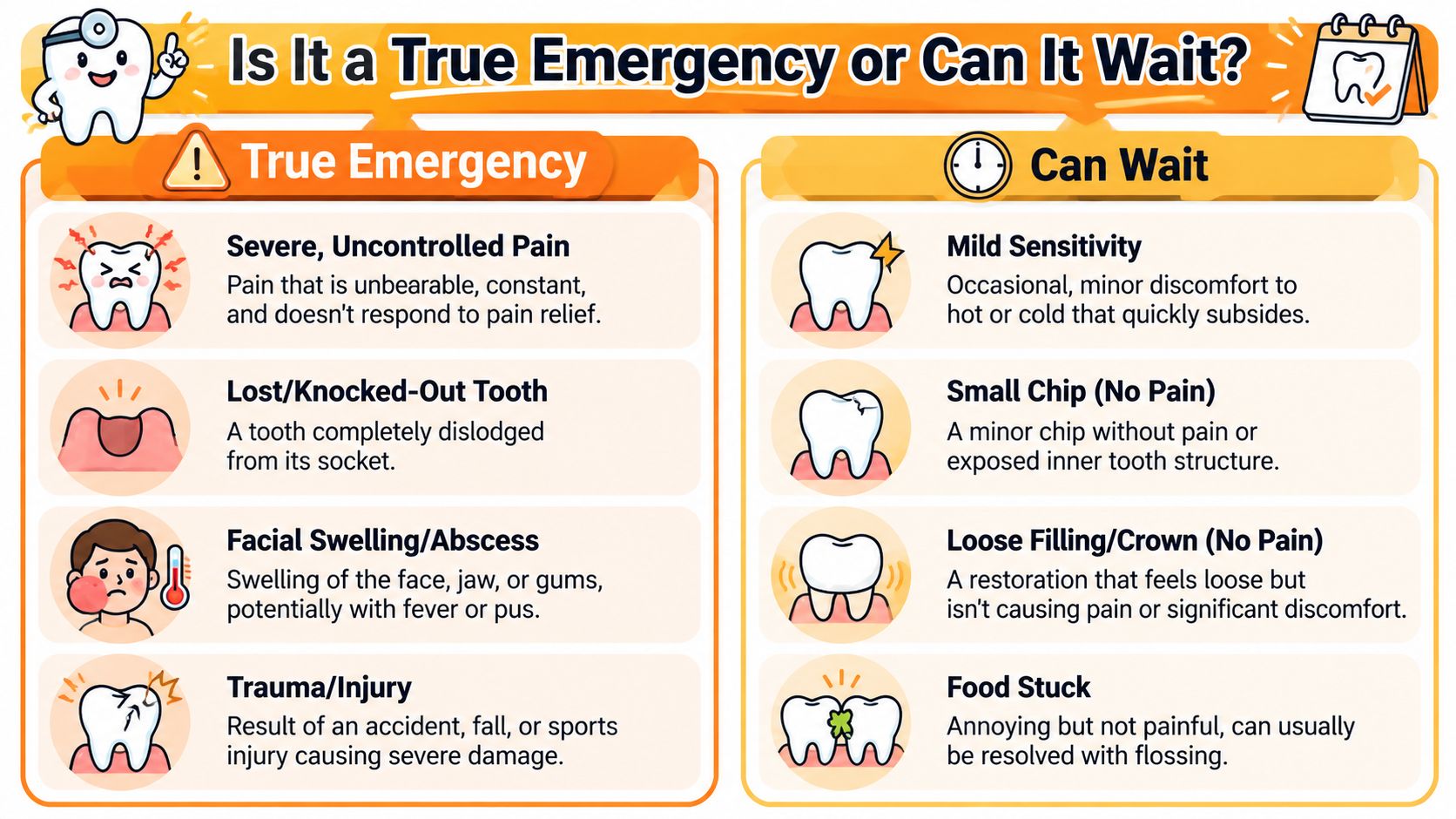
Not every dental problem needs an after-hours visit. Some do. The key is knowing the difference without talking yourself out of getting help when you need it.
Sydney hospital emergency departments are set up for dental trauma and uncontrolled bleeding, but they rarely treat non-traumatic dental pain. NSW public guidance also directs people with severe pain, swelling, or knocked-out teeth to contact their regular dentist first because many clinics provide after-hours access, as explained by NSW Health emergency oral health advice.
If your pain is coming from a tooth that may be infected internally, these signs you need a root canal can help you recognise the pattern.
Problems that usually need same-day attention
These situations shouldn't sit on a to-do list:
| Situation | Why it's urgent |
|---|---|
| Knocked-out adult tooth | Time and handling affect whether the tooth can be saved |
| Uncontrolled bleeding | It may need direct professional management |
| Rapid swelling | Infection or trauma can spread |
| Severe, constant pain | It often signals a problem that won't settle on its own |
| Facial trauma with dental injury | You may need both medical and dental assessment |
Problems that are urgent, but may wait until the next business day
Some issues are serious without being immediate emergencies.
- Small chip without pain: Needs review, but not always after-hours.
- Loose crown with no swelling: Annoying and vulnerable, but often manageable overnight.
- Lost filling without severe pain: Worth booking promptly, not necessarily at midnight.
- Food trapped between teeth: Usually improves with careful flossing.
If you're deciding between “watch it” and “call”, let swelling, bleeding, trauma, and the intensity of pain make the decision.
When to go to hospital
Go to a hospital emergency department if there's major facial trauma, uncontrolled bleeding, or a broader medical concern. For routine toothache without trauma, hospital staff usually can't provide the definitive dental treatment that stops the cause.
How to Choose the Right Emergency Dentist in Sydney
When you're in pain, people often choose the first clinic they find. That's understandable, but it isn't always the best move. A few quick checks can tell you whether a practice is set up for real emergency care or only occasional urgent bookings.
Check access first
The right clinic has to be reachable when the problem happens.
- Look at actual appointment availability: Late evening and Saturday access matter more than a polished homepage.
- Choose a practical location: If you're in the Inner West, convenience matters when you're swollen, tired, or trying to travel with a child in pain.
- Confirm how emergencies are triaged: A clinic should tell you what to do before arrival, not just say “come in”.
For patients comparing urgent options, this article on walk-in dental care helps explain what to ask before heading out.
Ask what treatment can be done on the day
Some clinics can assess you but not treat much on the same visit. That leads to a frustrating cycle of pain relief today and a second urgent appointment tomorrow.
A better option is a practice that can diagnose and stabilise the problem properly. That may include digital X-rays, drainage of infection where appropriate, temporary restorations, extractions, or planning for root canal treatment if the tooth can be saved.
Consider comfort and technology
Emergency dentistry isn't only about speed. It's also about how the treatment is delivered.
Look for clinics that offer:
- Gentle treatment approaches: This matters when the tooth is already inflamed and sensitive.
- Sedation options for anxious patients: Fear often delays care, which makes emergencies worse.
- Modern tools such as Biolase laser dentistry where suitable: Less invasive techniques can be helpful in selected soft tissue and restorative situations.
The Smile Spot in Dulwich Hill is one example of a clinic that offers urgent appointments, late evening and Saturday access, sedation options, and Biolase laser dentistry for minimally invasive treatment where appropriate.
Don't ignore fees and health funds
Cost matters during an emergency because you may need to make a decision quickly. A practice should be able to explain consultation fees, likely treatment pathways, and whether they accept private health funds.
Clear pricing doesn't remove the stress of an emergency, but it does remove uncertainty. That helps patients say yes to the treatment they need.
The best emergency dentist in Sydney for you is usually the one who can assess the problem promptly, explain it clearly, and complete meaningful treatment without making you chase answers across multiple visits.
What to Expect During Your Emergency Appointment
Most patients feel better once they know what the visit will look like. Emergency appointments are usually very focused. The goal is to identify the cause, reduce pain, and stop the problem from getting worse.
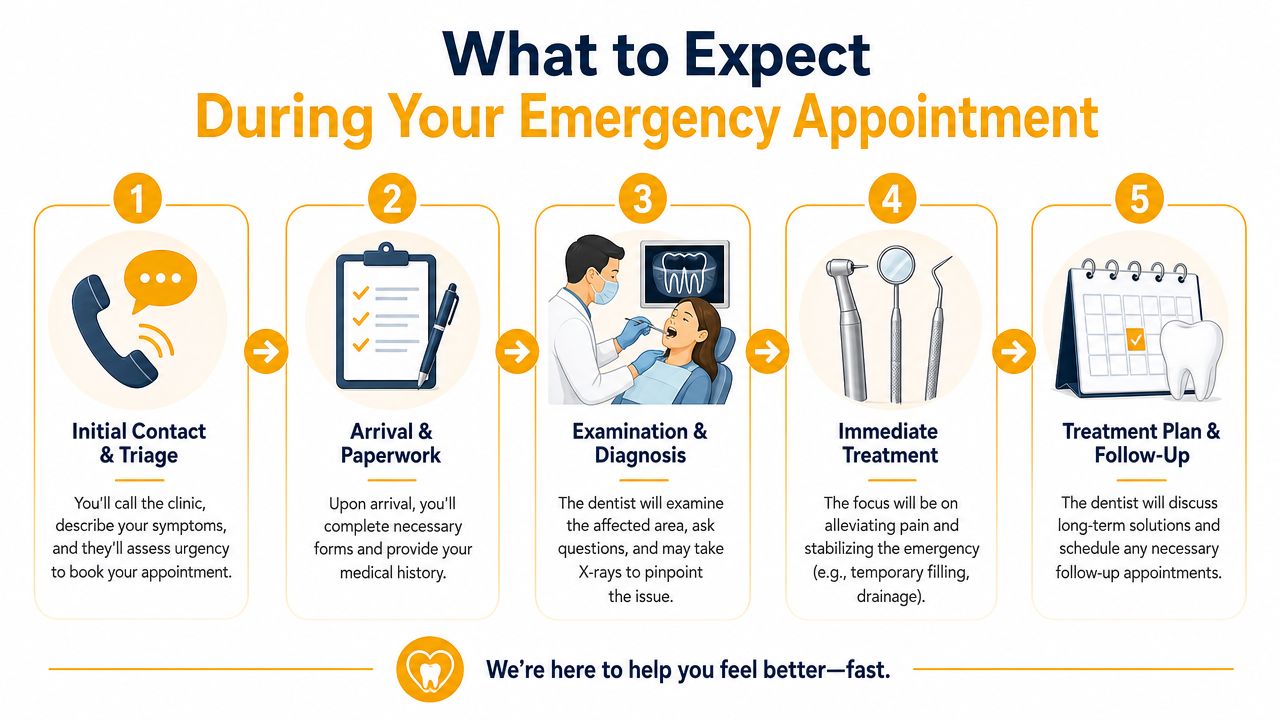
The call before the visit
When you phone, the clinic will usually ask what happened, how long the pain has been there, whether there's swelling or bleeding, and whether trauma is involved. If a tooth has broken, fallen out, or become impossible to bite on, say that early.
If extraction may be on the table, this guide on an emergency tooth pull explains when removal becomes part of urgent care.
What happens in the chair
Once you arrive, expect a short medical history, a focused examination, and often digital X-rays if the problem isn't obvious from the outside. Good emergency care is usually calm and methodical. The dentist narrows down whether the pain is coming from decay, infection, a crack, trauma, gum problems, or a failed restoration.
After that, you'll get a clear explanation of the findings and the immediate options. That might mean stabilising the tooth, draining infection, placing a temporary filling, recementing a crown, or removing a tooth that can't be saved.
Why many emergencies are treated immediately
In emergency dental encounters, the treatment acceptance rate is approximately 93.3%, which indicates that most patients agree to and complete recommended procedures during the same visit for immediate pain relief, according to same-day emergency treatment data.
That reflects what works. If the diagnosis is clear and the treatment is practical, dealing with it then and there is usually better than stretching pain over several days.
Most people don't need a perfect long-term solution in the first hour. They need the pain controlled, the tooth stabilised, and a sensible plan.
Emergency Dental Costs and Your Next Steps
Cost is one of the first questions people ask, and it should be. In Sydney, an emergency dental consultation typically costs between $200 and $500. If treatment such as a repair or extraction is needed on the same day, the total can range from $800 to $2,500, and after-hours care may add an extra $100 to $300, based on Sydney emergency dental cost guidance.
That range is broad because emergency treatment varies a lot. A straightforward issue is very different from a cracked tooth, swelling, or a difficult extraction. The most useful approach is to ask the clinic what the consultation covers, what the likely treatment options are, and whether your private health fund may reduce some of the out-of-pocket cost.
If you want a clearer sense of how cover works before or after your visit, this guide to dental health insurance in Australia can help.
The simplest next step
If you're dealing with pain, swelling, bleeding, a broken tooth, or a lost restoration, don't spend the next few hours hoping it settles by itself. Use the first-aid steps above, protect the area, and call a dentist who can triage the problem properly. Fast, sensible treatment usually means less pain, less damage, and fewer complications.
If you need urgent dental care in Dulwich Hill or the Inner West, The Smile Spot offers emergency appointments, online booking, late evening and Saturday availability, and care for adults and children with pain, swelling, trauma, broken teeth, and other urgent dental problems.