You're biting into toast, sipping a hot coffee, or helping your child brush after a birthday party, and there it is. A quick sting from a tooth. Maybe it's nothing. Maybe it's the start of something you don't want to ignore.
That little twinge is often the moment people start asking what causes tooth decay. It's a fair question, and the answer is more manageable than commonly believed. Cavities don't appear out of nowhere. They form through a slow, predictable process, and once you understand that process, you can do a lot to prevent it.
For busy families in Dulwich Hill and across the Inner West, one detail matters more than people realise. It's not just what you eat. It's how often your teeth are exposed to sugar and acid through the day.
That First Twinge A Sign to Pay Attention
A parent will often notice it first in a child. A faint chalky patch on a front tooth. A complaint that ice cream “hurts a bit”. An adult might spot it during a rushed weekday morning. Cold water suddenly feels sharp on one side, or a back tooth starts catching food more than usual.
It's common to worry that pain means a major dental problem. Sometimes it does. Often, though, it's your mouth giving you an early warning. Teeth usually whisper before they shout.
A cavity starts small. The earliest changes can be invisible to anyone without proper lighting and magnification. That's why a mild twinge matters, even if it comes and goes. If you've ever wondered whether sensitivity means decay or something deeper, it can help to read about the signs a tooth may need root canal treatment.
A sore tooth isn't always an emergency, but it's rarely random.
Parents also get confused because children can seem completely fine even when decay is forming. Kids may still eat normally, sleep well, and never mention pain. Adults do the same. We adapt. We chew on the other side. We avoid cold drinks. We convince ourselves to “watch it for a while”.
That's understandable, but early attention makes life easier. The earlier decay is found, the simpler the fix tends to be. The key is knowing what's happening on the tooth surface, because once you understand that, the whole topic becomes much less mysterious.
The Hidden Science of a Cavity
A cavity isn't a sudden hole. It's the result of a chemical tug-of-war happening on your teeth every day.
The recipe for decay
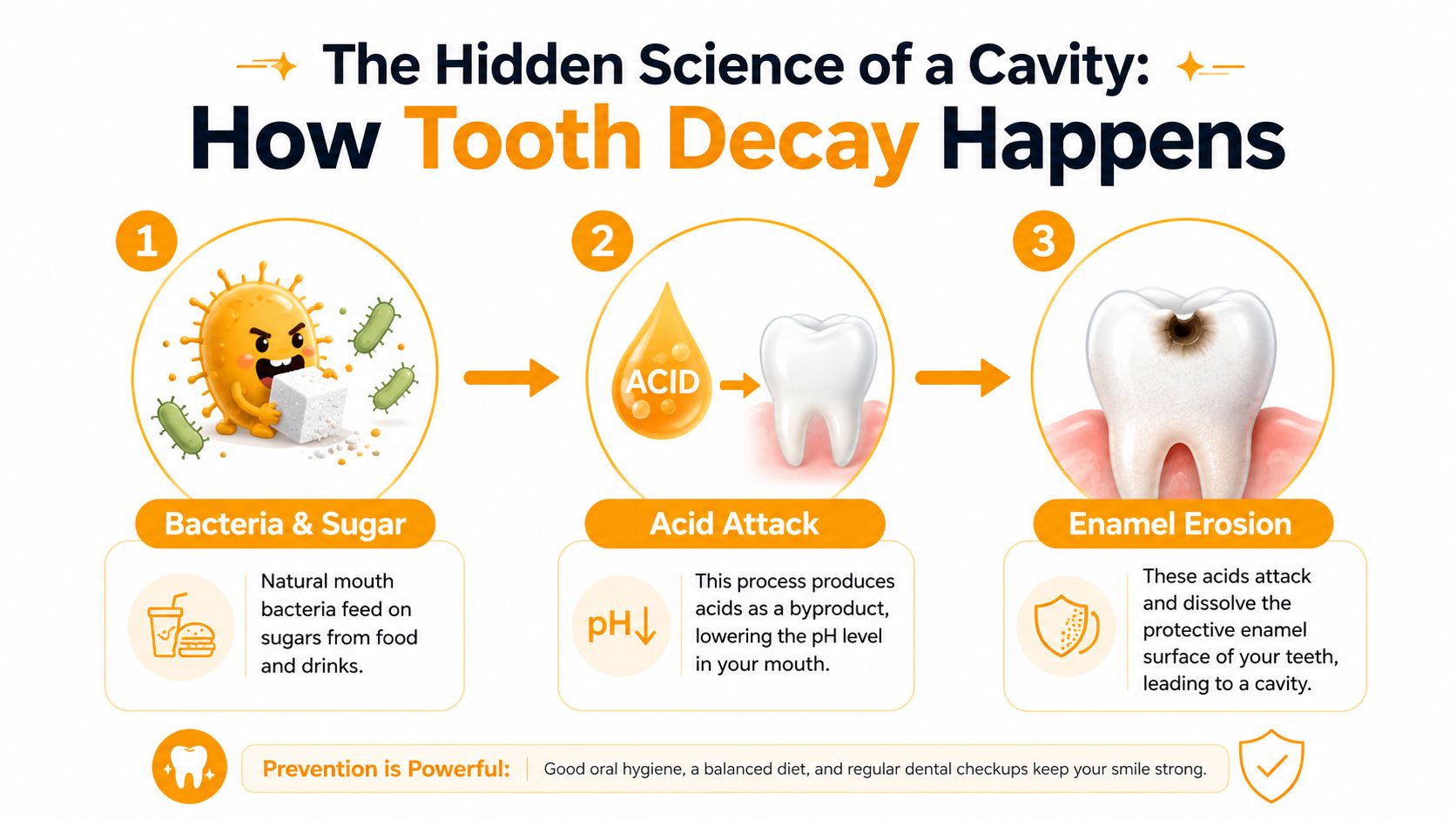
Your mouth naturally contains bacteria. Many are harmless. Some, including Streptococcus mutans, play a major role in tooth decay. When these bacteria feed on free sugars and fermentable carbohydrates, they produce acid.
That acid changes the environment around the tooth. Tooth decay begins when acidogenic bacteria, mainly Streptococcus mutans, metabolize free sugars into acids. This process lowers the pH in the mouth to a critical level, typically below 5.5, initiating the demineralisation of enamel and dentine. This process is described in this explanation of cavity formation.
Consider this:
- Bacteria settle on the tooth in a sticky film called plaque.
- Sugar arrives from food or drink.
- Acid is produced, and the tooth starts losing minerals.
That mineral loss is called demineralisation. Enamel is hard, but it isn't indestructible. If acid attacks happen too often, the enamel surface weakens. Eventually, a small soft spot can turn into a cavity.
Why it can be hard to see
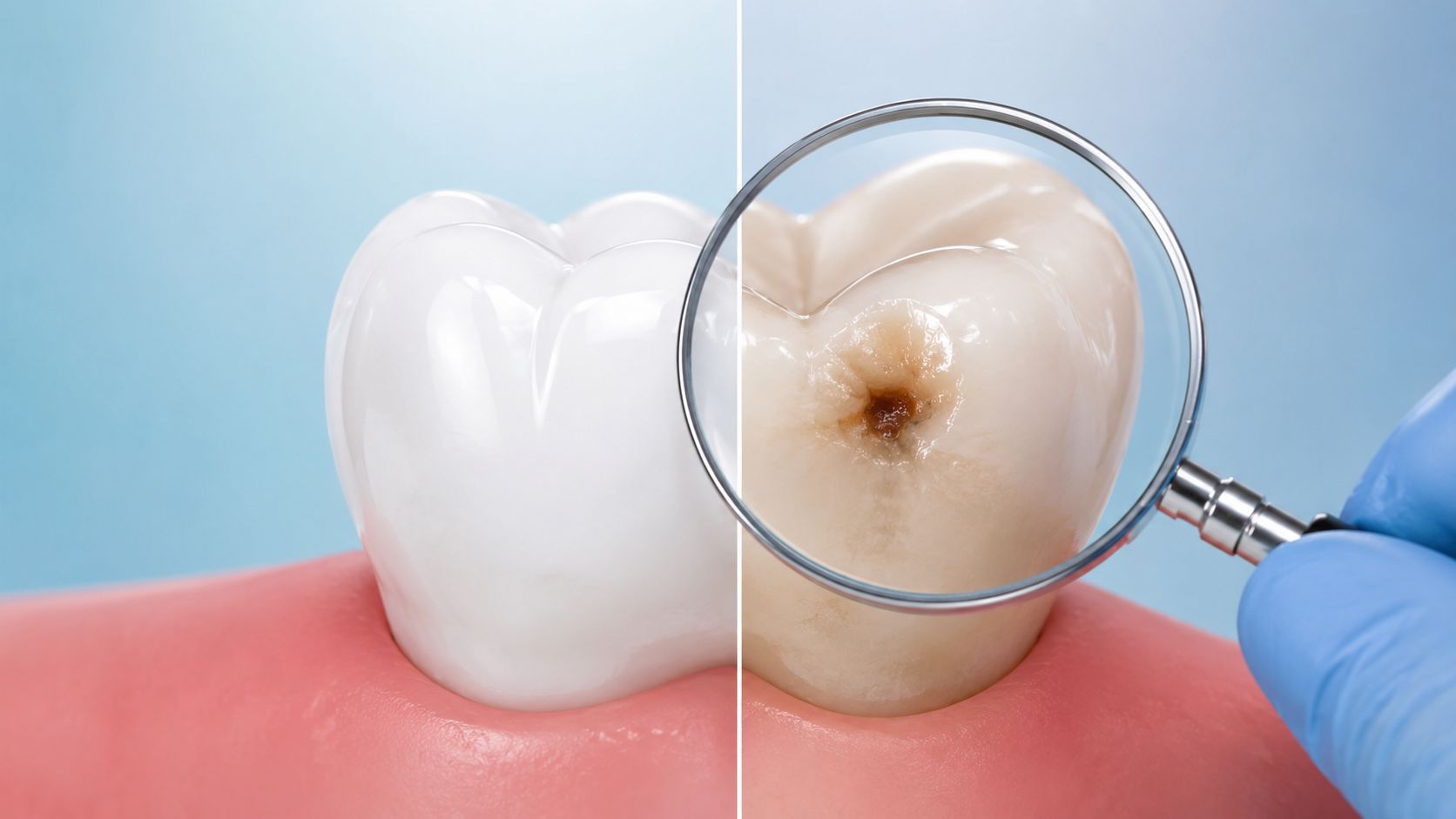
Many people expect decay to start as a dark hole. It usually doesn't. Early decay often begins as a pale, chalky area where minerals have been leached out of the enamel.
By the time you can clearly see a brown or black defect, the process has often been underway for a while. That's one reason dentists use close-up tools and bright illumination. If you've never seen how much detail this can reveal, intraoral camera dentistry makes it much easier for patients to understand what the dentist is seeing.
Key point: Bacteria are normal. Sugar is common. The problem starts when those bacteria get frequent fuel and enough time to keep making acid.
Once people grasp this, one common misunderstanding clears up. It's not that sweets are “bad”. It's that repeated acid attacks give the tooth less chance to recover.
Common Risk Factors That Fuel Tooth Decay
Some risk factors are obvious. Others are easy to miss, especially in households that are always on the go.
Sugar matters, but frequency matters more than most people think
In Australia, excessive sugar consumption is the single biggest factor in tooth decay. Data from 2017 to 2018 showed that 89% of adults have experienced decay, with an average of 11.2 affected teeth, linked to high sugar consumption and frequent snacking, as outlined in Australian tooth decay statistics.
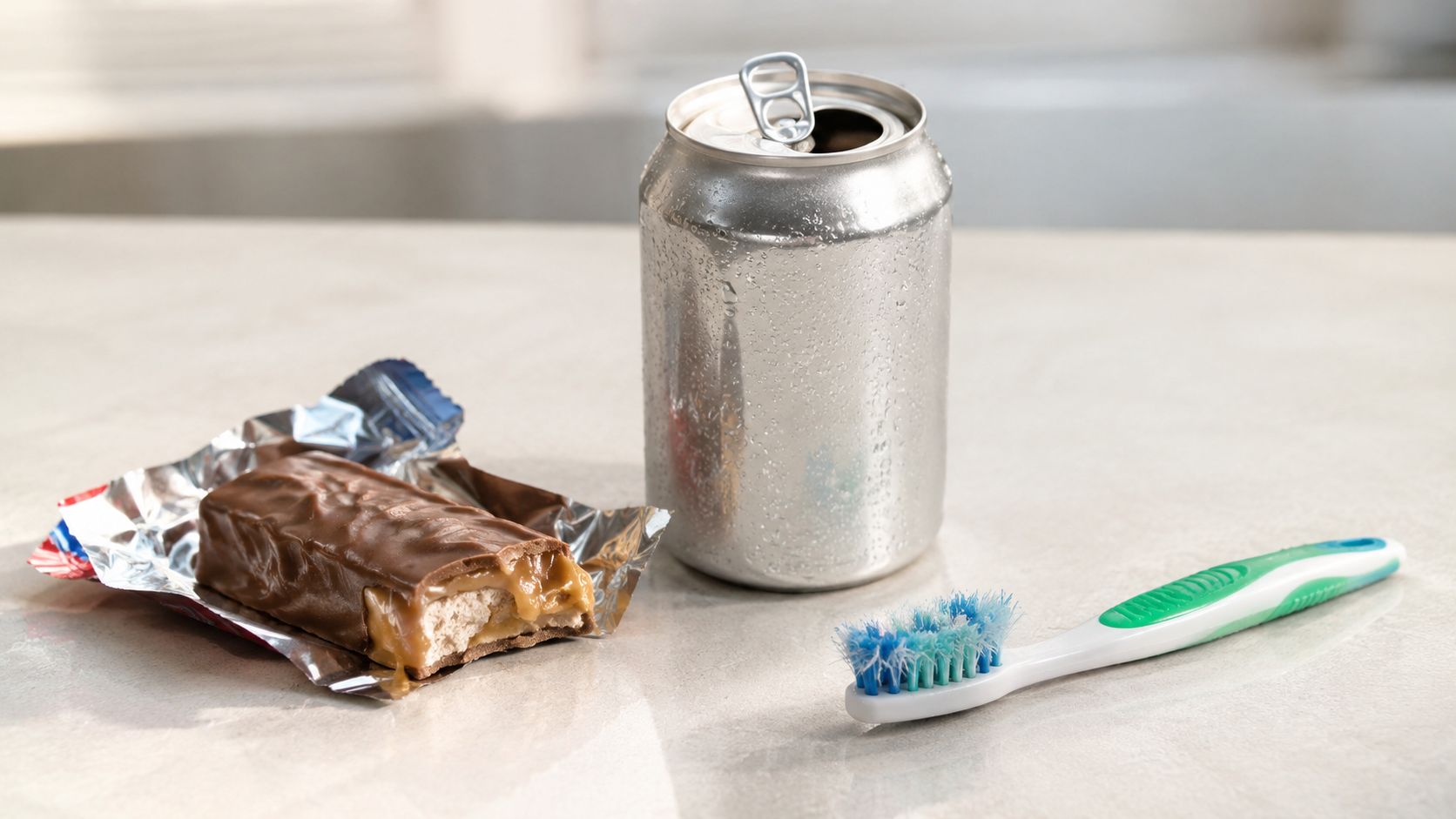
That sounds straightforward, but here's the part many families miss. A biscuit after lunch is different from nibbling on sweet snacks all afternoon. A juice box with a meal is different from sipping it in the car, at the park, and during homework time.
When you snack frequently, your mouth keeps dropping into an acidic state. Saliva needs time to calm things down. If fresh sugar keeps arriving, the recovery period keeps getting interrupted.
The busy-family trap
For Inner West families, the pattern often looks like this:
- School grazing: A child has breakfast, then a snack, then another small snack, then a juice, then something after sport.
- Workday sipping: An adult nurses a sweet coffee, soft drink, or energy drink over hours instead of having it with one meal.
- Convenience foods: Muesli bars, crackers, gummies, and flavoured yoghurts seem small, but they can keep feeding plaque bacteria again and again.
If you're sorting out children's daily supplements as well as snacks, a practical parent's guide to children's vitamins can help you think through choices that may sit in the mouth longer than you expect.
Other common risk factors
Sugar frequency isn't the whole story. Decay becomes more likely when several issues overlap.
- Plaque left in place: If plaque isn't disrupted regularly, bacteria stay parked against enamel and keep using food remnants as fuel.
- Irregular check-ups: Small areas of early decay can be hard to spot at home.
- Dry mouth: Saliva does more than keep your mouth comfortable. It helps dilute acids and bring minerals back to enamel.
- Hard-to-clean areas: Crooked teeth, deep grooves, and orthodontic appliances can trap food and plaque.
If your focus is prevention, preventive dental care gives a helpful overview of the habits and treatments that lower risk.
A short visual refresher can make this easier to picture:
Practical rule: Try to think in “eating occasions” rather than grams of sugar alone. Fewer acid attacks usually mean less wear on enamel.
Recognising the Signs and Stages of Decay
Decay changes over time, and the earliest stage doesn't look dramatic. That's good news, because early changes can often be managed before a tooth develops a larger hole.
What early decay looks like
A very early lesion may appear as a white spot. It can look chalky or dull compared with the shinier enamel around it. This is often the stage where minerals have been lost, but the surface may still be intact.
As decay progresses, the area may turn light brown. Later, you might see a dark brown or black spot, a visible hole, or a place where food keeps catching. Symptoms can also change from no pain at all, to sensitivity, to lingering ache.
The 4 stages of tooth decay
| Stage | Appearance | Symptom | Reversible? |
|---|---|---|---|
| Early demineralisation | White, chalky spot | Usually none, sometimes mild sensitivity | Often yes |
| Early enamel decay | Light brown patch or rough area | Sensitivity to cold, sweets, or brushing | Sometimes, if caught very early |
| Dentine decay | Darker spot or small hole | More noticeable sensitivity, food trapping | No |
| Deep decay | Larger cavity, possible dark area or broken tooth structure | Pain, lingering ache, possible swelling or night pain | No |
What parents and adults should watch for
A child may not say “my tooth hurts”. They might chew on one side, avoid cold foods, or become fussy during brushing. Adults often notice sensitivity first, or a rough edge when the tongue keeps finding the same spot.
Signs worth paying attention to include:
- Colour change: White, brown, or black areas that weren't there before
- Texture change: A spot that feels rough, catches floss, or traps food
- Sensitivity pattern: Pain with cold drinks, sweets, or brushing
- Behaviour change in kids: Avoiding certain foods, slower chewing, or dislike of brushing one area
If you can see an obvious hole, the decay has moved beyond the earliest stage. At that point, home care alone won't rebuild the lost tooth structure. Professional treatment becomes important.
Your Action Plan for Preventing Cavities
Prevention works best when it's simple enough to repeat on busy days. You don't need a perfect routine. You need a routine that your family can stick to.
Start with the basics that protect every day
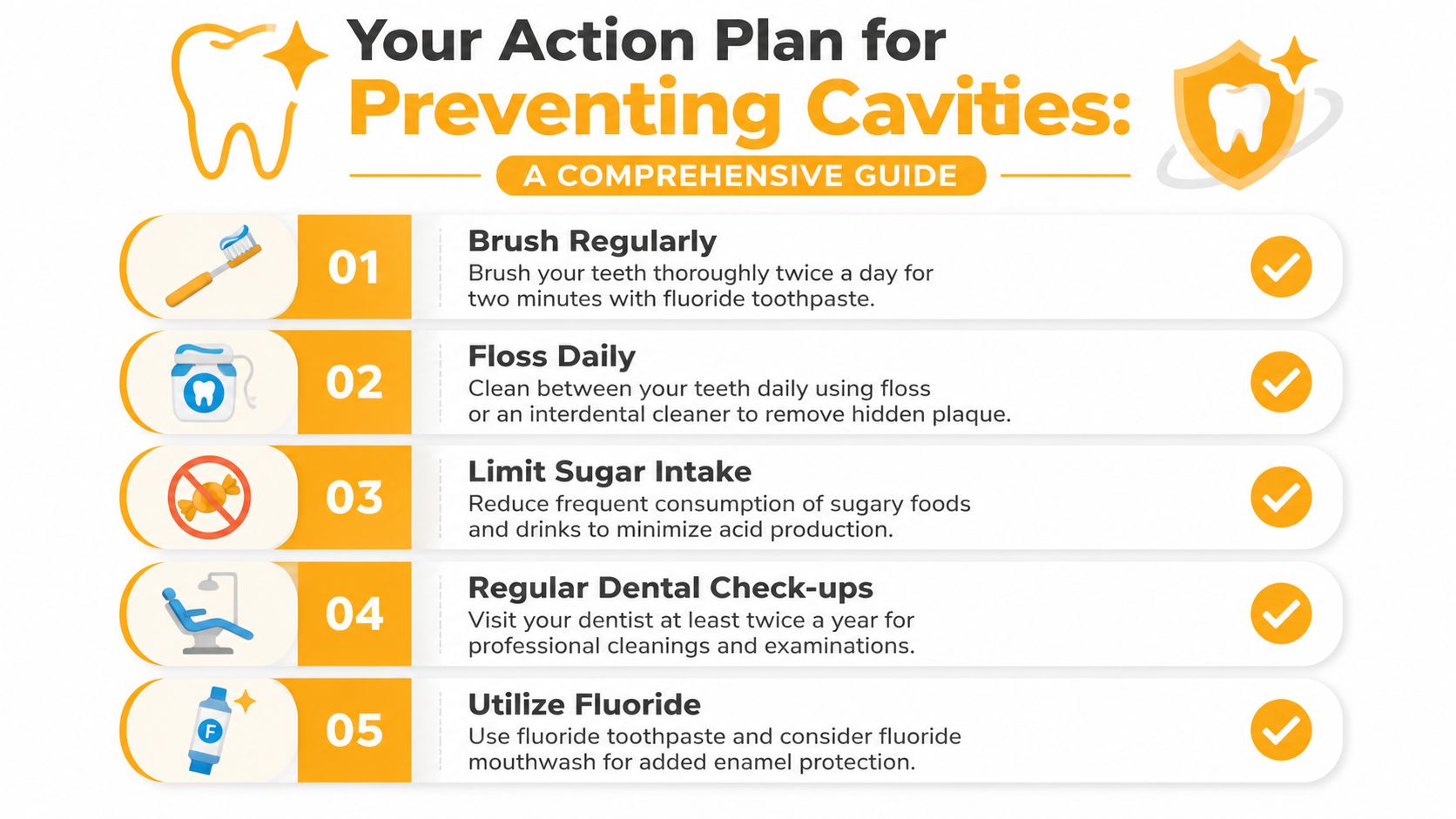
National surveys show that 1 in 3 Australian adults has untreated tooth decay, and this is strongly linked to inadequate oral hygiene and infrequent dental visits. The Australian Dental Association recommends twice-daily brushing with fluoride toothpaste and daily flossing to disrupt plaque build-up, as noted in Healthdirect's guide to tooth decay.
That advice sounds ordinary because it is ordinary. It also works.
- Brush thoroughly: Two minutes, morning and night, with fluoride toothpaste.
- Clean between teeth: Floss or use interdental cleaners where teeth touch.
- Don't rush bedtime care: Night-time brushing matters because saliva flow drops during sleep.
Change the timing, not just the menu
For many families, the most useful cavity-prevention shift is reducing all-day grazing.
Try these adjustments:
- Keep snacks to planned times instead of constant picking.
- Serve sweet foods with meals when possible, rather than alone between meals.
- Choose water between meals instead of sweet or acidic drinks.
- Finish a treat in one sitting rather than stretching it over hours.
That approach helps because saliva gets a chance to recover the mouth environment between eating occasions.
If you only remember one thing, remember this. Teeth cope better with occasional treats than with repeated small exposures all day.
Use fluoride wisely
Fluoride helps enamel repair early damage and become more resistant to acid. It's one of the most useful tools we have against decay. Fluoridated toothpaste matters, and fluoridated water provides ongoing low-level exposure through the day.
For children with deep grooves in molars, fissure sealants can add another protective layer by sealing spots where plaque often hides.
If you'd like extra reading on food choices that support oral health, Nutrition Geeks' dental health advice is a practical companion to the daily habits above.
Make check-ups part of the plan
Regular dental visits help because early decay is easier to manage than advanced decay. Cleanings remove built-up plaque in places brushing misses, and exams pick up changes before they become painful.
For children, this can also be the difference between a simple preventive approach and a more involved repair later on.
Modern Treatments to Restore Your Smile
If decay is found, don't assume the worst. Modern treatment depends on how far the decay has gone, and many options are straightforward.
Matching the treatment to the stage
When a tooth shows very early mineral loss, a dentist may recommend fluoride-based care and close monitoring. The goal is to support remineralisation before a hole forms.
Once there's a true cavity, the damaged part of the tooth usually needs to be cleaned out and repaired with a filling. If a larger portion of the tooth has weakened, a crown may be the better way to protect it long term. If you want a simple overview of when a tooth may need more coverage, dental crowns and bridges are designed to restore shape, strength, and function.
When decay reaches the nerve
Advanced decay can irritate or infect the inner part of the tooth. That's when pain may become stronger, more lingering, or harder to ignore. In those cases, root canal treatment can save the natural tooth by removing the affected inner tissue and sealing the space.
Dry mouth can complicate all stages of treatment and prevention. Dry mouth, or xerostomia, significantly increases cavity risk by reducing saliva's ability to dilute acids and deliver remineralizing minerals like calcium, phosphate, and fluoride to the enamel. This is a key physiological risk factor, especially for those on certain medications, according to Queensland Health's explanation of tooth decay.
A filling repairs damage. It doesn't change the mouth conditions that caused the decay in the first place.
That's why treatment and prevention always go together. The repair fixes today's problem. Your habits prevent the next one.
Take the Next Step at The Smile Spot
A lot of Inner West parents tell us the same thing. Their child does not eat many lollies, so the decay feels confusing. Often, the bigger issue is the pattern of eating across the day. A few bites here, a sip there, then another snack on the way to sport can keep teeth under acid attack for hours, even when the amount of sugar does not seem dramatic.
If you've noticed sensitivity, white spots, food trapping, or a tooth that just doesn't feel right, it makes sense to get it checked sooner rather than later. Early attention can mean a simpler fix, and it also gives you a chance to look at the daily habits behind the problem, especially frequent grazing that busy family routines can make easy to miss.
For families in Dulwich Hill and the Inner West, The Smile Spot offers gentle, judgment free care with practical options that fit real life. New patients can book a $240 complete care package that includes an exam, X-rays, scale, and fluoride. The clinic also offers late evening and Saturday appointments, modern laser dentistry, and care for both children and adults.

If you want a calm, thorough check for yourself or your child, you can book through The Smile Spot online booking page. The team in Dulwich Hill provides friendly family dental care, prevention advice that fits busy schedules, and gentle treatment options to help protect your smile early.