In Sydney, porcelain veneers typically cost $2,000 to $3,500 per tooth, while composite veneers usually cost $650 to $1,000 per tooth. That's a significant investment, especially if you're thinking about multiple front teeth, so it helps to understand exactly what you're paying for, what lasts, and where the long-term value sits.
If you're reading this, there's a fair chance you've already looked in the mirror, noticed the chips, uneven edges, staining, or spacing that keeps catching your eye, and then immediately wondered whether veneers are worth the money. That's a normal place to start. You're likely not just asking about appearance. You're trying to work out whether the result will suit your lifestyle, whether the maintenance is manageable, and whether the cost makes sense for the years ahead.
For Inner West patients in suburbs like Dulwich Hill, Marrickville, Petersham, Summer Hill, and Ashfield, the question usually isn't “what's the cheapest option?” It's “what gives me a smile I'll still feel good about in daily life, at work, in photos, and years from now?” That's the right question.
Investing in Your Smile A Guide to Veneer Costs in Sydney
A veneer quote can feel confronting at first glance. That's especially true if you've gone from casually researching cosmetic dentistry to seeing five-figure totals for a smile makeover. But veneers aren't a retail purchase. They're a custom dental treatment that combines diagnosis, planning, materials, bite assessment, tooth preparation, artistic design, and ongoing care.
That's why the smart way to think about dental veneers cost in Sydney is as an investment decision, not just an expense. The upfront figure matters, of course. But the more useful question is whether the treatment fits how you live, how long you want it to last, and how much maintenance you're comfortable with over time.
What patients usually want to know first
Patients often desire clear answers on four points:
- Material choice: Whether porcelain or composite makes more sense for their goals.
- Total spend: What the likely cost will be for one tooth, several teeth, or a broader smile design.
- Value over time: Whether paying more now could reduce replacements, repairs, or dissatisfaction later.
- Local relevance: How pricing in Sydney, and particularly for Inner West patients, compares with other parts of the city.
Practical rule: The lowest quote isn't automatically the lowest long-term cost. A veneer that needs earlier replacement, more frequent polishing, or repeated repairs can end up costing more in time, money, and frustration.
A well-planned veneer case should improve more than colour. It should support confidence, facial harmony, phonetics, bite comfort, and day-to-day practicality. If you're also exploring broader cosmetic changes, it can help to read about what a smile makeover in Sydney can involve before deciding how extensive your treatment really needs to be.
Why this decision feels bigger than a normal dental treatment
Cosmetic dentistry sits in a different category from routine care because the result is visible every day. You notice it when you talk, smile, laugh, and eat. That's why patients tend to weigh veneers carefully. They want the aesthetics right, but they also want to avoid choosing a treatment that looks good initially and becomes inconvenient later.
For that reason, the primary discussion isn't only about price. It's about durability, maintenance, finish, repairability, and how much treatment is necessary.
What Are Dental Veneers and Why Do They Vary in Price
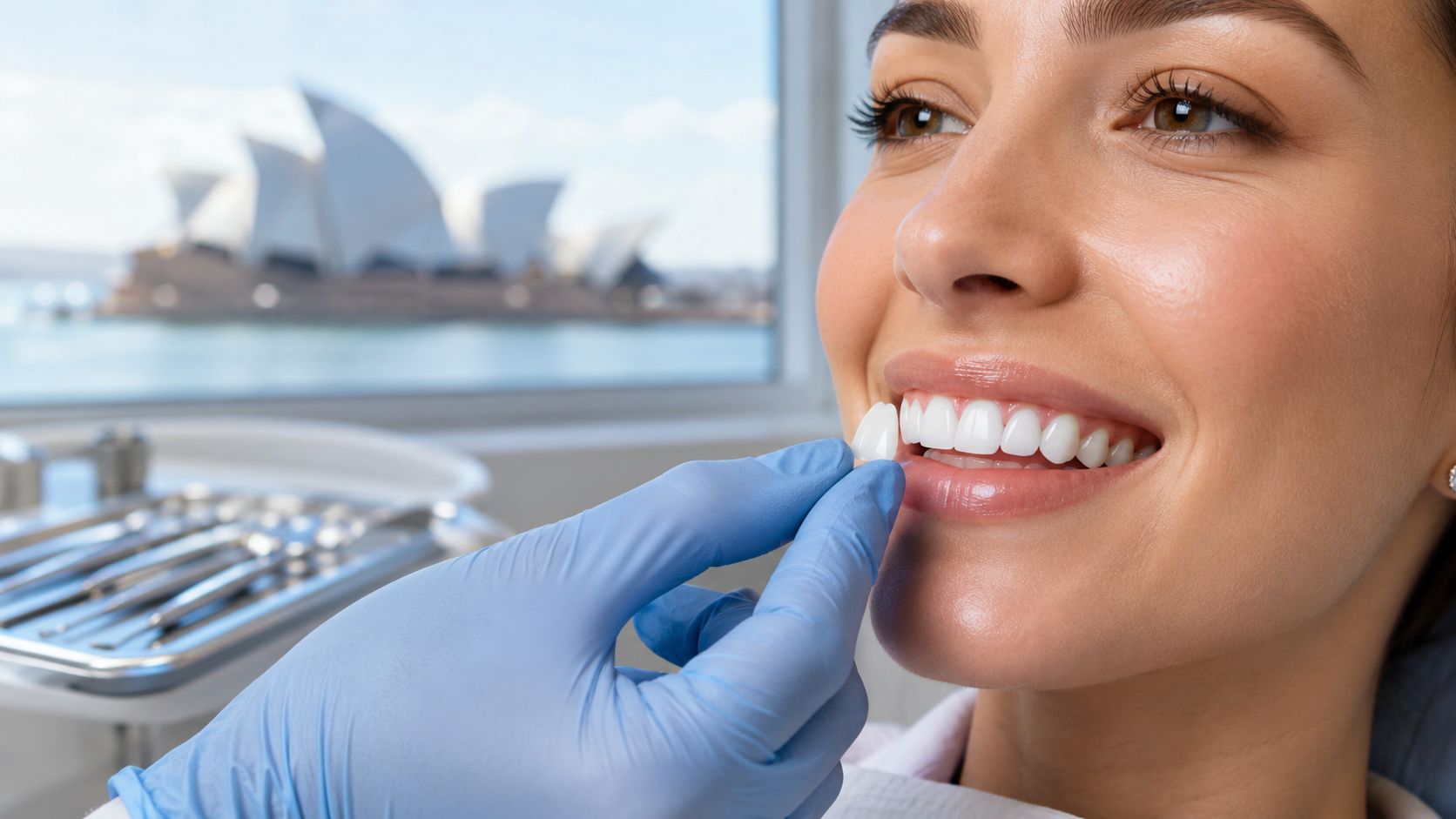
Veneers are thin coverings placed over the front surface of teeth to improve shape, colour, symmetry, and overall smile balance. In practice, most patients are choosing between porcelain veneers and composite veneers. They serve similar cosmetic goals, but they differ sharply in how they're made, how they behave over time, and what they cost.
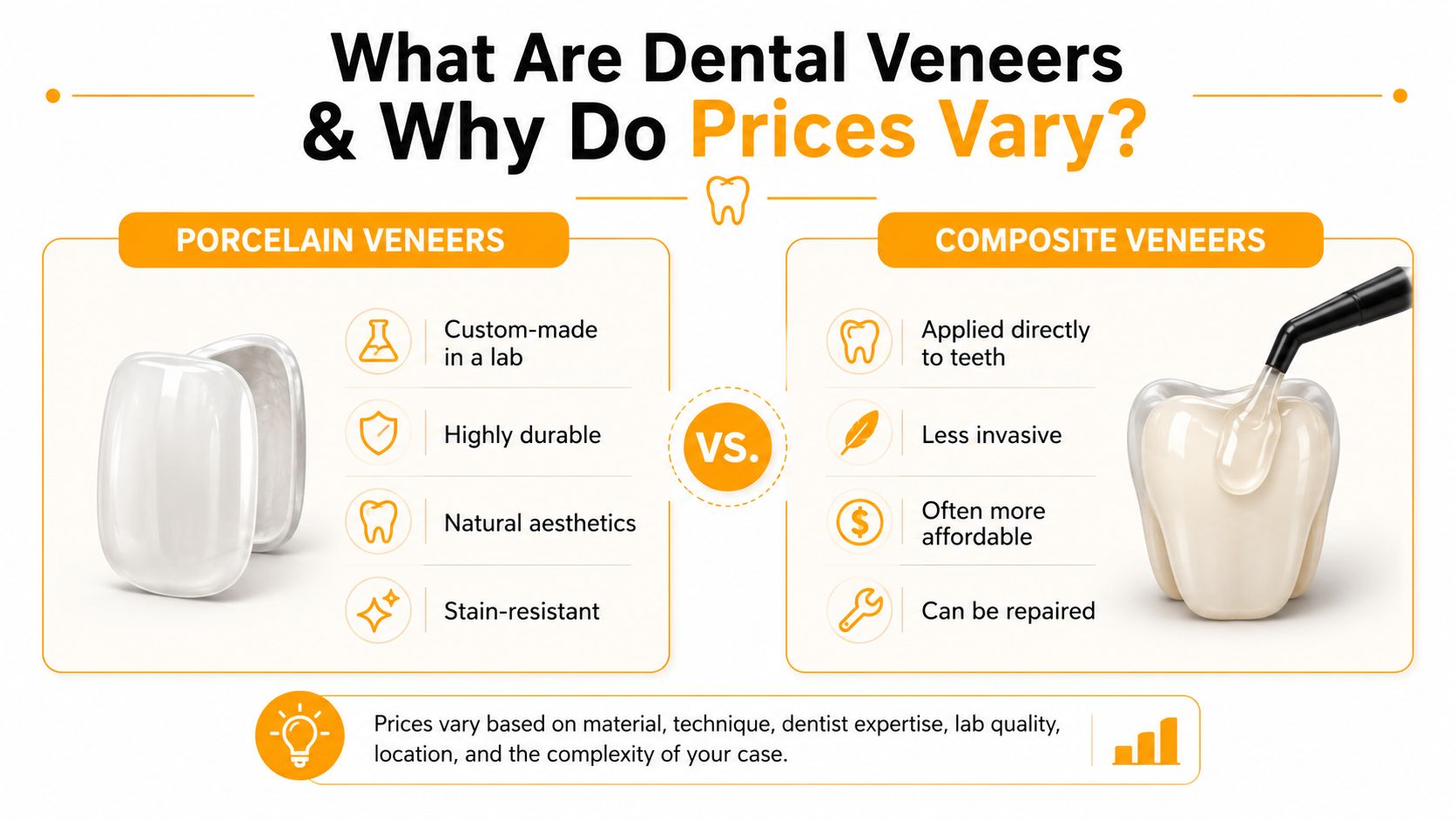
Composite is direct. Porcelain is commissioned.
Composite veneers are shaped directly onto the teeth by the dentist. Think of them as a carefully sculpted restoration created chairside. There's no external ceramic lab involved, which is one reason they're more accessible financially.
Porcelain veneers are different. They're designed with the dentist and then fabricated outside the mouth, usually by a dental laboratory. That extra stage matters. It introduces laboratory fees, more planning, and a second fitting appointment, but it also allows a higher level of refinement in translucency, texture, and stain resistance.
Why prices separate so clearly
The cost difference isn't arbitrary. It comes from the structure of the treatment itself. In Sydney, composite veneers are a single-appointment, direct-application option that avoids lab fees, while porcelain veneers usually require two appointments and include laboratory fabrication. The same Sydney data also notes a typical structural gap of about $1,400 to $2,000 per tooth, with porcelain lasting around 10 to 15 years and composite around 5 to 7 years according to this Sydney veneers cost guide.
That lifespan difference is a major part of the value discussion. Composite can be an excellent option for the right case, particularly when someone wants a conservative, lower-barrier cosmetic improvement. But lower upfront cost doesn't always mean lower lifetime cost.
What tends to work better for different priorities
- Choose porcelain if you want stronger stain resistance, a more stable finish, and a treatment plan built around longer-term durability.
- Choose composite if you want a more affordable entry point, same-day treatment in many cases, or a solution that can often be adjusted or repaired more easily.
- Be cautious with either option if your expectations are vague. Veneers work best when the smile design goal is specific and realistic.
A good veneer plan starts with the face, smile line, bite, and tooth proportions. It doesn't start with “How many can we do as cheaply as possible?”
If you're comparing aesthetics, durability, and suitability in more detail, this guide to the best veneers is a useful next step.
A Detailed Breakdown of Veneer Costs in Sydney
A patient from the Inner West might sit down for a veneer consult expecting a simple per-tooth price, then realise the fundamental question is broader. How much smile change is genuinely needed, and what will hold up well enough to justify the spend over the next decade?
For a Sydney price guide, the 2026 veneer cost overview from Totalcare Dental and Dermal places porcelain veneers at about $1,500 to $2,500 per tooth and composite veneers at about $500 to $1,500 per tooth. That gives a useful starting range, but a quote only becomes meaningful once the number of teeth, the design goals, and the condition of the bite are clear.
2026 Sydney Veneer Cost Comparison
| Veneer Type | Cost Per Tooth (Sydney) | 8-Veneer Smile Makeover Cost (Sydney) |
|---|---|---|
| Porcelain | $1,500 to $2,500 | $12,000 to $20,000 |
| Composite | $500 to $1,500 | $4,000 to $12,000 |
Those eight-tooth totals are simple estimates based on the per-tooth ranges above. In practice, larger cases can shift higher because smile design, temporaries, review visits, and finishing take more chair time.
Sydney fees are often higher than in many other parts of Australia. Inner West patients already know that living and operating costs here are not minor, and dentistry reflects that. The fee is not just for the veneer itself. It also covers diagnosis, treatment planning, preparation, lab communication, fit, bite checks, and follow-up.
Why one Sydney quote can sit well above another
Two veneer quotes can look similar on the surface and represent very different levels of work behind the scenes.
A lower fee may suit a straightforward case with limited design changes. A higher fee may reflect more detailed planning, a ceramist with stronger cosmetic experience, or a case where matching neighbouring teeth is difficult. That difference matters. Veneers are cosmetic, but they still have to function under daily chewing forces, suit the face, and age reasonably well.
For Inner West patients, value usually sits in the middle ground. A clinic does not need a CBD postcode to charge carefully for good work, but a cheap quote should always prompt better questions about materials, preparation style, reviews, and what happens if adjustments are needed.
Budgeting by treatment scope
Most patients do not need a full set of veneers.
Common treatment scopes include:
- One or two veneers for a chipped, worn, or darkened tooth
- Upper front teeth only where the upper smile shows far more than the lower
- A wider smile design where several visible teeth need coordinated changes in shape, colour, and symmetry
The most cost-effective plan is the one that creates balance without treating extra teeth for no clinical reason.
If cost is part of the timing decision, ask early about deposits, staging, and whether treatment can be phased sensibly. A clear veneer payment plan can help you spread the investment while still choosing the material and design approach that suits your long-term goals.
Beyond the Material Factors That Shape Your Final Cost
Material matters, but it's only one part of the quote. Two patients can both ask for porcelain veneers and receive very different treatment plans because the actual cost sits in the complexity of the case, not just in the ceramic itself.
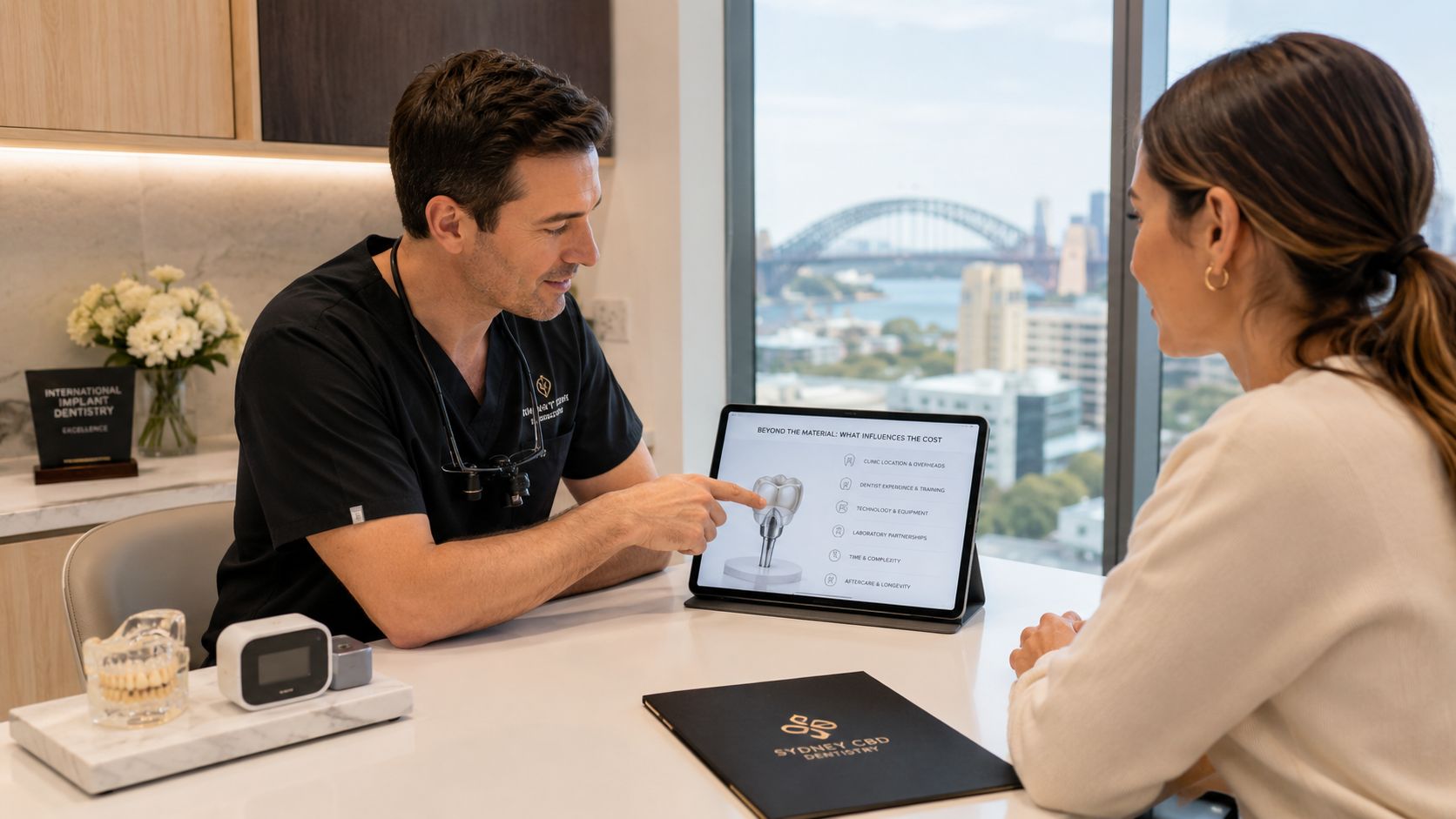
The number of teeth changes the economics quickly
The more teeth included, the more time is needed for smile design, shade matching, bite refinement, and finishing. That sounds obvious, but patients sometimes assume veneer pricing scales in a simple linear way. It often doesn't. Once a case becomes more extensive, planning becomes more demanding.
A small case focused on one or two teeth is usually about correction. A larger case is often about orchestration. Every tooth has to relate properly to the next.
Complexity can outweigh the material itself
A veneer case can be simple, or it can involve multiple layers of decision-making:
- Colour problems: One type of challenge.
- Minor edge wear or shape correction: Another.
- Crowding, bite issues, asymmetry, or uneven gum levels: More complex again.
The more cosmetic and functional variables involved, the more clinical judgement you're paying for. That's why experience matters. An experienced cosmetic dentist isn't just placing restorations. They're deciding where to stop, what to preserve, and how to avoid a result that looks bulky, flat, or artificial.
There's also a fee baseline in the market
Australian Dental Association item data used by industry tracking sites places the maximum cost in Australia at up to $2,036 per tooth for a porcelain veneer and up to $836 per tooth for a composite veneer, based on the listed item codes, as outlined in this ADA-based veneer pricing page for Sydney. That provides a useful baseline for understanding standard itemised treatment, although cosmetic veneer planning often involves broader considerations than a simple item number suggests.
This short explanation is useful if you want a visual overview of why cosmetic treatment plans can vary.
Other factors patients often overlook
- Preparatory treatment: Some smiles need whitening, contouring, or other preliminary work before veneers make sense.
- Bite management: If you grind or clench, protection and planning become more important.
- Provisional stages: Temporary restorations and trial smiles can add value in complex cases because they reduce guesswork.
- Follow-up care: Review appointments and small refinements are part of doing cosmetic work properly.
You're not only paying for what goes on the tooth. You're paying for the decisions that stop the wrong thing going on the tooth.
The Veneer Journey From Consultation to Final Smile
Patients usually feel more comfortable once they know what the process looks like. Veneer treatment is easier to understand when you think about it as a sequence of decisions, not one dramatic appointment.
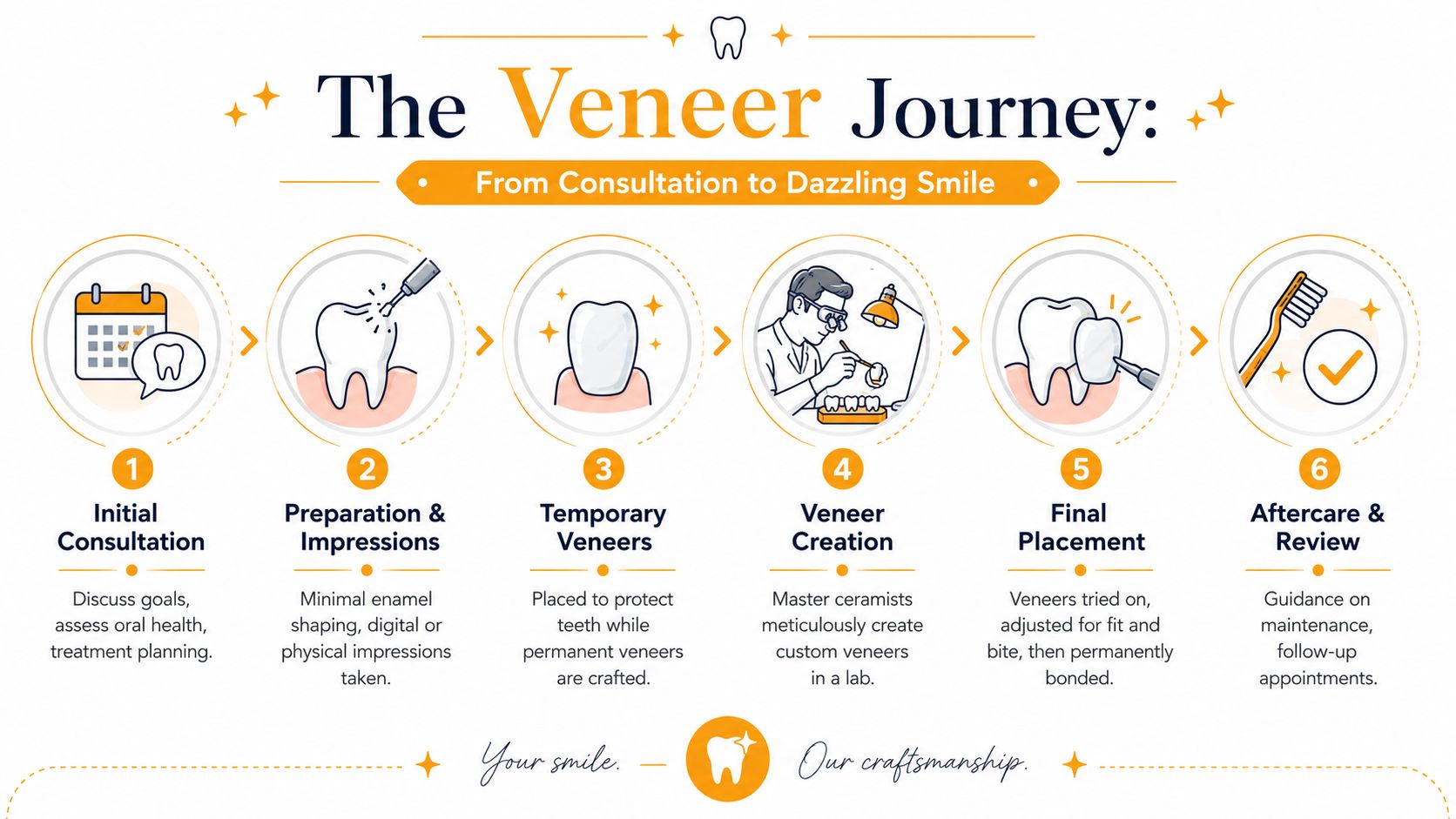
What porcelain treatment usually involves
Porcelain veneers are typically a two-appointment process in Sydney. One commonly cited Sydney guide places them at $1,500 to $2,800 per tooth, with a full smile makeover of 6 to 10 veneers ranging from about $8,000 for composite to over $28,000 for premium porcelain, and explains that porcelain is lab-made while composite is applied directly in a single visit, according to this Sydney veneers pricing overview.
A typical porcelain sequence looks like this:
Consultation and planning
Photos, examination, discussion of smile goals, and assessment of whether veneers are the right treatment.Preparation and records
Teeth are prepared where needed, then impressions or scans are taken so the veneers can be made accurately.Temporaries if appropriate
Some cases benefit from temporary veneers while the final ceramic is fabricated.Fit and bond
The final veneers are checked for shape, colour, edge position, and bite before bonding.
What composite treatment usually feels like
Composite veneers are often more immediate. The material is placed directly onto the teeth, shaped by hand, cured, and polished in the chair. For the right patient, that direct process is a major advantage. There's less waiting, no external ceramic lab, and the treatment can be more conservative.
That doesn't mean it's casual work. Good composite requires a strong eye for proportion and surface anatomy. Done well, it can look very natural. Done poorly, it can look dull or overbuilt.
What patients in the Inner West should prepare for
- Time off work: Porcelain usually needs more planning around appointments.
- A review period: It helps to allow time to adapt to the feel of new tooth shapes.
- Imaging and records: Some cases need extra diagnostics. If your dentist recommends imaging, understanding an OPG dental X-ray can make that step less mysterious.
- Protective habits: If you clench, bite nails, or use your front teeth as tools, those habits need to change.
Veneers should feel deliberate, not rushed. The final result is usually better when patients give planning the same attention they give colour and shape.
Choosing Your Veneer Provider in Sydneys Inner West
Choosing a veneer provider on price alone is usually where disappointment starts. A low quote can look appealing until the design feels generic, the teeth look too opaque, the bite feels off, or the maintenance becomes more frequent than expected. In cosmetic dentistry, value comes from diagnosis, restraint, planning, and finish.
Nationally, a full set of veneers in Australia is often placed in a broad range of $10,000 to $30,000, depending on material and case complexity, while a full aesthetic set of eight porcelain veneers in Sydney is consistently priced between $16,000 and $28,000, according to this Sydney veneer pricing analysis. That range tells you something important. There isn't one standard veneer case. There are many different clinical situations wearing the same label.
What to look for in an Inner West clinic
A suitable veneer provider should be able to explain, in plain language:
- Why veneers are appropriate: Not every cosmetic concern needs veneers.
- Which material suits your habits: Staining, grinding, and maintenance expectations matter.
- How the smile will be designed: Good cosmetic work is planned around the face and bite, not copied from a template.
- What happens if something chips or needs adjusting: Long-term support matters.
For local patients, practicality also counts. Easy access from Dulwich Hill, Marrickville, Summer Hill, Ashfield, and surrounding suburbs makes review care easier. That matters more than one might expect once treatment is complete.
Why communication and transparency matter
The dentist should be comfortable discussing trade-offs openly. Porcelain may offer stronger long-term stability for some people. Composite may be the smarter choice for others. A trustworthy consultation doesn't push one answer. It explains why one path fits better than another.
Practices that communicate well outside the surgery often do a better job inside it too. If you're interested in how strong dental communication and education should look from a patient perspective, this expert playbook from Click Click Bang Bang offers a useful lens on how dental practices present information clearly.
For Inner West patients specifically, dental veneers in Dulwich Hill is one local option to review if you want to compare treatment information, veneer materials such as E.max, Zirkonzahn Skin, and composite, and what a personalised consultation may involve. At The Smile Spot, Dr. Dimitrios Thanos has been practising since 1996, and the clinic uses technology including Biolase laser dentistry for minimally invasive care where appropriate.
The right provider should make you feel informed, not sold to. If the consultation leaves you clearer about limits, maintenance, and alternatives, that's a good sign.
A veneer decision should fit your face, your habits, your budget, and your timeline. If those four factors line up, the investment usually feels worthwhile long after the initial quote is forgotten.
If you're weighing up dental veneers cost in Sydney and want clear, specific advice for your smile, The Smile Spot can help you understand your options without pressure. A personalised consultation can clarify whether porcelain or composite suits you better, how many teeth should be treated, and what the long-term financial picture looks like for your case.