If you're reading this with a puffy cheek, a slightly stiff jaw, and an ice pack that already feels too warm, you're in the right place. The first day after wisdom tooth surgery can feel odd. Your mouth is tender, your face may look fuller than expected, and it's hard to tell what's normal and what isn't.
The good news is that wisdom teeth removal swelling is usually a routine part of healing. It can look dramatic before it starts to settle, which is why a clear timeline matters. Understanding what swelling tends to do each day, when ice helps, when heat doesn't, and when it's time to call the dentist, can greatly assist in managing recovery.
Navigating Your Wisdom Teeth Removal Recovery
In the first few hours after surgery, the body gets to work straight away. Blood clotting starts at the extraction site, nearby tissues react to the procedure, and fluid begins to move into the area as part of the normal inflammatory response. That's why swelling often starts early, even when the extraction went smoothly.
In Australia, swelling is a classified and expected postoperative inflammatory complication following wisdom teeth surgery. Surgical tooth removal was the most common dental procedure in Australia in 2022 to 2023, with around 149,000 surgeries performed, making swelling a routine consideration for hundreds of thousands of Australians each year, as noted in Australian wisdom teeth statistics.
That matters because patients often assume swelling means something has gone wrong. Usually, it doesn't. It means the body has recognised a surgical site and is sending fluid and healing cells there.
Practical rule: Swelling is expected. Your job in the first phase is to control it, not to panic about it.
A few simple priorities make the first day easier:
- Protect the area: Don't keep checking the socket with your tongue or fingers.
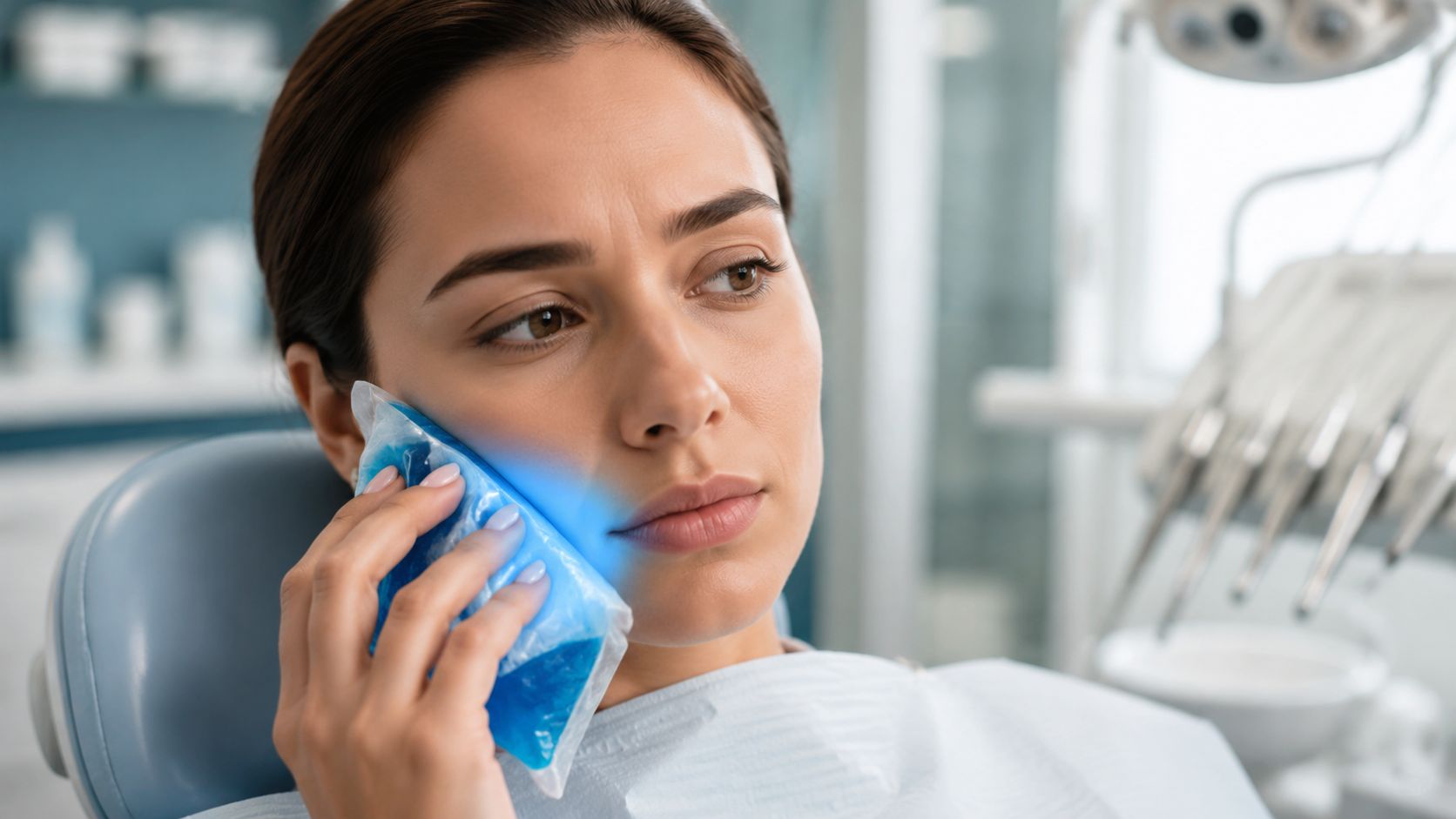
- Use cold correctly: Apply a cold pack to the outside of the face in short cycles.
- Rest smartly: Keep activity light and avoid bending, lifting, or rushing back into routine.
- Choose gentle food: Soft, cool or lukewarm meals are easier on the jaw.
If you want a broader overview of surgery and healing, our guide to wisdom tooth surgery explains what happens before, during, and after the procedure.
Understanding Why Swelling Happens
Swelling after wisdom tooth removal is easier to understand if you think of the extraction site as a small construction zone. Tissue has been disturbed. In some cases, the tooth has been lifted from deeper in the gum or bone. The body responds by sending blood, fluid, and repair cells into the area so healing can begin.
That response is useful, but it also creates fullness in the cheeks and stiffness in the jaw. It's similar to what happens with a sprained ankle. The tissue swells because the body is trying to protect and repair it.
Why one person swells more than another
Not everyone gets the same amount of swelling. Research on third molar surgery found that postoperative swelling is significantly influenced by patient-specific characteristics including age, gender, and body mass index (BMI), according to this study on short-term outcomes after third molar surgery.
That's why comparing your recovery to a friend's isn't very helpful. One patient may have mild puffiness for a few days. Another may have obvious facial swelling and jaw tightness, especially if the tooth was difficult to access or remove.
The extraction itself also matters
A straightforward eruption usually causes less tissue disturbance than a tooth that's trapped under gum or bone. If your tooth was angled, impacted, or close to neighbouring structures, the procedure may have involved more manipulation of the area. More tissue handling usually means a stronger inflammatory response afterwards.
For many patients, the key question isn't whether swelling will happen. It's how much, how fast, and how long it will last.
A more complex removal often means a slower first few days. If that applies to you, our article on impacted wisdom tooth removal gives more context about why these cases can feel different during recovery.
Swelling isn't a sign that your mouth is failing to heal. In most cases, it's a sign that healing is active.
Your Swelling Recovery Timeline Day by Day
Understanding the pattern can bring reassurance. Swelling doesn't always improve in a straight line. It often rises first, then settles.
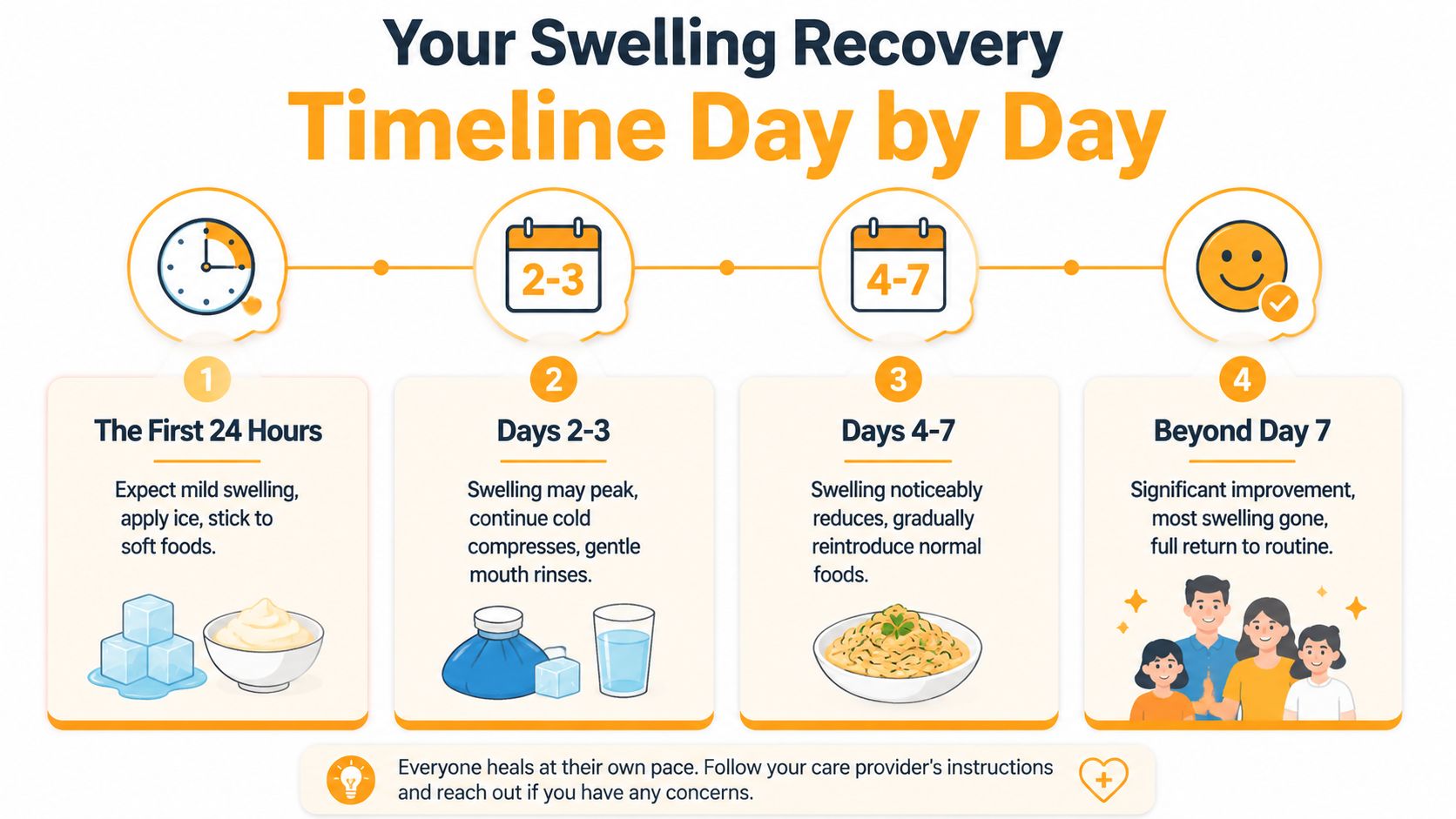
Swelling after wisdom teeth removal in Australia typically appears within the first 48 hours and peaks around days two to three, before slowly easing over the following 3 to 4 days, with most cases resolving within two weeks, according to clinical guidance on normal swelling after wisdom teeth removal.
The first 24 hours
This is the setup phase. You may notice mild puffiness, numbness wearing off, and a general bruised feeling around the jaw. Don't expect your face to look its most swollen yet. That usually comes later.
Your focus here is simple:
- Keep cold packs rotating
- Rest with your head raised
- Stick to soft foods
- Avoid straws, smoking, and vigorous rinsing
Days 2 to 3
This is usually the most confronting part of recovery. Your cheeks may look fuller, your jaw may feel stiff, and opening wide can be uncomfortable. Some people also notice bruising or tenderness tracking down the side of the face or under the jaw.
That doesn't automatically mean anything is wrong. In many cases, this is the expected peak phase.
Day two or three is often when patients worry most, simply because the face looks worse before it starts to look better.
Days 4 to 7
By this stage, one typically notices that the swelling has stopped climbing. The face starts to soften, jaw movement improves, and eating becomes easier. You may still feel tight or tender, but there should be a general sense that things are moving in the right direction.
This is also when sleep often improves. If you're still trying to get comfortable at night, our guide on how to sleep after wisdom teeth removal can help.
Beyond day 7
Most visible swelling is usually much better by this point. The site may still feel odd, and the gum may still be healing, but the obvious facial fullness should be easing. Some patients recover quickly. Others take longer, especially after more involved surgery.
A slower recovery can still be normal if the trend is steady improvement.
A Practical Aftercare Plan to Manage Swelling
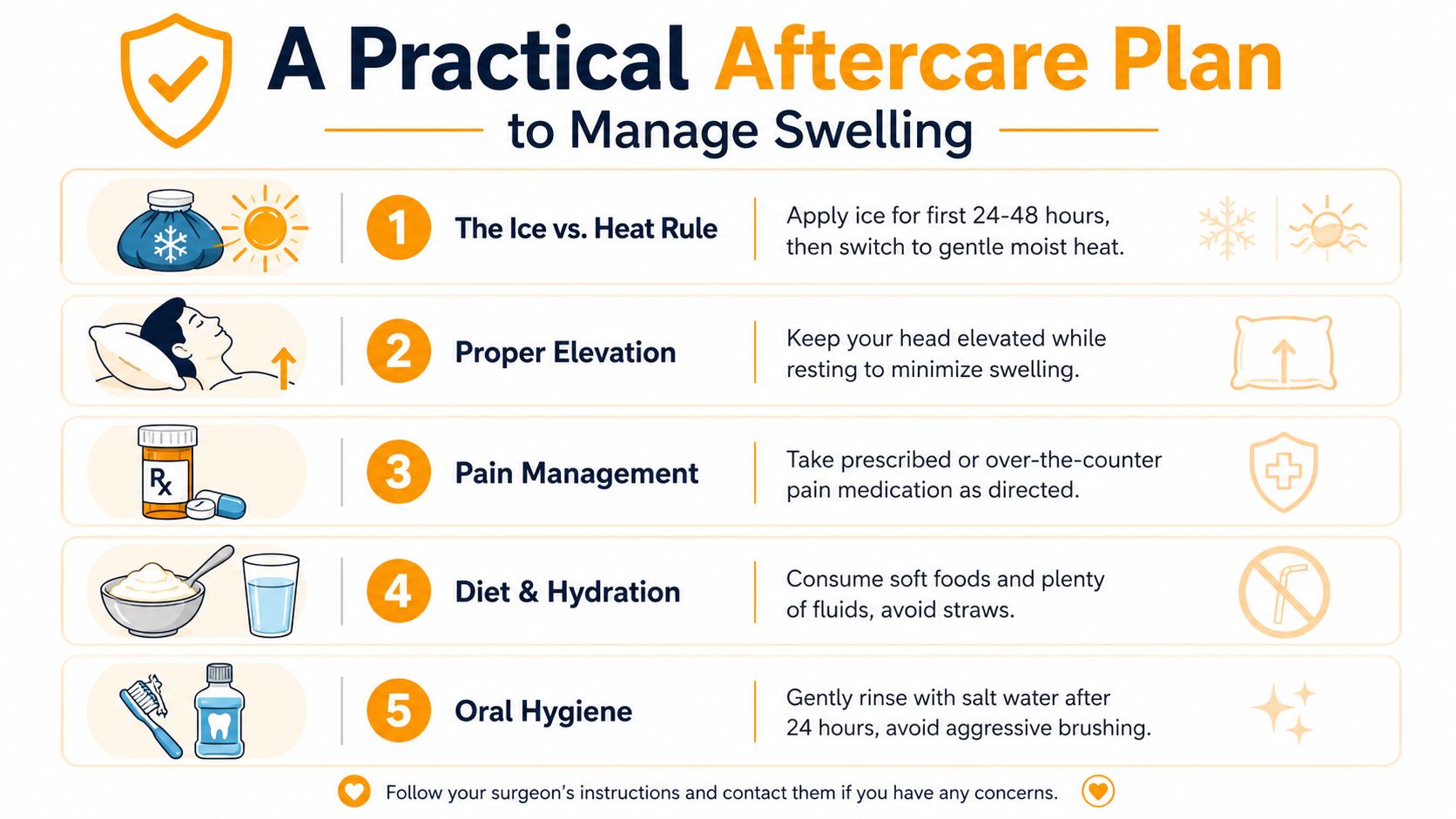
The most common mistake I see is timing the aftercare badly. Patients either stop cold therapy too early, use it too long, or switch to heat before the swelling has peaked. The result is confusion and, sometimes, a more uncomfortable recovery than necessary.
The ice versus heat rule
This is the clearest way to think about it.
Use cold first. Don't use heat early. Switch only after the acute swelling phase.
Australian surgical centre protocols advise applying ice packs to the sides of the face for the first 8 hours after surgery using a 20-minute on, 20-minute off cycle, which helps limit swelling, reduce pain, and decrease residual bleeding, as outlined in Australian oral surgery aftercare guidance.
A separate clinical point matters just as much. Cold compresses yield no clinical benefit after the first 24 hours, and warm compresses should only begin after the acute swelling phase, post-48 hours, to support healing through vasodilation, according to guidance on swelling and compress timing after wisdom tooth extraction.
Here's the practical version:
| Time after surgery | Best approach | Why it helps |
|---|---|---|
| First day | Cold pack on and off | Cold constricts blood vessels and limits early fluid build-up |
| Second day | Usually still avoid heat | Swelling may still be developing |
| After 48 hours | Gentle warm compress if advised | Warmth can support circulation once peak swelling has passed |
Key point: Ice is for the inflammatory phase. Warmth is for the recovery phase. Mixing those up is one of the easiest ways to make swelling feel worse.
Position, rest, and routine
The way you rest affects how swollen you feel the next morning.
- Keep your head raised: Use an extra pillow or rest in a reclined position.
- Take it easy: Light activity is fine, but strenuous exercise can aggravate throbbing and swelling.
- Sleep on your back if possible: Side sleeping can put pressure on the sore area.
A lot of patients notice their face looks puffier after lying flat for too long. Elevation won't eliminate swelling, but it often makes it more manageable.
Before you think about changing medications, it's worth understanding the basics. FindMyScript's pain relief comparison gives a useful plain-English breakdown of common anti-inflammatory options people often ask about after dental treatment.
Food, hydration, and hygiene
What you eat won't magically stop swelling, but it can make recovery smoother.
Try meals that require very little chewing. Yoghurt, mashed potato, soft pasta, scrambled eggs, smoothies eaten with a spoon, and lukewarm soup are all practical choices. Very hot foods, crunchy foods, and anything sharp can irritate the area.
Oral hygiene matters too, but gentle is the word.
- Keep the mouth clean: Follow your dentist's instructions on brushing near the area.
- Start gentle rinsing only when advised: Don't swish aggressively.
- Avoid suction: No straws, and don't spit forcefully.
If the sore side is bothering you as much as the swelling, our article on wisdom tooth removal pain explains what tends to settle on its own and what deserves a closer look.
A short visual guide can also help if you're midway through recovery and want a quick refresher:
Warning Signs When to Contact Your Dentist
Most swelling is ordinary postoperative inflammation. The trick is knowing when swelling is uncomfortable and when it may point to a complication.

What's usually normal
These signs often happen during a routine recovery:
- Puffy cheeks: Especially in the first few days
- Jaw stiffness: Opening wide can feel tight
- Mild oozing: A small amount of blood-stained saliva early on can happen
- Bruising: Some discolouration along the jaw or cheek can appear
- Tenderness when chewing: Soft foods are often easier for several days
What's more concerning
These symptoms deserve a call to your dentist:
- Swelling that keeps worsening instead of starting to settle
- Pain that becomes more severe rather than gradually improving
- A bad taste, foul smell, or discharge from the area
- Fever or feeling generally unwell
- Difficulty swallowing or breathing
- Marked asymmetry or firmness that feels unusual rather than just puffy
A simple way to assess it is to look at the direction of travel. Normal healing is uncomfortable, but it usually trends toward better. A complication often feels like the opposite. The pain intensifies, the swelling becomes more alarming, or new symptoms appear after you thought things were settling.
If your recovery is becoming more painful, more swollen, or more difficult to manage, don't wait it out just because someone told you swelling is normal.
Your Next Steps and Advanced Care at The Smile Spot
Good recovery starts before the extraction itself. Careful planning, gentle technique, and the right postoperative support can make the swelling phase easier to handle.
Some patients need only standard home care. Others benefit from a more individualized approach, especially if the tooth is impacted, the procedure is more involved, or anxiety is likely to make the experience harder than it needs to be.
Why the treatment approach matters
Minimally invasive treatment usually gives tissues less to recover from. That's one reason advanced tools can be helpful in selected cases. At The Smile Spot, Biolase laser dentistry is part of that broader approach to gentler care. In the right situation, laser-assisted treatment can reduce tissue trauma and support a smoother healing experience.
Sedation can also make a major difference for anxious patients. When someone is tense before and during treatment, the entire experience can feel harder. A calm, well-supported appointment often leads to a more manageable recovery period afterwards.
Here's a look at the clinic environment:
When you want local support
If you live in Dulwich Hill or elsewhere in the Inner West, local follow-up matters. Patients often feel better knowing they can speak to a team that already knows the details of their surgery if swelling changes or recovery feels slower than expected.
If you're comparing local options, this guide to wisdom tooth removal near me may help you understand what to look for in a clinic before booking.
Frequently Asked Questions About Recovery
When can I brush my teeth normally again
You can usually brush the other teeth gently straight away, but you should avoid aggressive brushing around the extraction area until your dentist says it's safe. The goal is to keep the mouth clean without disturbing healing tissue.
When can I go back to work or the gym
Desk work is often easier to return to before strenuous exercise. If swelling is still building, heavy physical activity can make you feel more throbbing and pressure. Ease back in rather than rushing it.
What should I eat in the first week
Soft, easy foods work best. Think yoghurt, eggs, mashed vegetables, soup that isn't too hot, soft pasta, and smoothies taken without a straw.
Is bruising normal with swelling
Yes, it can be. Bruising may appear around the jaw or cheek as tissues recover from surgery.
What if I'm also trying to understand dental cover
If you're comparing broader dental funding information for family members in different systems, what Medicaid covers for dental care gives a general overview that some readers may find useful, though Australian cover works differently.
If you've got questions about recovery, swelling, or whether your healing looks on track, The Smile Spot can help with advice, assessment, and follow-up care for wisdom tooth treatment in Dulwich Hill and the Inner West.