A routine dental check can uncover a tiny patch that a patient never noticed, and that's the point. In oral cancer screening, the goal isn't to wait for pain or a visible lump, it's to catch change while it's still small, local, and easier to act on. In Australia, that usually happens during an ordinary visit, when a clinician looks beyond the teeth and checks the soft tissues as part of preventive care.
Introduction to Oral Cancer Screening
A patient might book in for a clean, sit back in the chair, and mention nothing more than a sore spot that comes and goes. A careful intra-oral check can turn that brief conversation into an early referral, which is why oral cancer screening matters in family dentistry as much as any other part of prevention.
A normal appointment can reveal a lot
Screening is most useful when it happens in a familiar setting. A dentist already knows how your mouth normally looks, so small changes stand out more clearly than they might at home. That's one reason the routine check-up is such a valuable moment for finding suspicious tissue early.
Oral cancer screening isn't a dramatic test with a single yes-or-no answer. It's a quiet, careful look at the parts of the mouth and surrounding tissues that people don't easily see on their own. The aim is to decide whether something looks healthy, needs monitoring, or needs a biopsy.
For families, that can make the process feel far less intimidating. Children, adults, and older patients all benefit from the same simple principle, regular attention catches change sooner. If you already understand the value of routine preventive care, the logic behind a screening visit will feel familiar, just like checking for decay before a tooth starts to hurt.
Understanding Oral Cancer Screening
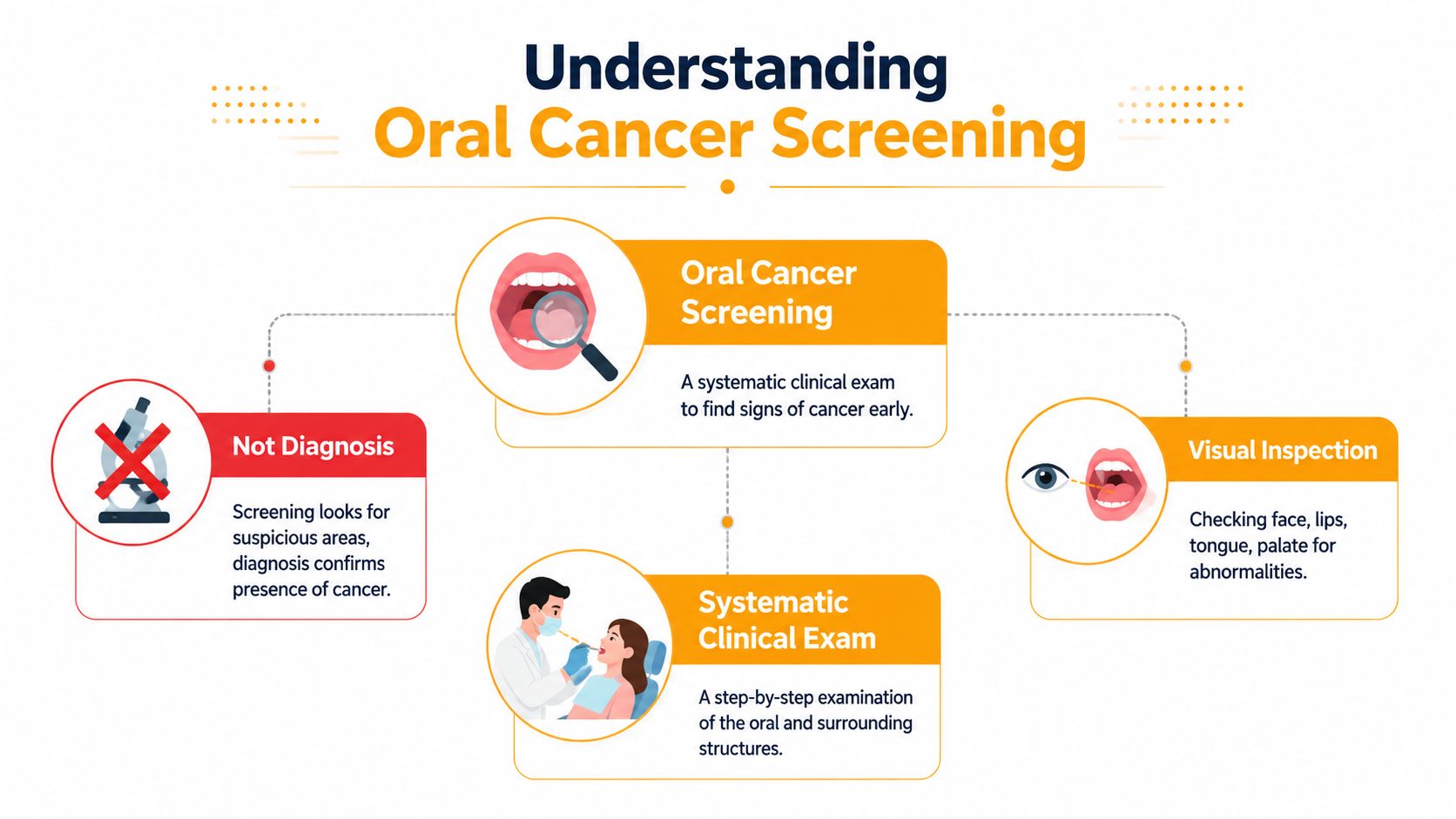
Oral cancer screening is a systematic clinical examination. It is used to look for suspicious changes, not to confirm cancer on its own. That distinction matters because a screening can raise concern, but diagnosis still depends on confirming what a lesion is, usually with a scalpel biopsy, which remains the diagnostic gold standard according to evidence reviews on oral cancer detection Canadian Agency for Drugs and Technologies in Health review.
What the dentist is actually checking
The oral cancer screening works like a careful safety check at several entry points. A clinician visually inspects the face, neck, lips, labial and buccal mucosa, gingiva, floor of mouth, tongue, and palate, then palpates the regional lymph nodes, the tongue, and the floor of mouth. That is the core of the examination, because oral cancer and precancerous change can hide in places that look ordinary at first glance.
Practical rule: if a patch, ulcer, lump, or colour change does not fit the picture, it deserves closer attention rather than guesswork.
Some adjunctive tools can help with triage. Reviews note that toluidine blue, fluorescence visualisation, and brush cytology may help flag suspicious tissue, but they do not replace biopsy. That is why clinicians do not rely on a gadget alone. They combine what they see, what they feel, and whether the lesion is persistent or in a high-risk site, especially the ventrolateral tongue and floor of mouth, where concerning lesions are seen more often. In Australian family dentistry, that approach fits opportunistic, risk-based screening, where the dentist uses the routine visit to check for change and then decides whether the next step is observation, imaging, or referral.
For readers who want to understand how other dental tools support assessment, this guide on OPG dental X-rays explains how imaging fits into a broader clinical review.
The same principle applies across preventive dentistry. A screening is a check for warning signs, not a final verdict, and it works best when it is performed methodically rather than casually. Care also matters. Some practices use mirrors, good lighting, and close-up photography to make small changes easier to track, while keeping the appointment calm and familiar for the patient.
Why Oral Cancer Screening Matters
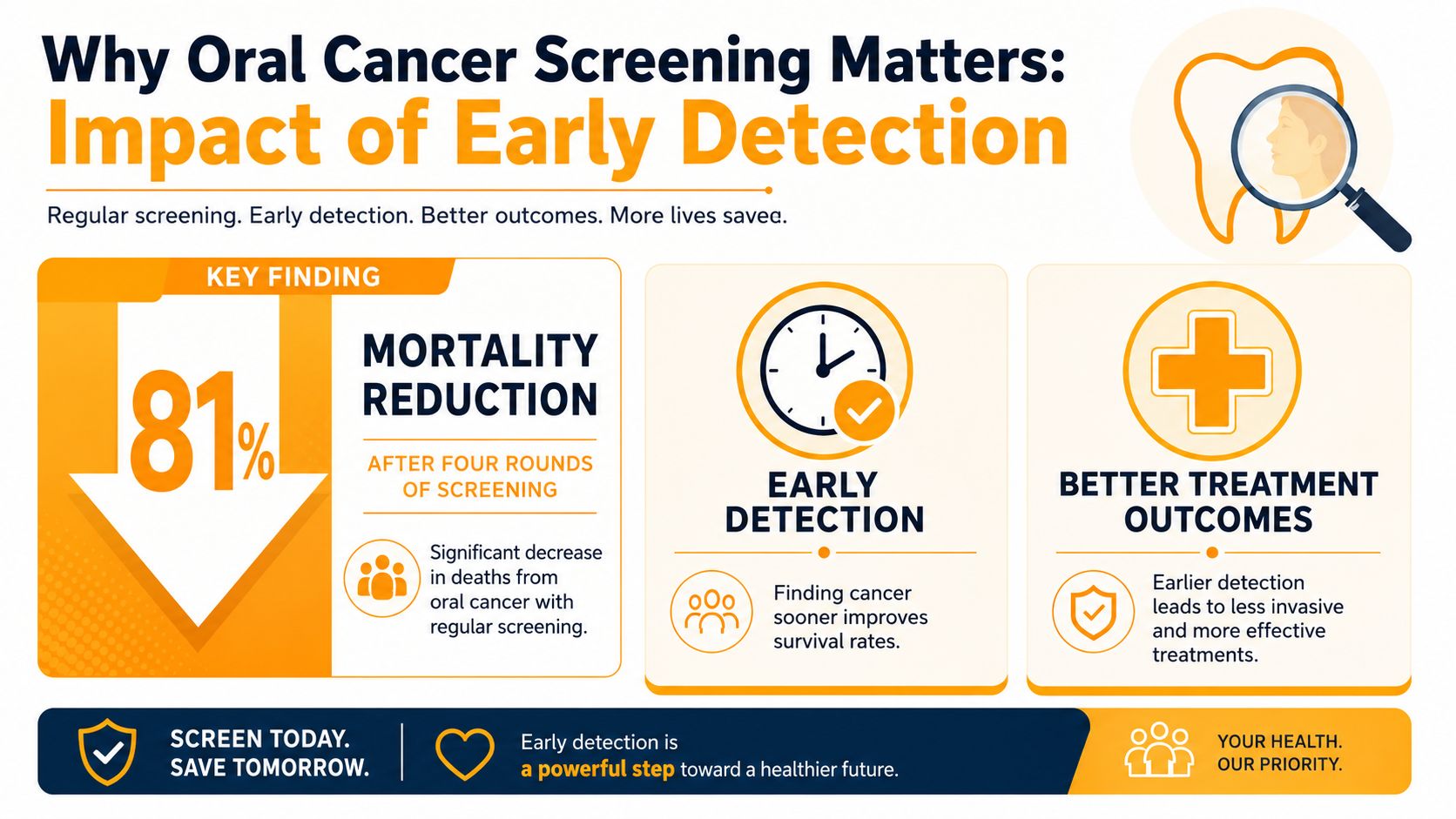
The strongest reason to screen is simple, earlier detection can change the outcome. In older randomized evidence, one trial reported an 81% mortality reduction after four rounds of screening, and another found a 27% mortality reduction over up to nine years with triennial visual inspection review of screening evidence. Those findings don't prove that every screening model works in every setting, but they do explain why repeated opportunistic checks still matter in higher-risk adults.
Where the benefit is most convincing
The benefit is most persuasive in people whose baseline risk is already higher. A 2022 meta-analysis found that clinical oral examination screening reduced oral-cancer mortality by 26% and advanced-case detection by 19% in high-risk groups, while evidence stayed inconclusive for incidence reduction and for newer methods meta-analysis summary. That lines up with Australian practice, where screening is usually opportunistic and risk-based, not a universal population program.
Screening works best when the clinician has a reason to look closely, not just a form to tick off.
That's also why family dentists often frame oral cancer screening as part of the regular preventive conversation rather than as a separate event. A patient who smokes, drinks heavily, has a history of persistent mucosal change, or has had other oral potentially malignant disorders deserves a different level of attention from someone with low baseline risk.
If you want a broader explanation of prognosis and treatment pathways after diagnosis, the overview from oral cancer prognosis and treatment is a helpful clinical resource to read alongside screening information. In practical terms, screening isn't about creating anxiety. It's about giving clinicians a better chance to find disease before treatment becomes more complex.
Identifying Risk Factors and Warning Signs
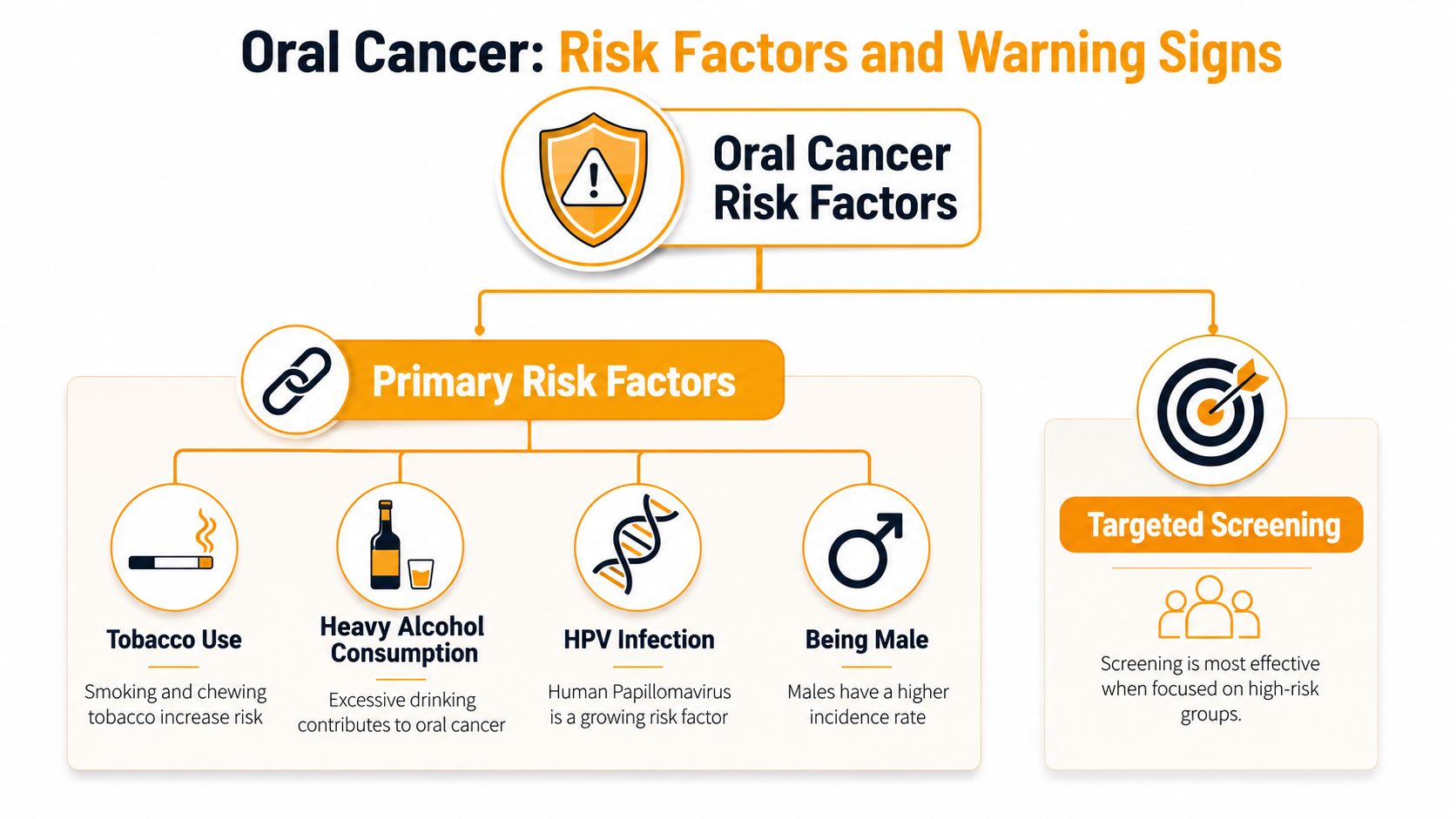
Oral cancer does not affect every person in the same way. It is more common in men and is closely linked to tobacco use, heavy alcohol consumption, and HPV infection SEER oral cavity fact sheet. In a family dentistry setting, that is why screening is often opportunistic and risk-based, with the clinician paying closer attention when a patient's history suggests a higher chance of change.
A helpful way to approach this is to look for patterns, not isolated moments. A single ulcer or patch may be harmless, while a change that lingers or keeps returning deserves a careful look.
The changes that deserve a closer look
A simple checklist works well because early warning signs can be easy to miss. Watch for:
- A sore or ulcer that doesn't heal, especially if it keeps coming back in the same spot.
- A red patch or white patch, particularly if the colour change is persistent.
- A lump, thickened area, or firm spot inside the cheek, on the tongue, or under the jaw.
- Unexplained bleeding or discomfort without a clear cause.
- A change in how teeth, dentures, or the bite fit, especially if nothing else has changed.
These changes do not prove cancer. They do mean the tissue should be examined by a clinician, because irritation, infection, and early disease can look similar at first glance.
If a mouth change lasts, shrinks and returns, or sits in a high-risk area, don't keep watching it alone.
Dryness and irritation can also make the mouth feel abnormal for other reasons. For readers who want a broader look at that overlap, SleepHabits mouth breathing insights is a useful reminder that mouth tissues can be affected by several causes, which is why a proper assessment matters.
A practical point is often missed in general articles. Risk is shaped by habits, but it is also shaped by the pattern of those habits and by what the clinician sees in the mouth. Someone with tobacco exposure, alcohol exposure, or HPV-related risk needs more deliberate attention than a low-risk adult with a short-lived ulcer from a sharp tooth. In family dentistry, that broader view helps the team decide when to watch, when to photograph, and when to use an intraoral camera for a closer, clearer look, including the kind of detail explained in this guide to intraoral camera dentistry.
What to Expect During Your Oral Cancer Screening
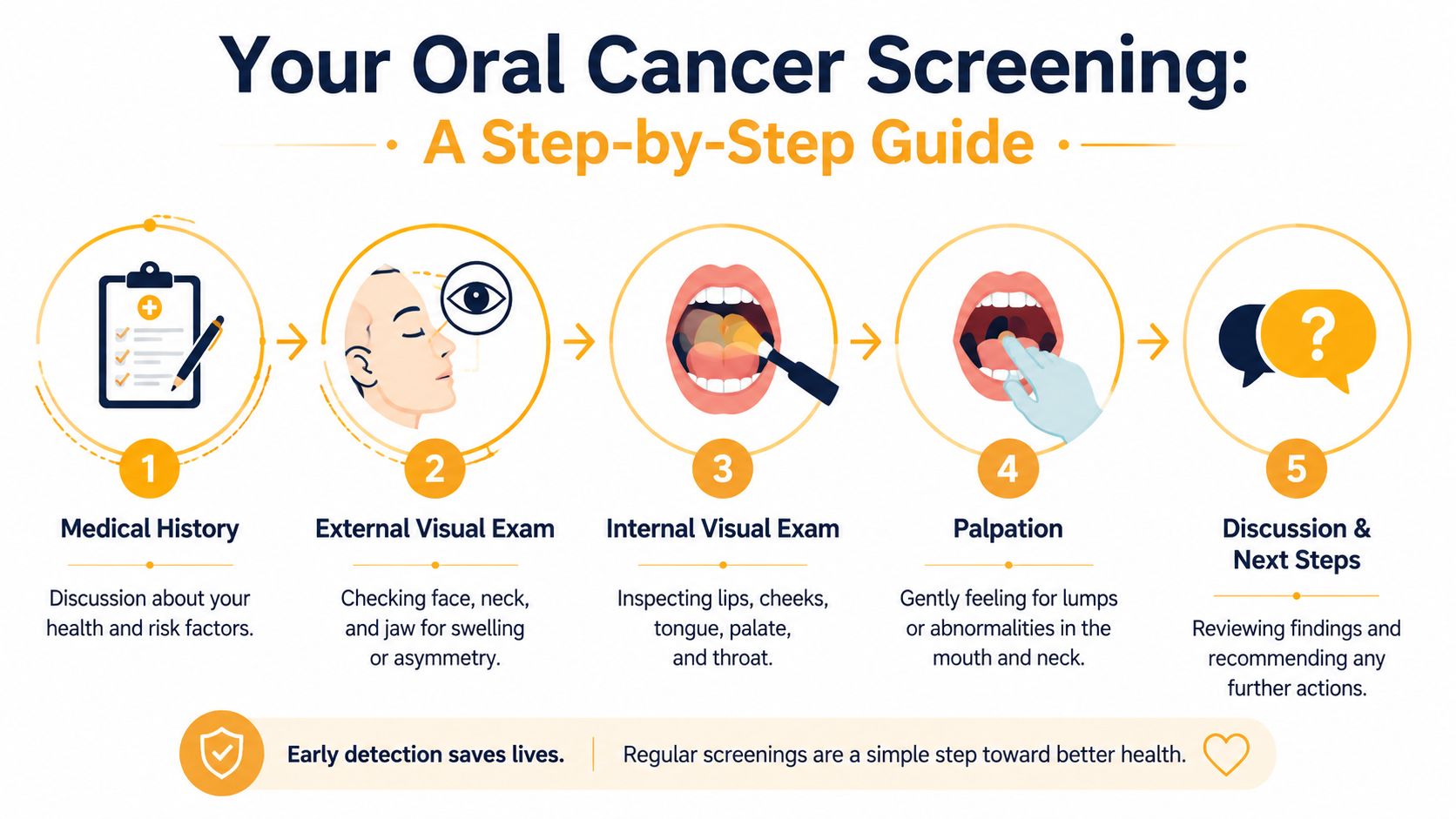
The appointment usually starts with a conversation, not an instrument. Your clinician asks about symptoms, past problems, tobacco or alcohol exposure, and any patches, ulcers, or lumps you've noticed. That history matters because it tells the examiner where to look more closely and whether a lesion has enough staying power to concern them.
From first look to follow-up
The exam then moves in a clear sequence. In an Indian cluster-randomised study, up to three rounds of triennial screening led to a 27% reduction in oral-cancer mortality versus control, with benefits concentrated in participants who used tobacco or alcohol NCBI review. That's one reason repeated checks matter more than a one-off look.
You can expect the clinician to:
- Inspect the outside of the face, neck, and jaw, looking for asymmetry or swelling.
- Look inside the mouth, checking the lips, cheeks, tongue, palate, and throat.
- Feel the tissues gently, including the neck and floor of the mouth.
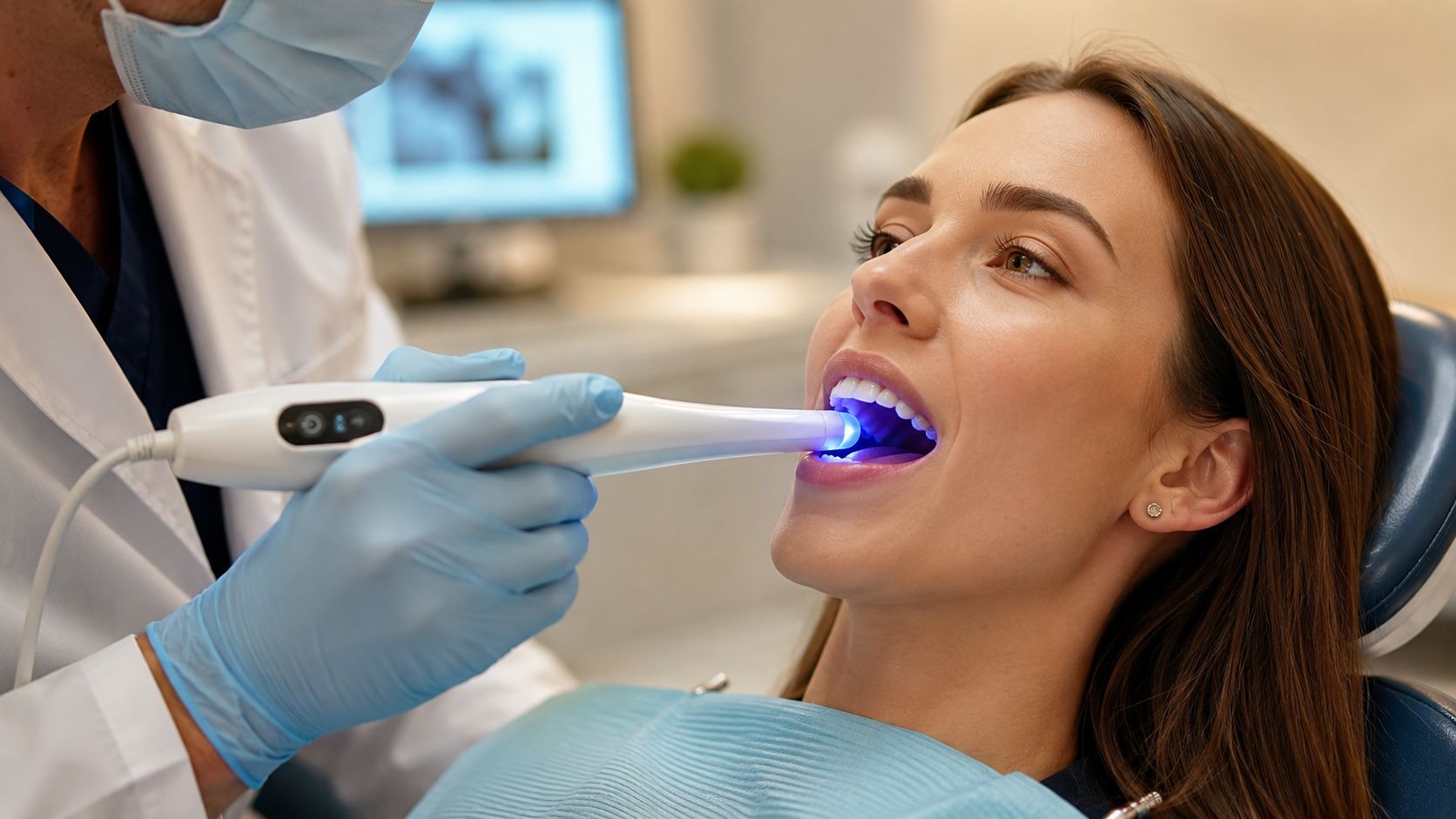
- Use adjunctive tools if needed, such as a fluorescence device, to help triage a suspicious area.
- Explain the findings and next steps, which may include monitoring, referral, or biopsy.
A short visual aid can help patients recognise how that process works. During the appointment, the clinician may also take close-up photos or use extra illumination so changes are easier to track over time. If a lesion looks persistent or anatomically risky, referral doesn't mean panic, it means the team is treating the finding properly.
Patients who want a general walkthrough of a routine hygiene visit can also read checkup and clean to see how preventive appointments fit together.
Recommended Screening Frequency and Prevention Tips
There isn't a single schedule that fits everyone, because oral cancer risk isn't the same for all patients. In Australian practice, the most defensible approach is to include screening as part of routine preventive visits, then increase attention for people with tobacco exposure, heavy alcohol use, HPV-related risk, or a history of persistent lesions. That's where opportunistic screening works best, inside the normal rhythm of dental care.
Screening and prevention work together
A screen tells the clinician what deserves a closer look. Prevention lowers the chance that suspicious tissue develops in the first place. Those two jobs belong together.
Practical prevention still starts with the obvious habits. Reducing or stopping tobacco use matters, moderating alcohol intake matters, and keeping the mouth healthy matters too. Good oral hygiene doesn't prevent every cancer, but it does reduce the noise that can make early changes harder to spot.
A cleaner, calmer mouth is easier to monitor than a chronically irritated one.
For patients who clench, grind, or play contact sports, a custom mouthguard can protect oral tissues from repeated trauma. That matters because persistent irritation can make it harder to tell what's injury and what needs further review. For more general prevention principles, preventive dental care is a useful companion read.
The simplest takeaway is this, screen regularly, reduce known risks, and don't ignore change that lingers. When those three parts work together, the appointment becomes more than a routine clean. It becomes a practical safeguard for long-term oral health.
Addressing Common Patient Concerns
Many patients worry that a screening will hurt, feel awkward, or lead to an unexpected bill. In reality, it's usually quick and gentle, and the clinician can often complete it during a routine check-up without adding much time or discomfort. If you're anxious, tell the dental team upfront, because a calm pace, clear explanations, and gentle technique make a big difference.
The other common worry is whether screening is even necessary if there are no symptoms. The answer is nuanced. The U.S. Preventive Services Task Force and National Cancer Institute say the evidence is insufficient to recommend for or against routine screening in asymptomatic populations NCI oral screening summary, which is exactly why Australian practice leans on opportunistic, risk-based exams rather than a universal one-size-fits-all approach.
If you're comparing comfort options or wondering how irritated mouth tissue is managed, best mouth ulcer gel Australia may help you separate symptom relief from proper diagnosis.
The Smile Spot Oral Cancer Screening Approach
At The Smile Spot, oral cancer screening fits into a broader family-dentistry model built around prevention, comfort, and practical access. That means careful soft-tissue examination is part of the same visit as routine dentistry, so the check doesn't feel like an added burden. Patients who value straightforward explanations, gentle handling, and modern techniques tend to appreciate that approach.
Dr Dimitrios Thanos, a University of Sydney graduate and principal dentist since 1996, brings long-standing clinical experience to that process. The clinic also uses Biolase laser dentistry for minimally invasive care where appropriate, which can support a calmer experience for patients who are nervous about treatment. That matters because the best screening is the one people return for.
The clinic's convenience also helps families stay consistent. Online booking, late evening and Saturday appointments, emergency availability, and acceptance of most private health funds make it easier to keep preventive care on the calendar. For many households, that predictability is what turns a good intention into an actual habit.
If you're ready to make oral cancer screening part of your next check-up, book a visit with The Smile Spot and ask for a thorough preventive examination that includes a soft-tissue screen. A small appointment now is far easier than waiting for a change to become impossible to ignore.
A CTA for The Smile Spot.