Normal activities can resume within 24 to 48 hours, with noticeable soreness lasting 2 to 3 days. Comfort often returns for patients in about 3 to 5 days, so recovery is usually measured in days, not weeks, even though the tooth keeps healing underneath.
You've probably just had the appointment, or you're trying to plan it around work, school runs, and dinner with the family. That's the key question for busy people in Dulwich Hill and the Inner West: how much downtime should you expect, and when will chewing, speaking, and sleeping feel normal again?
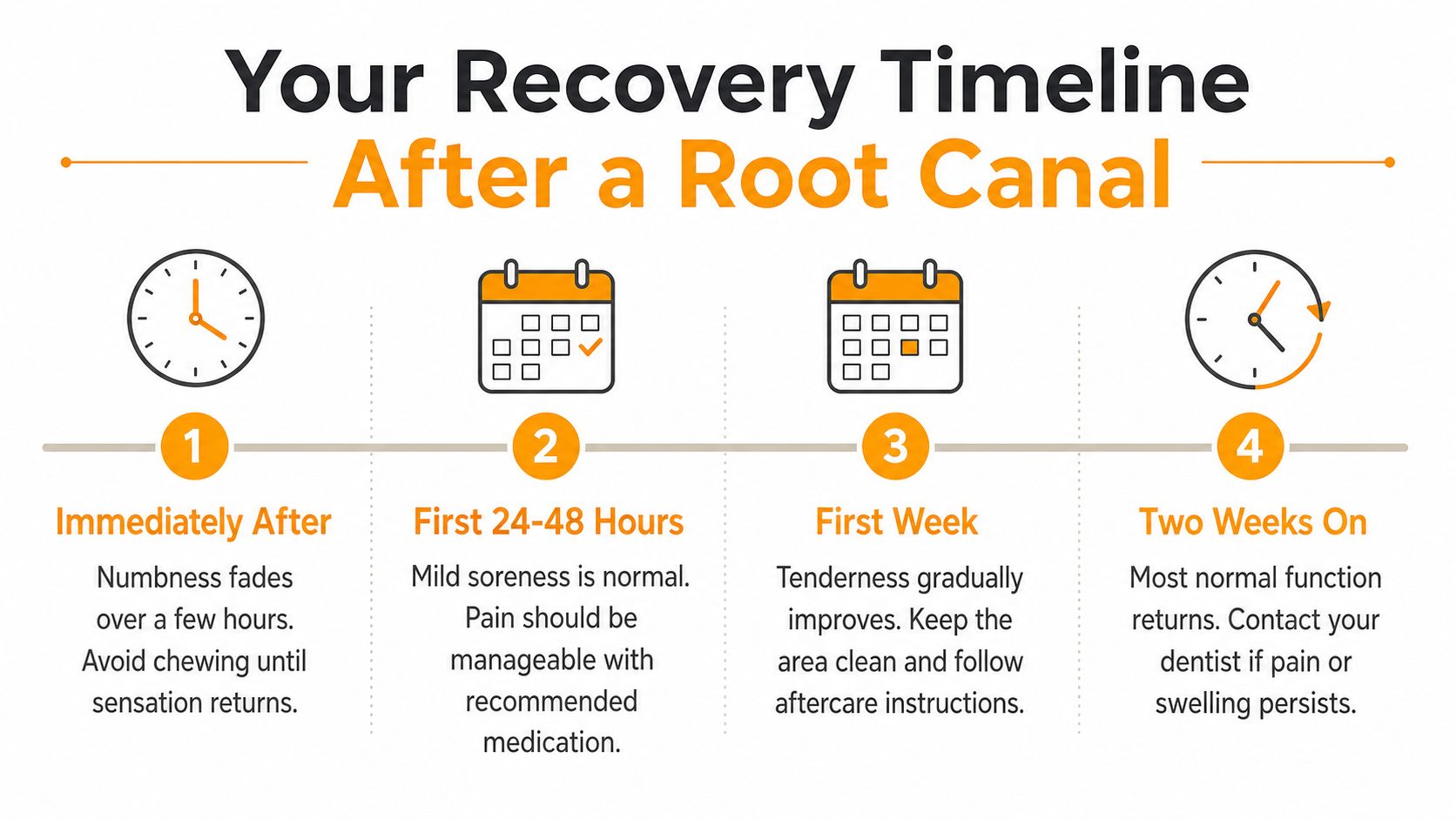
Your Recovery Timeline After a Root Canal
The first few hours after treatment are usually the quietest and the strangest. The local anaesthetic wears off, and the tooth often settles into a dull tenderness that feels more like bruising than sharp pain. Chewing on that side can feel awkward, especially after a molar procedure, so I usually tell Dulwich Hill patients to keep the day light and avoid testing the tooth.
By 24 to 48 hours, many patients are back to their usual routine, even if they still notice the tooth now and then according to Amanda Family Dental's recovery timeline. Keep that early period gentle. Soft meals, careful chewing, and leaving the tooth alone between meals tend to help more than repeatedly checking whether it still hurts.
Practical rule: if the discomfort is easing each day, that is the direction you want. A root canal should become less noticeable as healing settles, not more.
Some people also notice that biting feels different in the first couple of days. If that sensation is bothering you, the guide on addressing tooth sensitivity when biting explains why the tooth can feel tender under pressure.
If you want to understand the treatment sequence itself, this root canal treatment steps guide lays out the process clearly. That helps many patients make sense of the soreness afterwards, because the recovery follows the work that was done inside the tooth.
The first 48 hours usually matter most because tenderness and chewing sensitivity are most likely to show up then. After that, the pain should start tapering, and the jaw should feel less guarded when you eat or speak. That steady easing is the sign I look for in a normal recovery.
Navigating the First Week of Healing
By day three, many patients are already turning a corner. In Australian dental guidance, 80% are pain-free by day 3, and that lines up with the usual day-to-day experience of the tooth feeling less prominent and less reactive as noted by an Australian specialist recovery source. That doesn't mean every sensation disappears, but the pattern should be improving.
Day 3 to Day 5
This is the stage where you can start relaxing a little, as long as the tooth is getting quieter rather than louder. Lukewarm soft foods are usually easier than anything crunchy, chewy, or very hot. If you're tempted to test the tooth with a favourite meal, wait until it can tolerate gentler chewing without reminding you about it afterwards.
The next helpful marker is sleep. If you can rest through the night without the tooth waking you up, recovery is moving well. If it's still distracting after the first few days, that's useful information and worth monitoring.
Day 6 to Day 7
By the end of the first week, patients are often using the tooth more naturally again, even if they're still cautious on one side. Cleveland Clinic notes that lingering pain shouldn't persist beyond about a week in a typical recovery according to its root canal overview. That doesn't mean the tooth is “fully healed” in a biological sense, but the symptom phase should be settling.
If you're trying to plan meals, keep the first week simple:
- Start with soft foods, then move back to firmer textures only when chewing feels steady.
- Use the treated side gently, especially if the bite still feels slightly high or tender.
- Brush and floss normally, but don't scrub the area with extra force.
A lot of people worry that every twinge means something has gone wrong. Usually it doesn't. The better question is whether the discomfort is trending down day by day.
How to Manage Pain and Swelling Effectively
The first thing many patients want to know after root canal treatment is simple, how do I keep this comfortable enough to get through the day? Pain control should feel practical, not confusing, and the right approach usually starts with standard NSAIDs, especially ibuprofen 600 mg alone or combined with paracetamol 1000 mg, which are commonly used for post-endodontic pain relief according to Smile Solutions' root canal aftercare guide. Take medicine exactly as directed, and do not combine products without checking what is already in them.
Cold compresses help because they ease the tissues around the tooth and jaw, where much of the early soreness sits. Use them for short periods rather than holding ice directly against the skin. If the face feels puffy, resting with the head slightly raised can also help, especially on the first night.
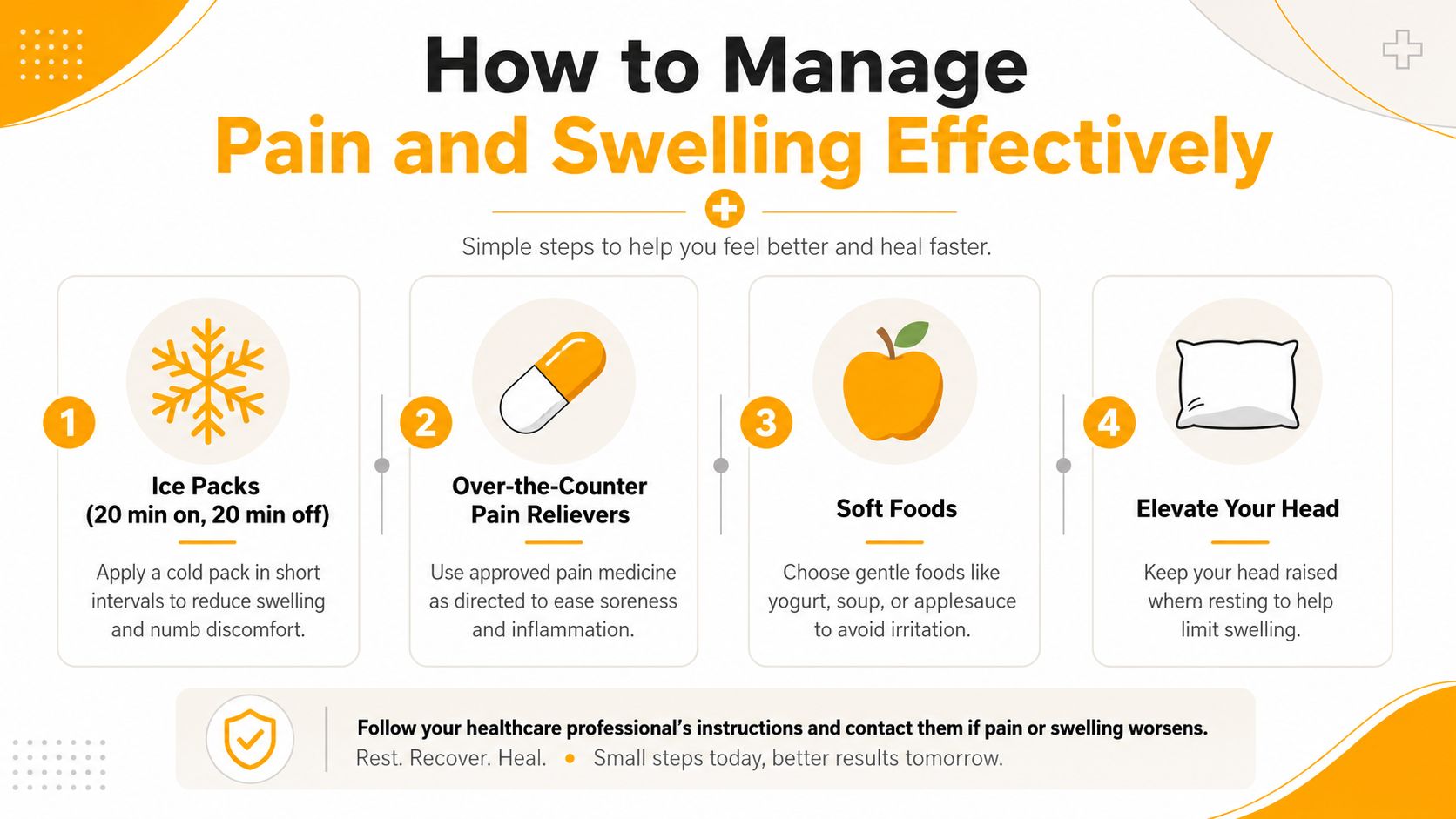
Soft foods are not just about comfort. They reduce the force going through the treated tooth while the surrounding tissues settle.
The first 1 to 2 weeks are the main aftercare window in the Australian specialist guide, so it makes more sense to use those basics consistently than to force yourself back into hard chewing too soon as noted in the same Smile Solutions guide. If you want a practical comparison of medication choices for dental pain, this guide to Panadeine Forte after tooth extraction explains how dentists think about stronger pain relief in general, even though root canal recovery is often managed without it.
Swelling should settle over time. If it improves with rest, medication, and cold compresses, that is reassuring. If it keeps building, that needs attention.
Factors That Can Influence Your Recovery
Not every tooth heals at the same pace. A front tooth is often simpler to treat than a molar, and that difference shows up in the recovery pattern because molars have more canals, more chewing load, and usually more complex anatomy. That complexity can make the bite feel tender for longer, even when the procedure itself went smoothly.
The tooth itself matters
Australian follow-up data found that healing time increases when healing is biologically compromised, in patients older than 40, in teeth with Weine type II canal anatomy, when the canal is prepared to a master apical file size <35, and when there is an overextended filling as reported in the study. The practical takeaway is simple, anatomy and technical details affect how well the root tips seal and how quickly the tissues quiet down.
That doesn't mean those factors guarantee a poor outcome. It means some teeth need more time, more monitoring, and sometimes a different restoration plan. Age, canal shape, and obturation quality all affect the biology of healing in ways patients can't see from the outside.
What you can control
Your daily habits still matter. Avoid chewing hard foods on the treated side until the bite feels comfortable again. Keep brushing and flossing, because plaque control supports the healing tissues rather than irritating them.
If you want to understand why dentists care so much about the broader outcome after treatment, this root canal success rate article is worth a read. The main point is that recovery is not just about symptoms fading, it's about the tooth becoming stable again.
Ensuring the Long-Term Success of Your Tooth
A root canal is only part of the job. The tooth still needs to be protected so it can stay functional for years, not just feel better this week. That's why the definitive restoration matters so much after the initial soreness has settled.
A large National Dental PBRN analysis found a median survival time of 11.1 years for root canal-treated teeth, and 26.1% were estimated to survive beyond 20 years in the published dataset. The same reporting says teeth that received a filling or crown after treatment lasted around 11 years, while teeth with no restorative work lasted only around 6.5 years. That's a major difference, and it comes down to protection against fracture and leakage.
For most back teeth, a crown is the restoration that gives the tooth real day-to-day strength. A simple filling can close the access hole, but it doesn't always reinforce the tooth enough for regular chewing. If you've ever watched a cracked back tooth split under load, you know why this step is treated seriously in dentistry.
A useful way to think about it is this. The root canal resolves the infection and pain source. The crown, or other definitive restoration where appropriate, protects the investment. If you're comparing options, this guide to dental crowns and bridges gives a practical overview of why protection after treatment matters.
When to Call Your Dulwich Hill Dentist
A little tenderness is normal. Pain that steadily worsens is not. The difference is usually clear if you pay attention to the pattern rather than a single moment of discomfort.
Normal healing signs
Mild soreness, slight sensitivity when biting, and a tooth that feels a bit “different” for a few days can all fit normal recovery. So can tiredness on the day of treatment, especially if you've been tense in the chair. If the symptoms are fading and you're sleeping, eating, and working more comfortably each day, that's a good sign.
Red flags that need a call
- Persistent pain beyond 3 days that doesn't ease or starts getting worse.
- High fever or swelling spreading into the cheek, jaw, or neck.
- Allergic reaction to medication, including rash, itchiness, or trouble breathing.
- Numbness that doesn't fade after the expected anaesthetic window.
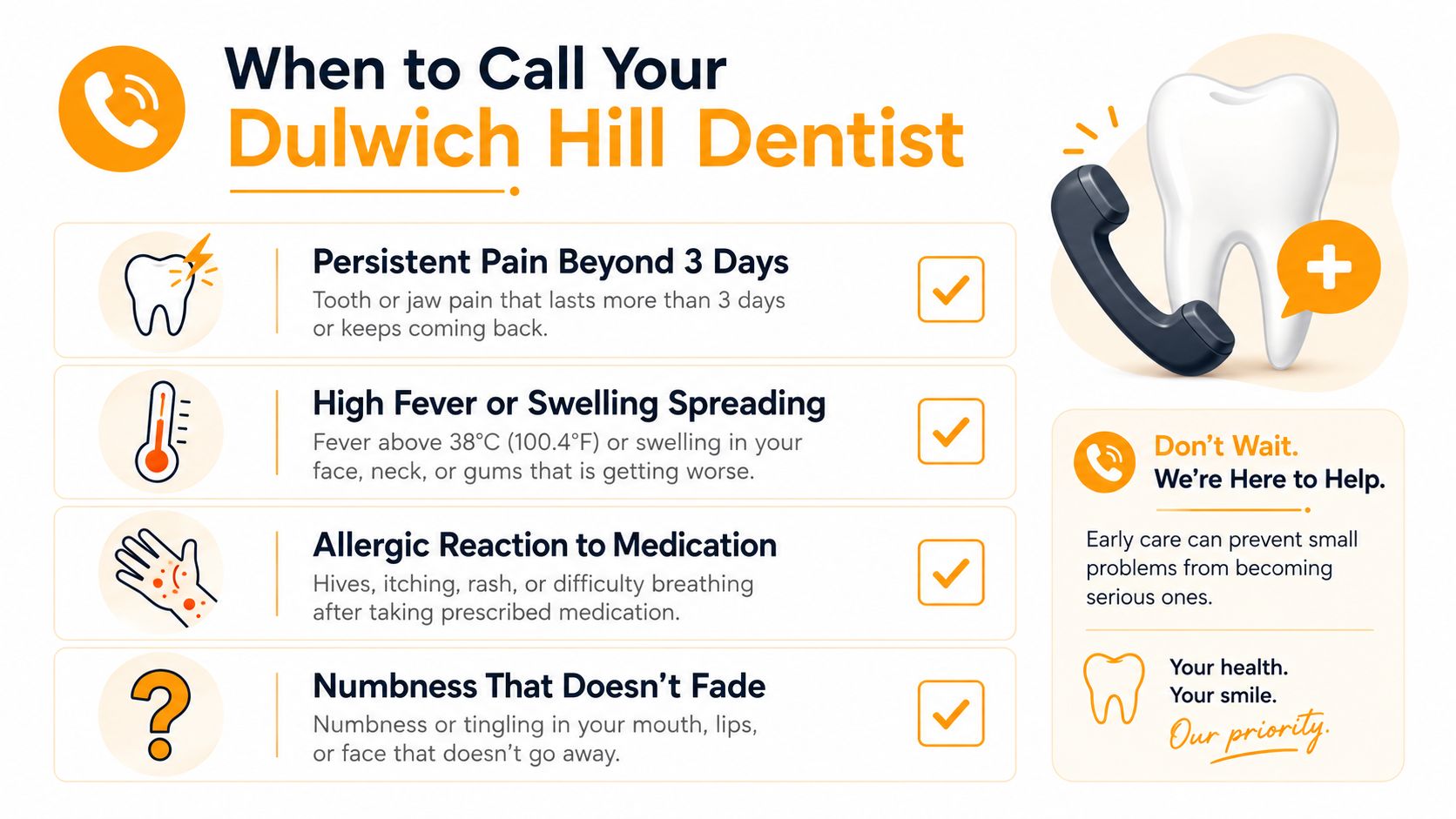
If symptoms feel urgent, don't wait to see whether they settle on their own. The Australian emergency guide linked here, dental emergency services, is a good reminder that faster advice is better than guessing when pain is changing.
Call sooner if the pain is sharp, swelling is expanding, or the bite suddenly feels off after it had been improving.
That rule helps families and busy workers alike. It keeps small issues from becoming bigger interruptions.
Your Root Canal Recovery Questions Answered
A lot of the questions I hear are practical, not clinical. People want to know how this fits into a normal week, not just whether the tooth is technically healing. That's especially true for parents juggling school drop-offs and professionals commuting into the CBD.
If you're heading to work the next day, many people do fine with a train trip and a normal office day, as long as the anaesthetic has worn off and the pain is under control. The main issue isn't the commute, it's whether you can focus comfortably and avoid clenching on the way in. For someone in Dulwich Hill catching public transport, that usually means a calm morning is realistic, but a very long or physically demanding day might not be the best first choice.
For gym sessions in Marrickville, the better call is to take it easy at first. Light movement is usually easier to manage than anything that involves heavy lifting, straining, or jaw clenching. If you're lifting weights or doing high-intensity training, give the tooth time to settle before loading your body hard again.
Dinner is another common concern, especially if your favourite restaurant meal in Petersham isn't soft. If the dish needs strong chewing, crusty bread, or a lot of force on one side, it's smarter to wait until the tooth feels settled. Soft meals in the first couple of days keep the recovery smooth and stop you from repeatedly testing the area.
Parents often ask whether they can carry on with family life as normal. Usually, yes, but the first 24 to 48 hours are easier if someone else can help with the heavier lifting, meal prep, or school run. That small bit of breathing room makes recovery feel much less disruptive.
If you want personalised advice after a root canal, The Smile Spot can help you understand what's normal for your tooth and what needs a closer look. Book a visit with The Smile Spot if you want clear guidance, gentle follow-up care, and a plan that fits your schedule in Dulwich Hill and the Inner West.