A single-tooth dental implant in Australia typically costs AUD $3,000–$7,000 in 2026. All-on-4 / All-on-X full-arch treatment commonly runs AUD $20,000–$40,000 per arch, and full-mouth fixed restoration can reach AUD $40,000–$80,000.
That's the honest starting point if you're sitting there with one missing tooth, a quote in front of you, and no clear idea whether the number is sensible or inflated. In the Inner West, I'd budget above the cheapest headline price, because Sydney and NSW sit on the pricier side of the national market, and the final bill depends on more than the implant fixture alone.
What Dental Implants Really Cost in Australia Right Now
If you've just been told you need an implant, the first mistake is chasing the lowest advertised number. The second is assuming every clinic means the same thing by “implant”. They don't, and that's why the quotes look all over the place.
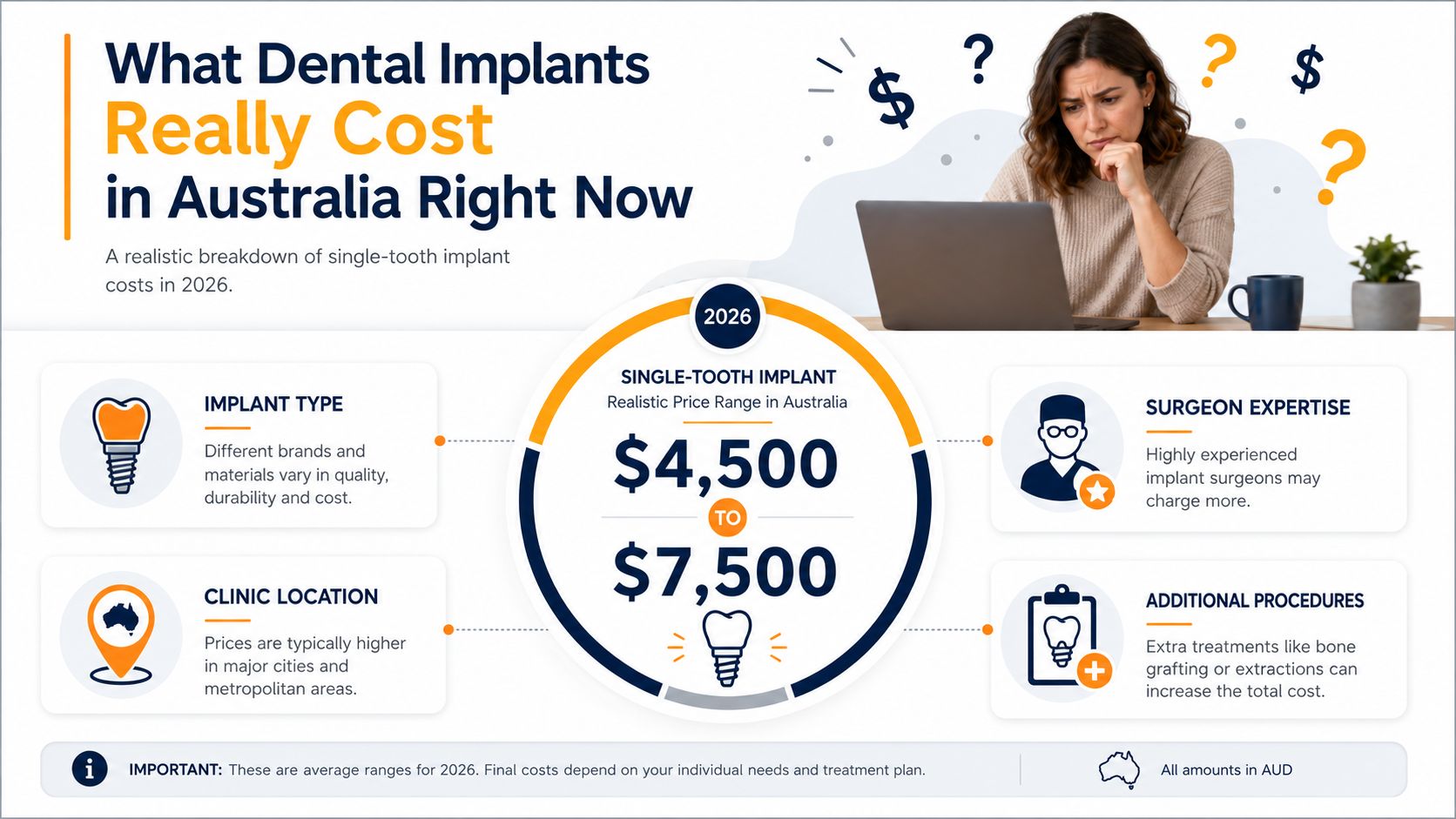
The cleanest way to think about dental implants cost Australia is as a spectrum of treatment complexity. A single-tooth implant usually lands at AUD $3,000–$7,000 in 2026, while All-on-4 / All-on-X full-arch work commonly sits at AUD $20,000–$40,000 per arch. If you're replacing both arches with a fixed solution, full-mouth restoration can reach AUD $40,000–$80,000. Those numbers aren't random, they reflect the jump from a single replacement to a full load-bearing reconstruction.
Why the range jumps so sharply
A full-arch case costs far more because it's not just one tooth being replaced. The work involves more planning, more surgical coordination, and a fixed prosthesis that has to carry a whole arch of biting force. In the Australian guidance I've reviewed, full-arch treatment can cost roughly 6 to 13 times more than a basic single-tooth case, depending on the number of implants, prosthetic design, and surgical planning (Australian implant cost guide).
That's the number that matters, not the most cheerful headline on a landing page. If you're comparing clinics in Sydney, keep in mind that NSW and Sydney pricing tends to sit above the cheapest national ranges, with one 2026 guide listing NSW at AUD $3,150 low / $4,980 mid / $6,820 high for a single implant and Sydney at AUD $4,000–$7,000 for the same treatment (NSW and Sydney pricing guide).
Practical rule: if a quote looks much lower than the ranges above, ask what's missing before you assume you've found a bargain.
For Inner West patients, that means budgeting for a realistic Sydney clinic fee, not the cheapest number on Google. A quote only becomes useful when it reflects your actual mouth, not an abstract “one tooth” price.
The Three Parts of an Implant and What Each One Costs
A quote for an implant often looks simple on paper. In the chair, it rarely is. A proper implant restoration breaks into three separate parts, and each one has its own role in the final bill.
What the quote should actually include
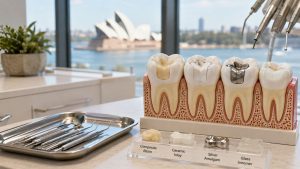
The fixture is the titanium post placed into the jaw. The abutment is the connector that links the fixture to the visible tooth. The crown is the tooth you see and chew with, and if you want a closer look at the crown restoration process, the clinic should be able to explain how that part is designed, shaded, fitted, and reviewed. A transparent quote should separate these items, because a line that says only “implant” can hide the most expensive part of the restoration.
| Component | What it does | Typical AUD range |
|---|---|---|
| Implant fixture | Replaces the tooth root in the jaw | Usually bundled into the full restored implant price |
| Abutment | Connects the fixture to the visible tooth | Usually bundled into the full restored implant price |
| Crown | Restores chewing and appearance | Usually bundled into the full restored implant price |
Industry guides put a single restored implant at about AUD $3,000–$7,000 nationally once the implant, abutment, crown, and surgical steps are included (Australian implant cost guide). Another 2026 guide says the total for a single implant in Australia can reach AUD $5,000–$8,000 when the abutment, crown, and possible bone grafting are included (single implant cost guide).
Read those figures as a full treatment cost, not a bare fixture price. If a clinic gives you one number without separating the parts, you still do not know whether it covers the surgical post only or the complete restoration. That is how patients get caught out.
Ask this directly: “Does your implant fee include the fixture, the abutment, the crown, imaging, and review visits, or are those extra?”
For a quick sanity check, ask for the itemised breakdown before you commit. If the clinic cannot show you the three moving parts of the treatment, you are not looking at a complete quote.
Single Implant vs Bridge vs All-on-4
A patient with one missing back tooth, a run of gaps, and a failing full arch are dealing with three very different treatment plans. The quote changes because the work changes. In an Inner West clinic, that is the first thing to get clear before you compare numbers.
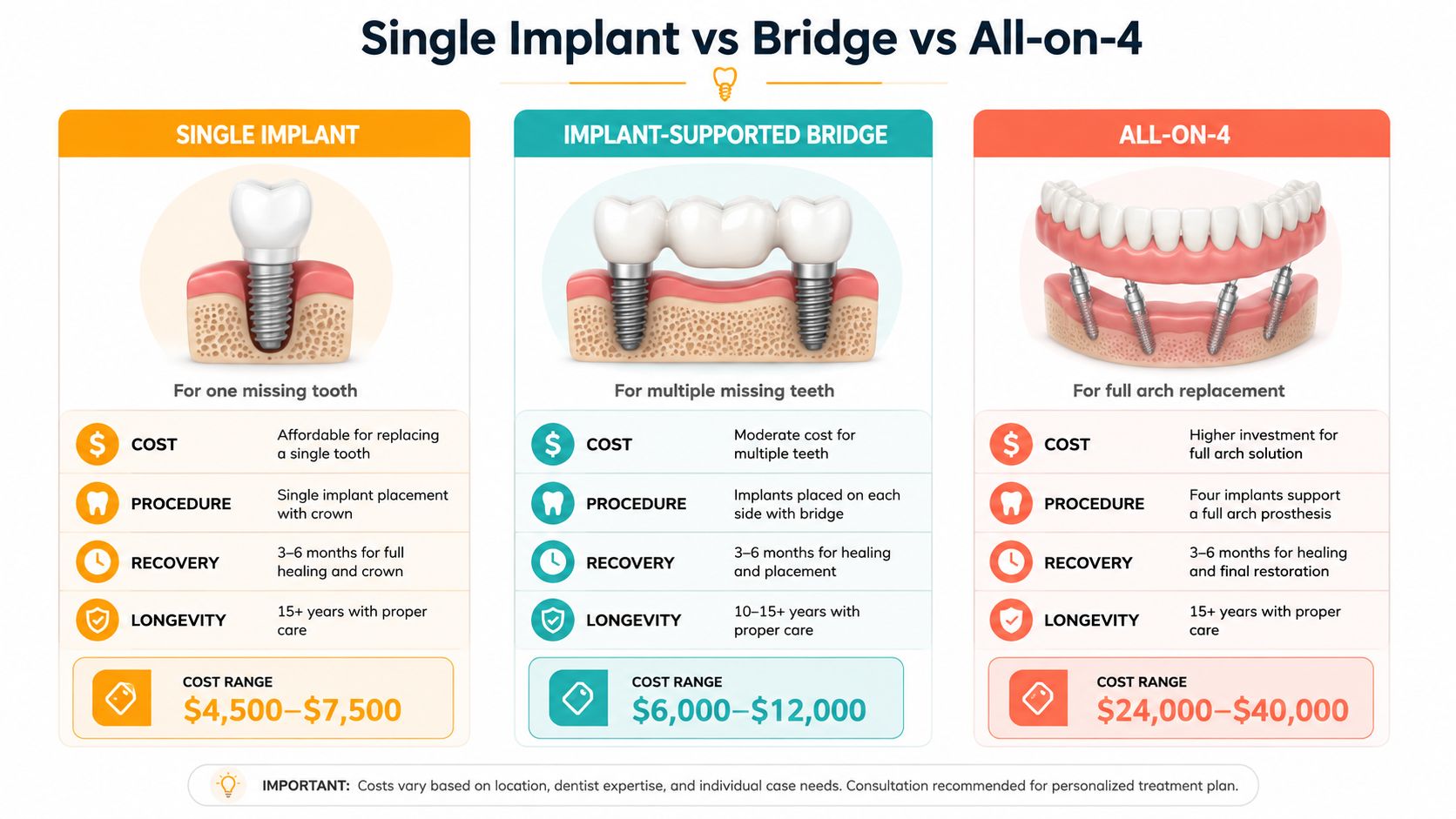
A single implant is the straight answer for one missing tooth, especially when the neighbouring teeth are healthy and you do not want them altered for a bridge. In Sydney, the practical range usually sits in the AUD $4,000–$7,000 zone rather than the lowest national figure (Sydney pricing guide). If the tooth is in the front and the smile line matters, the planning is tighter and the fee can rise.
An implant-supported bridge suits two or three missing teeth next to each other. You do not need an implant for every space, so a bridge can be a better use of treatment when the gaps sit together and the bite forces can be shared. The restorative design matters here because the bridge has to carry load properly and still look natural, and a practical overview of dental crowns and bridges explains why this treatment sits in its own category (crown and bridge guide).
For All-on-4, the entry cost is much higher because you are replacing an entire arch with a fixed prosthesis. A realistic range for one arch is AUD $20,000–$40,000, and some Australian guides place it a bit higher depending on the materials and case complexity (full-arch cost guide). Another Australian guide from The Smile Spot notes AUD $24,000–$42,000 per arch and AUD $48,000–$84,000 for both arches, which sits in line with the broader full-mouth figures above (All-on-4 Australia guide).
Use the pattern of the missing teeth to narrow the choice. One tooth usually points to a single implant. Teeth missing side by side may point to a bridge. A full arch of failing teeth, or a long-term denture case, is where All-on-4 starts to make sense.
Bottom line: do not compare a single implant quote with an All-on-4 quote and treat them as equal options. They represent very different levels of treatment and investment.
What Moves the Price Up or Down
Two implant quotes can differ by thousands and still be legitimate. The gap usually comes from what the clinic includes, who does the surgery, and how much extra treatment your mouth needs before the implant can go in.
The big cost drivers
Implant brand and material change the fee because established systems cost more to buy and service. Premium systems usually sit higher for a reason, they offer predictable parts availability and are used in more complex cases. That does not mean every patient needs them, but it does affect the quote.
Surgeon experience also shifts the number. A general dentist placing a straightforward implant and a specialist handling a difficult case are not pricing the same level of work. Clinics that use a periodontist or oral surgeon will usually charge more, and that extra cost reflects more advanced surgical planning.
Bone grafting is one of the biggest add-ons. If the site lacks enough bone, the implant cannot just be forced in and hoped for the best. Australian guides call out bone grafting as a common extra, with cost guides noting bone grafting ($500–$3,000+) when the site needs rebuilding (implant cost explainer). If you are comparing options before you book, exploring your tooth replacement options helps you see why some cases need more surgical work than others.
Where the hidden costs creep in
Imaging matters too. A clinic that includes CBCT scans and digital planning is doing more than a quick 2D check, and that usually shows up in the fee. Sedation can move the price as well, especially if you need it for anxiety or a more involved surgical session. Sydney and Inner West location also matters, because clinical overheads in central metro markets are higher than in smaller regions.
The other surprise is what does not get mentioned up front. Review appointments, temporary restorations, and follow-up adjustments can sit outside the shiny headline quote. A cheaper quote on day one can end up costing more by the time the final crown is fitted.
| Usually increases cost | Usually keeps cost down |
|---|---|
| Specialist placement | General dentist placement |
| Bone grafting or sinus lift | No additional surgical work |
| CBCT and digital planning | Simplified imaging |
| Premium prosthetic materials | More basic restorative choices |
If you want the cleanest advice, ask the clinic what is clinically necessary and what is optional. Those are not the same thing, and they should not be priced as if they are.
Private Health Insurance, Medicare, and Financing
Private health cover can take some of the edge off, but it rarely pays the full implant bill. A lot of patients walk in thinking major dental means the fund will cover most of the treatment. It usually does not.
What your fund is really likely to do
Most implant claims sit under major dental item numbers. The rebate depends on your policy tier, waiting periods, and annual limits. Many policies have a 12-month waiting period for major dental, and annual benefits often sit well below the full implant fee, so the rebate can reduce the bill without wiping it out (dental health insurance guide).
Medicare is even more limited. Routine adult implant treatment sits outside Medicare, apart from narrow medical or hospital-related situations. If someone says Medicare will cover the implant, they are describing a different pathway entirely.
Practical rule: call your fund with the item numbers before you book treatment. Do not rely on a general “yes, we cover implants” answer.
If you want to organise the money side properly, start budgeting and saving today with a clear treatment target rather than guessing month to month. A planned savings approach beats panic financing every time.
Financing pathways that make sense
For patients paying out of pocket, staged payment plans are the most common route. They let you spread the cost across appointments instead of taking the whole bill on day one. Early-release super can be relevant in genuine hardship where the treatment is medically necessary, but that is a serious pathway and needs proper documentation.
There is also a timing tactic that people miss. If your treatment is staged across calendar years, you may be able to use two annual benefit caps instead of one. That does not make the treatment cheap, but it can reduce the out-of-pocket pressure if your fund allows it.
The point is to structure the payment plan around the quote you receive. If your quote is itemised properly, you can compare what your fund covers against the exact treatment components, not a vague lump sum. For patients comparing local practices, a clear quote from an Inner West clinic should spell out the fixture, abutment, crown, imaging, sedation if needed, and every review visit, so you can judge value instead of chasing the lowest headline number.
Treatment Timeline and What Happens at Each Stage
An implant treatment unfolds over several months, so the price makes more sense once you break it into stages. The value sits in the planning, healing, and final restoration, which usually account for more than the surgery alone.
A realistic patient pathway
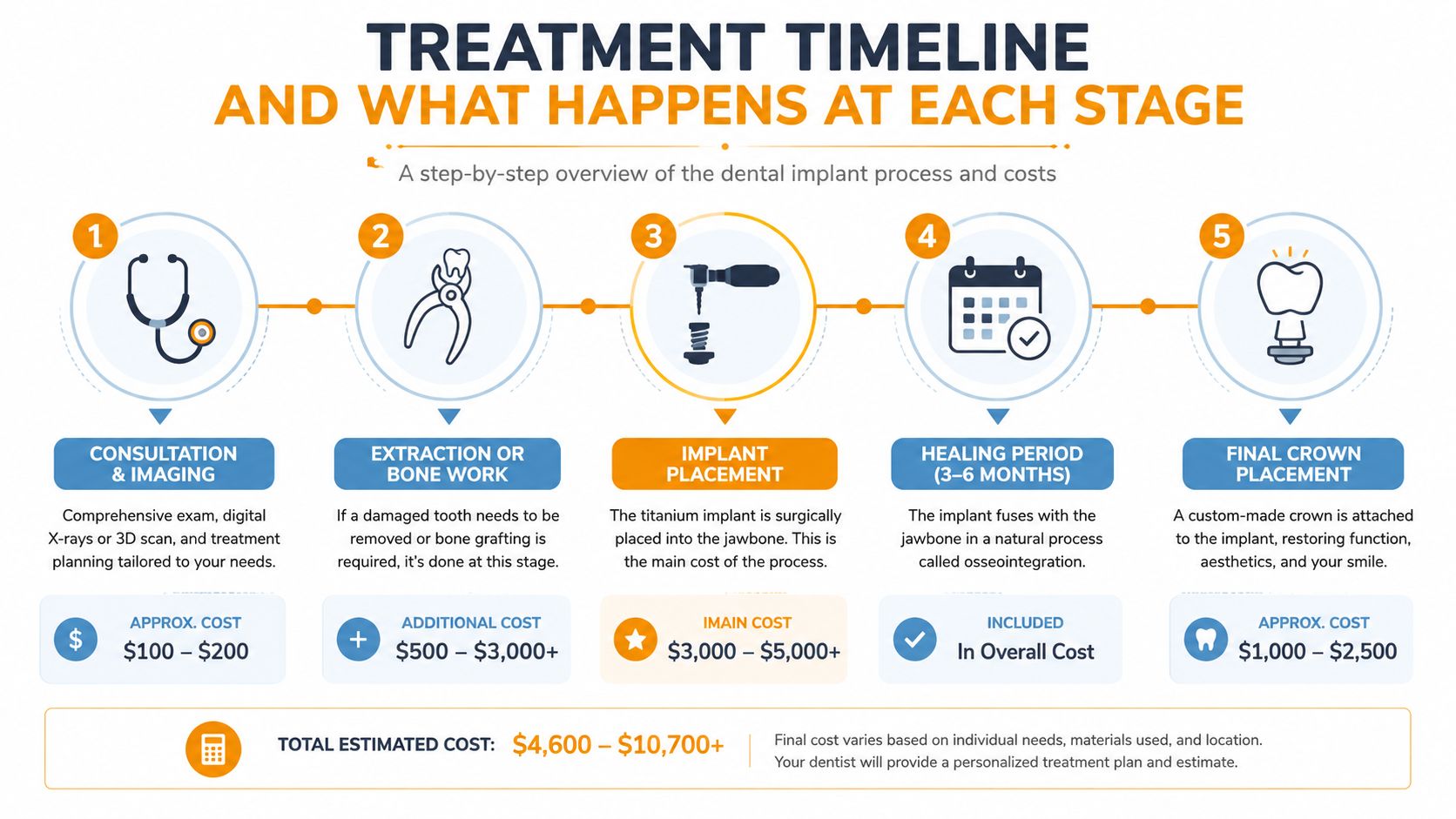
It starts with consultation and imaging. The dentist checks the gap, the bone, and the surrounding teeth, then decides whether an implant is suitable. If a tooth needs to come out or the bone needs rebuilding, that work happens before the implant goes in.
Then comes implant placement, followed by healing. The integration period is often 3–6 months as the implant fuses with the bone, a process called osseointegration. That waiting period gives the restoration its stability, and you can see the usual sequence in this implant procedure guide.
What people forget to budget for
The final crown does not appear on its own. After healing, the abutment is fitted and the crown is made to match the bite and the smile line. Temporary restorations can sit in the middle if the case needs them, and review visits are part of checking that the tissue heals properly.
Marketing often glosses over the next part. “Teeth in a day” usually refers to a temporary tooth or temporary bridge, not the finished crown. If a clinic rushes the process and tries to shortcut healing, that is where problems start. A cheap implant that fails early is the most expensive implant you will ever buy.
For Inner West patients, the practical question is not how fast a tooth can be fitted. It is how long the clinic expects you to heal, return for reviews, and come back for final fitment. A clinic with a sensible aftercare schedule is usually thinking about longevity, not just the first appointment.
Smart Questions to Ask at the Implant Consultation
A good consultation saves you money because it exposes what's really being quoted. If the answer feels vague, the quote probably is too. Bring a short list and make the clinic answer each point plainly.
The questions that matter
- Who does what: Ask who places the implant and who restores it. If the surgery and the crown are handled by different clinicians, that's fine, but the quote should say so clearly.
- What's included: Ask whether the CBCT scan, surgery, abutment, crown, temporary tooth, and review visits are included. If not, ask for each extra fee in writing.
- What material are you quoting: If it's an All-on-4 case, ask whether the final bridge is acrylic or zirconia. Those are not the same product, and they don't belong on the same fee line.
- Is sedation in-house or referred out: If you're anxious, you need to know whether the clinic provides sedation itself or sends you elsewhere.
- What happens if something fails: Ask about warranty, revision policy, and who pays for replacement parts if an issue shows up early.
- How are after-hours problems handled: A broken temporary tooth on a Friday night is a real issue, not a theoretical one.
What Inner West patients should look for
If you're comparing clinics in Dulwich Hill or nearby suburbs, practical access matters. Late evening or Saturday appointments help if you're working full-time. A clinic with transparent fees, such as an initial assessment package, gives you a better starting point than a vague “from” price.
The Smile Spot is one local option that combines implant treatment, restorative dentistry, and laser-assisted care under one roof, which matters when a case needs both surgery and follow-up work. That doesn't make it the only option, but it does show what an integrated setup looks like.
Ask for the same quote format from every clinic. If one practice items surgery separately and another buries it in a lump sum, you're not comparing like for like.
Planning Your Next Step With Confidence
Don't compare implant quotes by the headline total alone. Split each one into surgical fees, prosthetic fees, and adjuncts like scans or grafting, then compare the same components side by side. That's the only way to know whether one clinic is cheaper or just less transparent.
My advice is blunt, get two written quotes, ask both clinics to itemise them the same way, and book a proper implant assessment before you make a decision based on a number online. If you're weighing cost against long-term value, remember that a fixed implant can preserve bone and reduce the cycle of repeat repairs that comes with lower-cost temporary fixes.
If you want a straight answer about your own mouth, book an implant assessment with The Smile Spot. We can itemise the surgical and restorative steps, check what's needed, and give you a quote that makes sense for your case, not just a headline number.