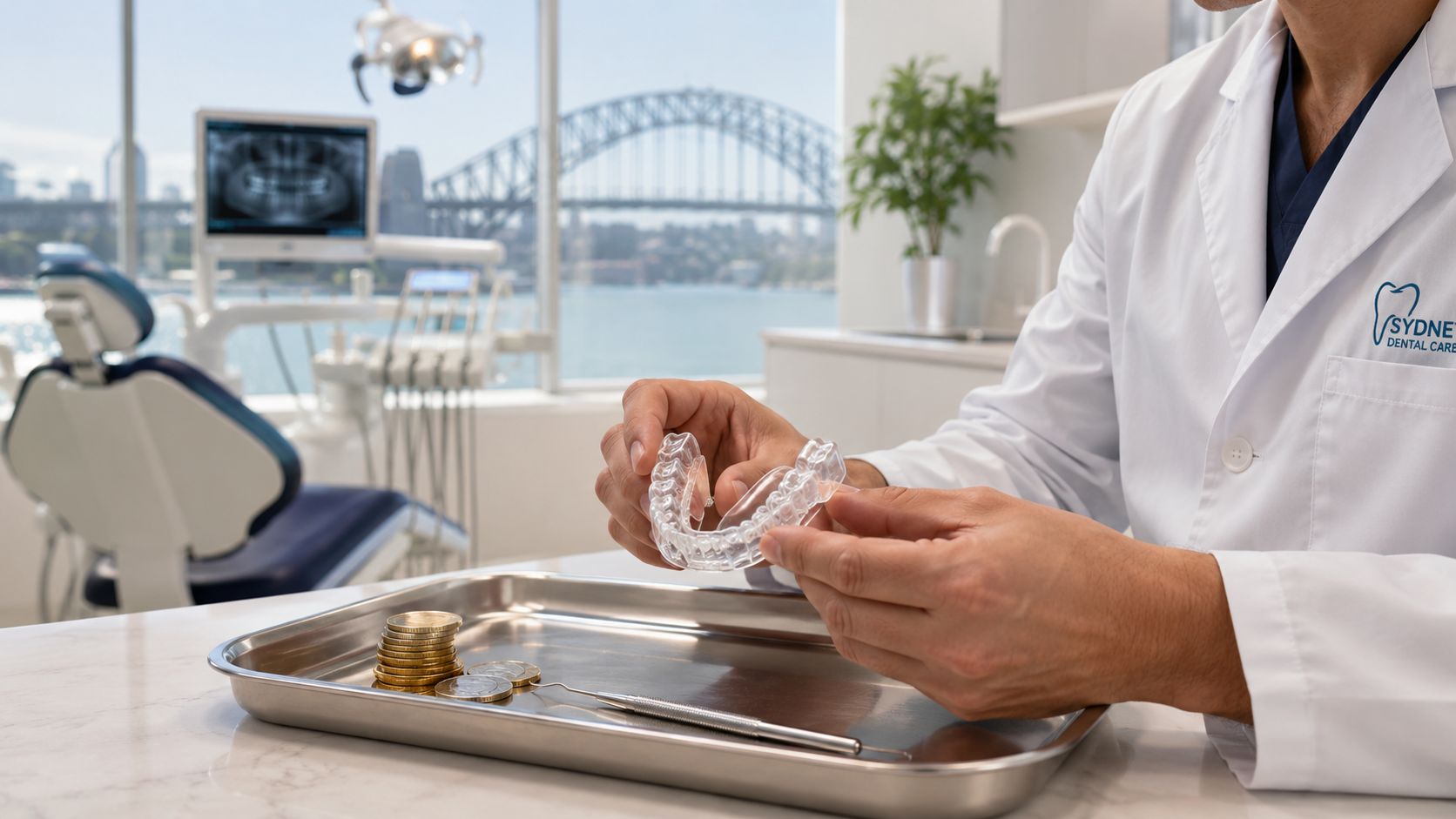
A custom-fitted dental splint in Sydney typically costs $500 to $900. The fee often includes impressions, laboratory fabrication, and the fitting appointment, but the final price depends on several factors, including the diagnostic work needed before the splint is even made.
If you're reading this because you're waking with a tight jaw, morning headaches, sensitive teeth, or a partner keeps telling you that you grind at night, you're not alone. Many people start by searching the dental splint cost, only to find broad price ranges that don't explain what they're paying for. In Sydney, the cost for a custom-fitted dental splint typically ranges from $500 to $900, but the final price depends on several factors that matter clinically, not just financially.
Understanding the True Dental Splint Cost
You notice a chipped back tooth, a tight jaw, and a headache most mornings. Then you search the price of a dental splint and find one number for the appliance, with very little mention of the appointments and checks that decide whether that appliance will help.
A dental splint is a custom therapeutic device made to protect teeth, reduce muscle strain, and manage clenching, grinding, and some temporomandibular joint problems. The appliance matters, but the total cost of care starts earlier than many guides explain.
In practice, the final fee can include the consultation, examination of tooth wear and bite function, impressions or a digital scan, lab fabrication, fitting, and any adjustments needed after delivery. Some patients also need X-rays or a more detailed TMJ assessment before a splint is prescribed. That extra diagnostic work can change both the plan and the cost, but it often prevents wasted money on the wrong appliance.
Why the total cost matters
Two splints can look similar in a case or in a photo and still represent very different levels of care. A professionally made splint is in a different category from a pharmacy guard, much like a custom orthotic compared with an off-the-shelf insole. The difference is not only comfort. It is how accurately it fits the bite, how well it protects the teeth, and whether it can be adjusted properly if symptoms change.
That is why I encourage patients to ask what the quoted fee includes.
A low upfront price can leave out the assessment that identifies joint involvement, the fitting visit that checks even bite contacts, or the review appointment that fine-tunes sore spots and improves wearability. A higher quote may include those steps from the start. For someone with mild grinding, a straightforward protective appliance may be enough. For someone with jaw pain, muscle fatigue, or an unstable bite, the added clinical time is often where the true value sits.
Practical rule: A splint that fits poorly, feels bulky, or throws the bite off is less likely to be worn consistently and more likely to need replacing.
For a broader look at how grinding appliances are used in day-to-day care, see our guide to a night guard for grinding. If you're comparing splint care with other jaw treatment pathways, Inspire Dental Group's TMJ costs offers useful context on how fees can extend beyond a single device.
Types of Dental Splints and Typical Price Ranges
A patient might call and ask, "How much is a splint?" The honest answer is that the term covers several different appliances, and the fee changes with the clinical job the splint needs to do.
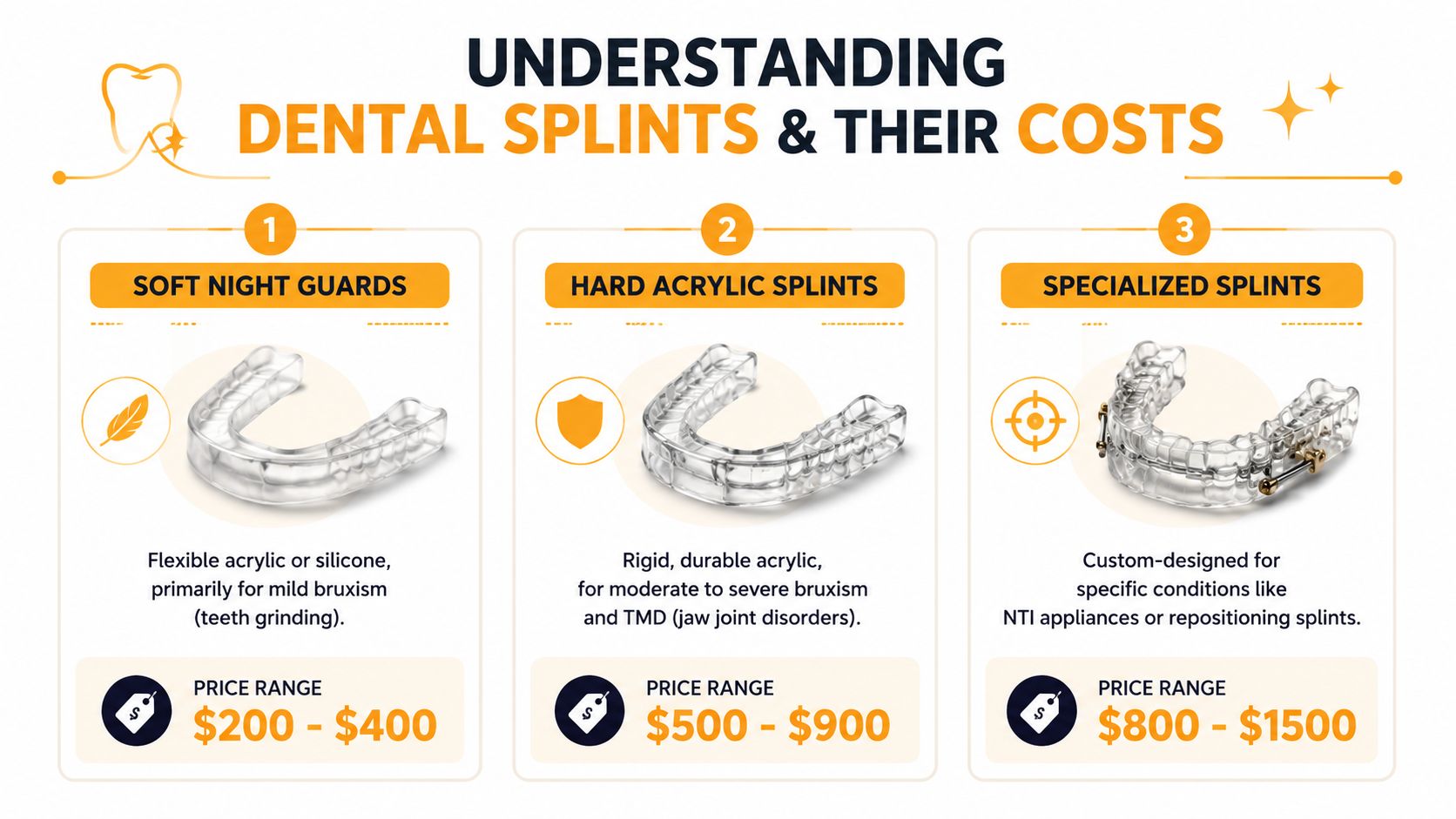
Soft guards and hard splints suit different problems
A soft night guard is usually chosen for lighter grinding or for patients who want a more flexible feel at the start. A hard acrylic splint is commonly preferred for heavier clenching, more advanced tooth wear, or cases where the bite needs to be adjusted with precision over time.
There are also specialised splints for more specific joint, muscle, or bite problems. These are less about the material alone and more about the design, the records taken, and the adjustment work required after the splint is made.
If you are still comparing options before getting a night guard, this is the part many price guides skip. The appliance type affects the lab fee, but it also affects how much clinical time is needed to assess, fit, and fine-tune it properly.
Dental Splint Types and Cost Comparison Sydney 2026
| Splint Type | Best For | Estimated Cost | Key Benefit |
|---|---|---|---|
| Soft night guard | Mild grinding, patients wanting a softer feel | Lower-fee custom option in many practices, depending on design and what is included | Often easier to get used to early on |
| Hard acrylic splint | Moderate to severe grinding, clenching, many TMJ-related cases | Commonly mid-to-upper custom splint pricing in Sydney, often reflecting greater adjustment and durability | Durable, adjustable, and more precise |
| Specialised splint | Complex bite issues or specific TMJ presentations | Usually higher than a standard appliance when added design work and review time are needed | Built around a specific therapeutic goal |
Price ranges make more sense once you separate the appliance from the care around it
Across Australian practices, custom splints are often quoted within a broad range, and Sydney fees are commonly at the higher end. The variation usually reflects more than the plastic. Some clinics bundle the consultation, bite records, impressions or scans, fitting, and review visits into one fee. Others quote the appliance separately and add the assessment and adjustment appointments on top.
That is why two splint quotes can look far apart even before the design changes. One may cover only the appliance itself. Another may include the diagnostic work that decides which type of splint is appropriate, plus the delivery appointment and early adjustments that make it wearable and effective.
A hard acrylic splint often costs more because it can be adjusted with much greater accuracy. In practice, that adjustability is often what makes the difference between a splint that sits in the drawer and one a patient actually wears.
For a plain-English overview of how these appliances are used in care, our guide to a dental mouth splint treatment options explains the basics clearly.
What Factors Influence the Final Splint Price
The biggest driver of dental splint cost isn't the plastic itself. It's the custom process behind it.
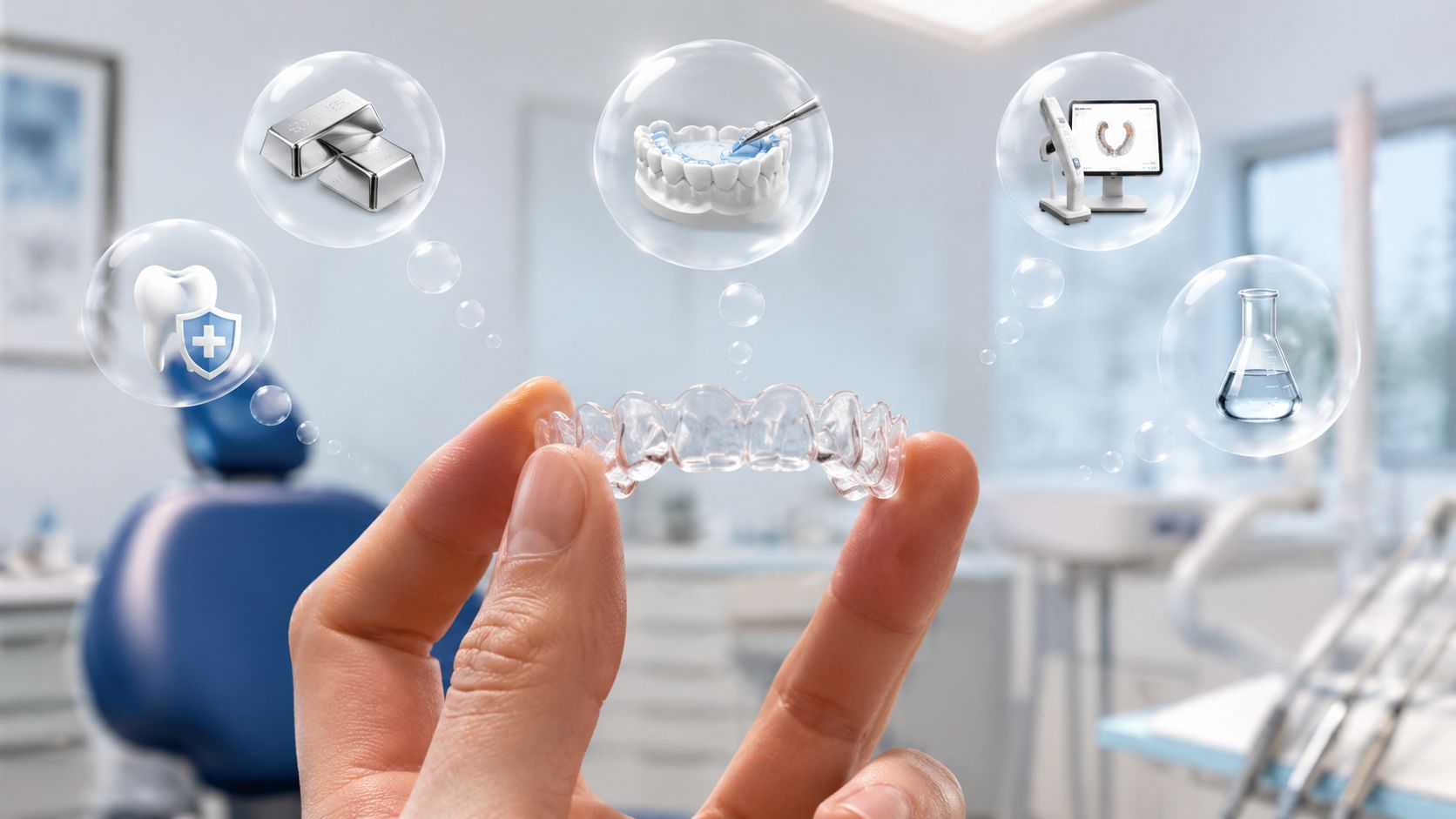
Custom fabrication changes both fit and fee
The main cost driver for a dental splint is the custom fabrication process, which requires precise impressions and laboratory moulding so the appliance fits snugly and helps prevent tooth contact while relieving muscle tension from bruxism or TMJ problems, as explained in this overview of dental splints and fabrication.
That process usually includes several moving parts:
- Clinical records: The dentist needs an accurate record of your teeth and bite.
- Laboratory work: A dental lab fabricates the appliance from those records.
- Adjustment time: The splint often needs careful balancing at delivery so it doesn't feel high, uneven, or awkward.
A generic boil-and-bite guard skips most of that. It's cheaper upfront, but it can be bulky, unstable, and much harder to wear consistently. In practice, many people abandon them because they don't feel right.
Your diagnosis matters as much as the material
A straightforward grinder with no joint symptoms is different from someone who clicks, locks, or gets pain around the ear and cheek muscles. Severe TMJ cases can need extra diagnostics or a more specialised design, which pushes the fee higher than a standard protective appliance.
The same goes for bite complexity. If teeth are heavily worn, missing, crowded, restored with crowns, or not meeting evenly, the splint has to be designed around those realities. More planning means more chair time and more technical work.
One useful test: Ask whether the quoted fee covers only the appliance, or the appliance plus the records, fitting, and review adjustments. That answer often explains the price difference.
Digital workflows can improve accuracy too. If you're curious how newer methods support custom appliance design, our article on dental 3D printing shows how modern records and fabrication can improve precision.
Some patients also benefit from reading outside perspectives before committing. A patient-focused guide on getting a night guard can help you compare the practical differences between simple guards and professionally made appliances.
Your Assessment and Fitting What Is Included
Many online guides fall short. They give a splint price, but not the total cost of care.
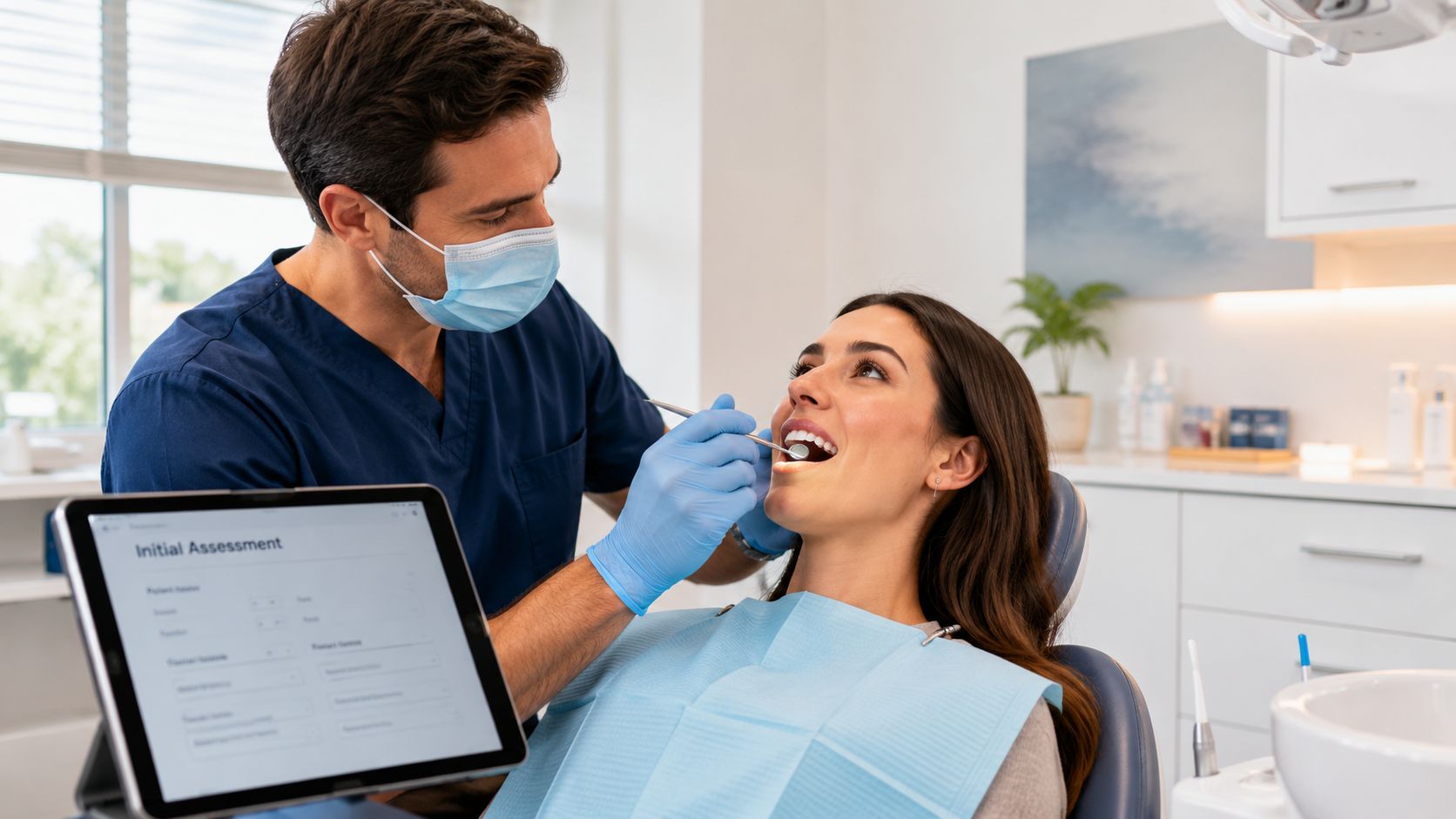
The first appointment is more than a quote
A proper splint appointment usually starts with a consultation and examination. The dentist checks tooth wear, cracked fillings, muscle tenderness, jaw movement, and how the teeth meet.
If the symptoms suggest joint involvement or there are concerns about the teeth and bone support, imaging may also be needed. That's why the advertised appliance fee isn't always the full story.
According to this Australian breakdown of occlusal splint costs, consultations, X-rays, and scans can add an additional $400 to $450 to the final bill, and many patients don't realise these diagnostic fees are separate from the splint itself.
What you're usually paying for
A quality splint process often includes:
Examination and diagnosis
The dentist confirms whether the issue is bruxism, muscle tension, joint dysfunction, tooth wear, or a mix of these.Records and imaging
This may include photos, impressions, scans, or imaging. If you've never had jaw-related imaging before, it may be necessary to make a sound treatment decision.Lab fabrication
The appliance is made to fit your bite, not just your teeth.Delivery and adjustment
The splint is fitted, checked, and adjusted so it seats properly and feels balanced.Review
Many patients need a follow-up adjustment after they've worn it for a short period.
If you'd like to understand one part of that work-up, our page on an OPG dental X-ray explains how imaging can help assess structures beyond what's visible in the chair.
A short video can also make the process easier to visualise.
The best way to avoid surprise fees is simple. Ask for the full pathway cost, not just the appliance price.
Using Health Funds and Medicare for Your Splint
A common scenario in practice is this: a patient has budgeted for the splint itself, then asks whether a rebate will also help with the appointments needed to diagnose the problem properly. Sometimes it does. Often, only part of the total care is claimable. That distinction matters because the final out-of-pocket cost can be very different from the appliance quote alone.
Private health Extras is usually the main rebate pathway for splints. Medicare is much narrower. It may apply in specific temporomandibular joint dysfunction cases under MBS Item 75618, which relates to the fabrication and fitting of a dental splint, but eligibility is limited and many people seeking a night splint for grinding will not meet that threshold.
For private cover, the rebate commonly depends on your Extras level, annual limits, waiting periods, and the item number your provider uses, often item 941. The practical question is not “am I covered?” It is “which parts of this treatment are covered?” Some funds contribute to the appliance but not the consultation. Some may help with certain records or radiographs. Others pay a rebate that still leaves a sizeable gap.
This is why I encourage patients to check the full fee structure before we start, not just the splint line item.
Ask your fund:
- Which item number will be used for the splint
- How much annual Extras allowance remains
- Whether the consultation, imaging, or other diagnostics attract separate benefits
- Whether a review or adjustment appointment is included in the claim rules
If you want a clearer sense of how funds apply across general dental treatment, our guide to dental health insurance in Australia explains the questions worth asking before you commit. If you're comparing how clinics explain payment options in other markets, this page on affordable dental care in Katy shows why cost transparency shapes patient decisions.
Transparent Pricing for Splints at The Smile Spot
You wake with a tight jaw, a sore tooth, or a headache and start looking up the cost of a splint. The number you see online often refers to the appliance alone. It may not include the examination, the bite assessment, any imaging, the fitting appointment, or the reviews needed to make sure the splint is helping.
At The Smile Spot, we discuss splint fees as a total cost of care. That matters because a splint is only one part of treatment. The real question is whether the appliance is appropriate, what records are needed to make it safely, and what follow-up is likely once you start wearing it.
Some patients need a straightforward night splint. Others need more investigation first because the pain is coming from a cracked tooth, worn fillings, gum problems, a bite imbalance, or a jaw joint issue. In those cases, the lowest appliance quote is not always the lowest overall cost. An appliance made without a proper diagnosis can lead to more appointments, adjustments, or replacement later.
Replacement splints can also be priced differently from a first appliance. If an existing patient has stable records, a clear treatment history, and a bite that has not changed significantly, the process may be simpler. If the fit, tooth wear, or symptoms have changed, new records and a fresh assessment are often the safer option.
The same principle applies across general dental care at The Smile Spot. Patients can already see transparent options such as the $240 full care package for exam, X-rays, scale and fluoride. We bring that same clarity to splints by explaining what the fee covers before treatment begins, rather than leaving patients to work it out from separate line items after the fact.
If you want a personalised quote, ask for the full pathway. That means the consultation, diagnostics, appliance, fitting, likely review visits, and any costs that may sit outside the splint itself.
If you'd like a clear, personalised breakdown of your dental splint cost, The Smile Spot can help. Patients in Dulwich Hill, Marrickville, Ashfield, Summer Hill, Petersham, Lewisham, Earlwood, Hurlstone Park and nearby Inner West suburbs can book online or call the clinic to arrange an assessment, review symptoms like grinding or jaw pain, and receive transparent advice about the full cost of care before treatment begins.