You know the feeling. A cold sip lands on one tooth and you get that sharp zing, or a dull ache starts pulsing just as you're trying to fall asleep. The phone comes out, the search bar fills up fast, and every result seems to jump straight from “maybe a cavity” to “call now”.
That panic is understandable, but tooth pain usually makes more sense than it first feels like. It often comes from the tooth itself, from the tissues around it, or from something nearby that's only pretending to be a tooth problem. If you want a calm first step tonight, this emergency tooth pain relief guide is a sensible place to start while you work out what's going on.
When a Toothache Hits and You Start Searching for Answers
The worst part of tooth pain is how ordinary life gets interrupted. You're having dinner, then one bite catches a tooth and the whole side of your mouth starts acting up. Or you're lying still in bed and the ache becomes louder the moment everything else gets quiet.
A lot of people try to guess the cause straight away, but the first useful question is simpler, where is the pain really coming from? Sometimes it's the tooth. Sometimes it's the gum, the jaw, the sinus, or a nerve pathway that sends pain into the mouth even when the tooth itself is healthy.
Practical rule: if the pain changes with cold, sweet food, biting, or pressure, that detail matters more than how dramatic the ache feels.
That's why a structured look at tooth pain causes helps more than generic advice. A short, sharp sting points one way, a throbbing night-time pain points another, and pain that feels “tooth-like” but doesn't behave like a tooth at all may need a completely different response.
For a worried patient, the goal isn't to self-diagnose perfectly. It's to tell the difference between “I can watch this overnight” and “I shouldn't sit on this any longer.” That calm distinction saves time, stress, and sometimes unnecessary treatment.
How a Tooth Actually Feels Pain
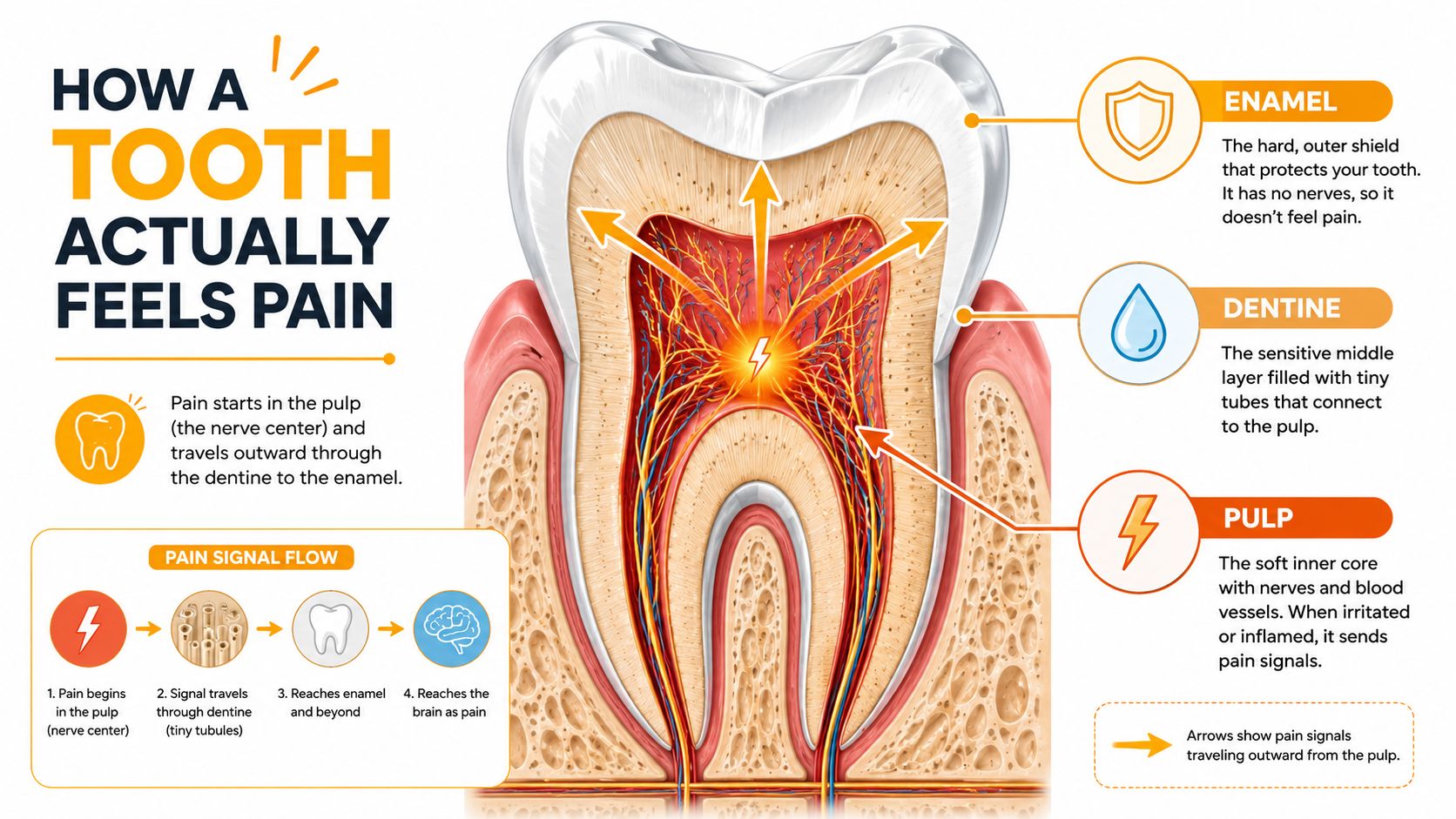
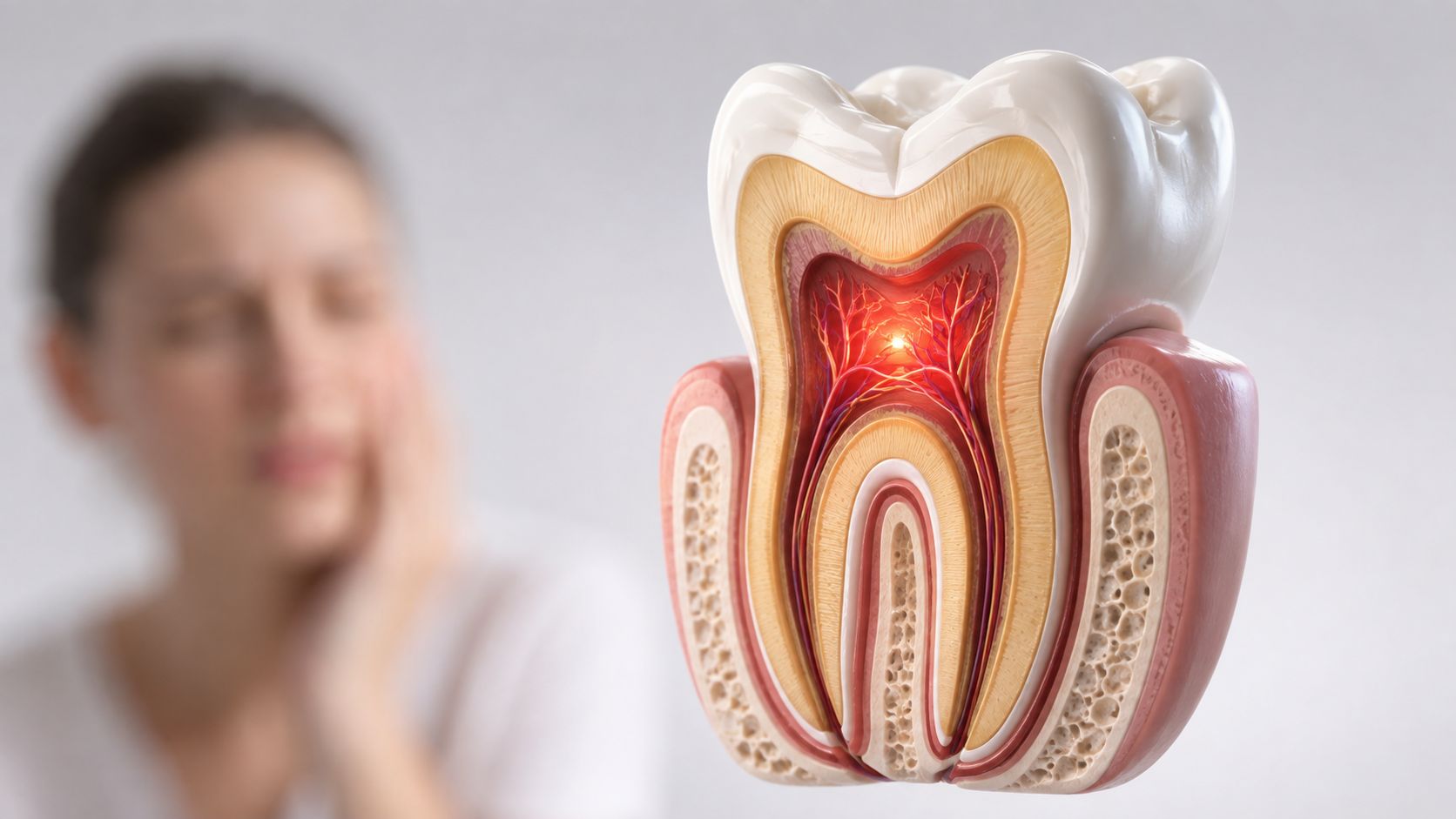
Think of a tooth as a layered structure. The outer enamel is the hard helmet, the dentine underneath is the sensitive middle layer, and the pulp at the centre is the soft nerve core. Pain changes depending on which layer is involved.
The outer layer is protective, not sensitive
Enamel doesn't have living nerve tissue, so a problem that stays in enamel often doesn't hurt much at all. That's why early decay can quietly grow before a person feels anything obvious. The trouble starts when the surface is worn away enough to expose the next layer.
Dentine contains tiny fluid-filled tubules, and those tubules are why cold, sweet, or even air can cause a quick, sharp reaction. If you've ever felt a fast “zing” that vanished as soon as the trigger stopped, that pattern often fits dentine exposure.
The nerve centre changes the pain pattern
Once bacteria reach the pulp, pain usually becomes deeper, longer lasting, and harder to ignore. That's the point where the tooth stops behaving like a simple sensitivity problem and starts acting like an inflamed tissue problem.
A useful way to read the pain is this. Short and sharp often means surface or dentine involvement. Deep, lingering, throbbing, especially if it wakes you, often points closer to the pulp. Biting pain usually suggests a structural or supporting-tissue problem rather than a simple cold sensitivity issue.
If you want a more focused look at the sensitivity end of the spectrum, this guide to sensitive teeth helps separate everyday triggers from pain that needs proper dental treatment.
The Most Common Tooth Pain Causes and What Each One Feels Like
Many people with tooth pain causes are trying to match a feeling to a likely reason. That's the right instinct. The sensation often gives you the biggest clue.
Pain that zings with cold, sweet, or acidic foods
That pattern often fits dentine hypersensitivity or early decay. In the pain literature, dentine hypersensitivity affects about 15% of the population and is commonly triggered by cold, sweet or spicy foods, and beverages (toothache overview). The mechanism is usually exposed dentine rather than a deep infection.
A cavity that's still shallow may not hurt much, but once it reaches dentine, the tooth can become reactive. The pain is often quick, localised, and easy to provoke with cold water or a sweet drink. If you want a plain-language explanation of that symptom pattern, browse tooth sensitivity guide is a useful comparison point.
Pain that throbs, lingers, or wakes you
That is more concerning for pulpitis, which usually develops after decay has progressed deeper into the tooth. Clinical reviews describe the main pathway as dental caries leading to bacterial invasion, then pulpitis, then pain (odontogenic pain review). The ache often feels deeper than sensitivity and may keep going after the trigger is gone.
A tooth that hurts at night, hurts without anything touching it, or feels hot and inflamed inside is rarely just “a bit sensitive”. Those symptoms deserve a proper exam rather than a wait-and-see approach.
Pain when you bite down or release the bite
That often points to a cracked tooth, a high or damaged filling, or inflammation around the ligament that holds the tooth in place. Cracks can be tiny and still create a very specific pain pattern, sharp on biting and sometimes worse on release.
A cracked tooth doesn't always look dramatic in the mirror. That's why pressure pain matters. If the tooth feels fine until you chew, the problem may be structural rather than decay-driven.
Constant ache with swelling or a bad taste
That pattern raises concern for a dental abscess. An abscess is an infection that creates pressure in and around the tooth, so the area becomes tender, swollen, and often more painful when touched or bitten. It's not a “wait a week” problem if swelling is growing.
Gums, wisdom teeth, and grinding
Gum disease can expose roots and make teeth ache around the edges rather than right through the centre. Impacted wisdom teeth can create soreness at the back of the mouth, especially when the area is inflamed. Bruxism, the clenching or grinding habit, can leave teeth feeling bruised or sore on waking.
A practical comparison table helps here.
| Cause | What It Feels Like | Likely Treatment | First Step |
|---|---|---|---|
| Early decay | Cold zing, sweet-triggered sting | Fluoride, filling, or early restoration | Book an exam before it deepens |
| Pulpitis | Deep throbbing, night pain, lingering ache | Root canal therapy or extraction if the tooth can't be saved | Stop chewing on that side and book promptly |
| Cracked tooth | Sharp pain on biting or releasing the bite | Crown, restoration, or root canal depending on depth | Avoid hard foods and get it checked |
| Abscess | Constant ache, swelling, pressure | Drainage and often root canal therapy | Seek urgent dental care |
| Gum disease | Sore gums, root tenderness, bleeding | Cleaning and gum therapy | Arrange a dental assessment |
| Grinding or clenching | Morning soreness, jaw fatigue, worn teeth | Night guard and bite management | Notice clenching patterns and mention them |
For patients who want a treatment-oriented view, signs you need a root canal is helpful when the pain feels deep, persistent, or hard to settle.
Simple distinction: cold-sensitive pain often behaves like a surface or dentine issue, while biting pain, swelling, or night pain usually means something deeper is happening.
When Tooth Pain Is Not Really a Tooth Problem
Not every pain in the mouth starts in a tooth. That's where people can get stuck, especially if the ache seems to move around or doesn't match the dental exam.
Sinus pressure can imitate upper tooth pain
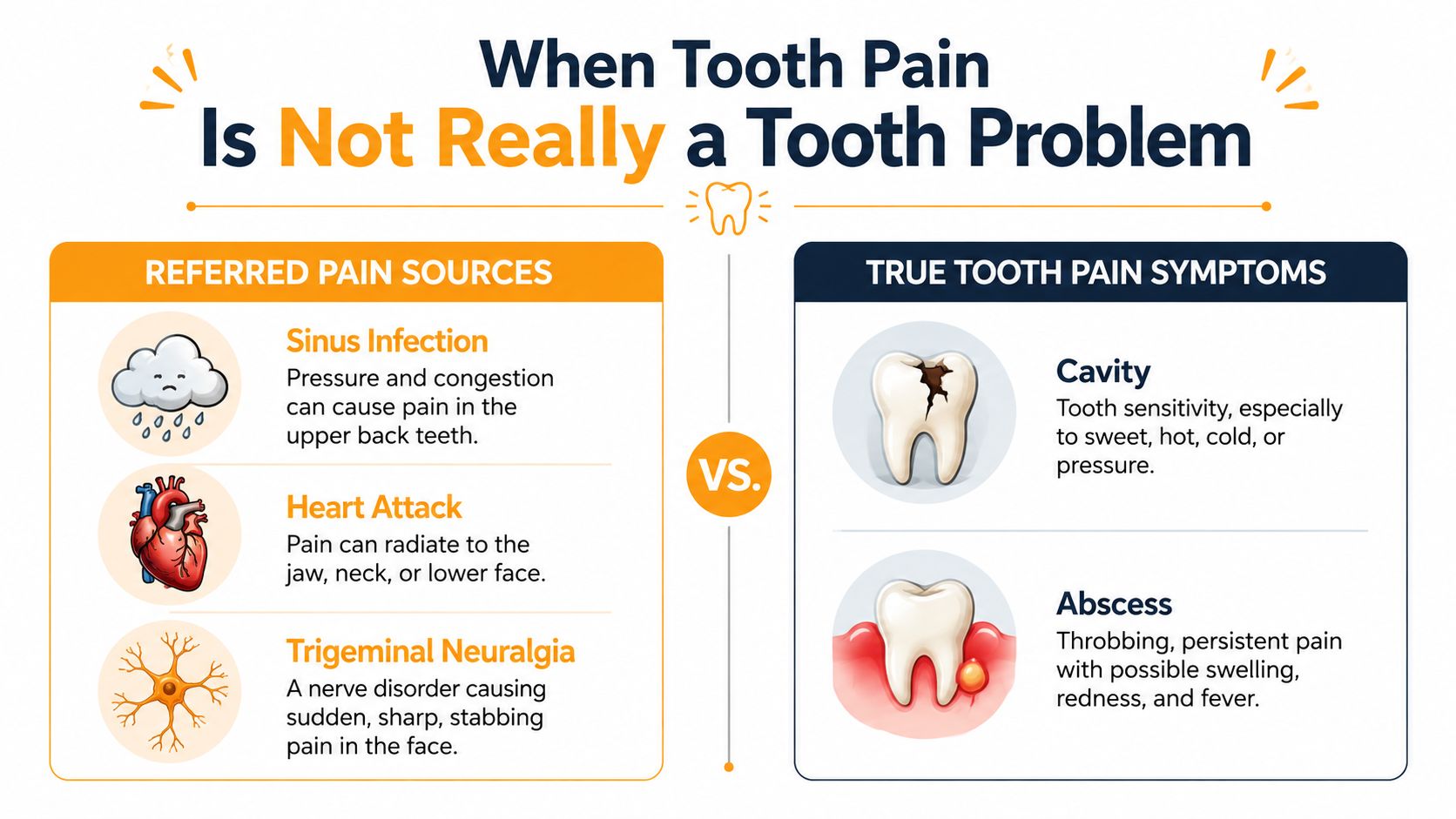
Upper back teeth sit close to the sinus floor, so sinus inflammation can feel like toothache. The pain often comes with facial pressure, tenderness, or a heavy feeling that worsens when you bend forward. If the “tooth pain” changes with head position more than with chewing, the sinus deserves a look.
Jaw muscles and the TMJ can send pain into the teeth
A tight jaw, a sore temporomandibular joint, or long-term clenching can radiate discomfort into the teeth. People often describe this as aching across several teeth rather than one specific tooth. If you wake with jaw tension or notice clicking, clenching, or headaches, the source may be muscular or joint-related rather than decay.
A night guard is often discussed in that context, and this dental mouth splint guide explains how bite protection can help when grinding is part of the picture.
Nerve pain and serious mimics need respect
Trigeminal neuralgia can feel like a sudden, electric shock through the face, not a dull toothache. Clinical sources also flag serious mimics such as acute coronary syndrome, temporal arteritis, and peritonsillar abscess when facial or jaw pain doesn't behave like a dental problem (toothache and infection review). That matters because lower jaw pain with chest tightness, exertion, or breathlessness needs medical attention.
The key pattern is this. If the pain keeps moving, doesn't line up with one tooth, or behaves more like a nerve or pressure issue than a dental one, the dentist may still be the right first stop, but the cause may sit outside the tooth itself.
What You Can Do at Home Today and What a Dentist Can Do Tomorrow
The first priority at home is comfort, not heroics. Warm salt-water rinses can soothe irritated tissues, a cold compress can help if there's swelling, and it makes sense to avoid the trigger that's setting the tooth off, whether that's ice water, chewing, or very sweet food.
A few things are worth avoiding. Don't put aspirin directly on the gum, don't use ice directly on the tooth, and don't delay if swelling, fever, or swallowing problems appear. If the pain is severe, constant, or spreading, home care is only a bridge to proper treatment.

The next step depends on the cause. Early decay may be treated with fluoride and a restoration. Irreversible pulpitis or an abscess often needs root canal therapy. Grinding usually needs a custom night guard. Impacted wisdom teeth may need removal. Teeth that can't be saved may be replaced with options such as implants or full-arch solutions.
| Cause | What It Feels Like | Likely Treatment | First Step |
|---|---|---|---|
| Early decay | Cold sensitivity, short pain | Fluoride, filling, laser-assisted cavity preparation in suitable cases | Book an assessment |
| Pulpitis | Deep, persistent ache | Root canal therapy | Avoid chewing on the side and seek care |
| Abscess | Swelling, pressure, constant pain | Drainage and root canal therapy | Get urgent dental review |
| Grinding | Morning soreness, worn teeth | Custom night guard | Mention clenching or jaw fatigue |
| Wisdom teeth | Back-of-mouth soreness, swelling | Extraction or surgical removal | Have the area examined |
If you want to see how other patients talk about getting help when pain stops being manageable, 4squares Dentistry testimonials offer a useful look at the kind of treatment experience people notice most.
A tooth that hurts on chewing, wakes you at night, or swells is telling you something specific. Don't try to guess forever.
Why Some Australians Keep Getting Tooth Pain Despite Good Brushing
Good brushing matters, but it doesn't solve everything. Australian oral-health reporting shows toothache is still common, with 11% of children aged 5 to 14 and 20% of adults aged 15+ reporting it in the previous 12 months, and adults aged 25 to 44 showing the highest rate at 23% (AIHW oral health report).
That doesn't mean people aren't trying. It means routine care, timing, and access still matter. Income-related inequalities in dental outcomes and broader access barriers help explain why some people end up seeing a dentist only after pain starts, rather than before decay or damage becomes obvious (Frontiers oral-health study).
There's also the day-to-day reality of busy families. Long work hours, skipped meals, frequent snacking, and delayed check-ups can let small problems grow. And for some patients, the issue isn't behaviour at all, it's a cracked tooth, clenching, or a post-restoration sensitivity that needs proper assessment rather than more toothbrush advice.
The honest takeaway is simple. Brushing is the foundation, but it can't close every gap. Some tooth pain keeps returning because the tooth was already weakened, the problem was missed early, or access to timely care was harder than it should be.
Red Flags That Mean You Need an Emergency Dental Visit Today
Some tooth pain can wait for a normal appointment. Some can't.
Book urgently if you notice swelling or infection signs
Facial swelling, neck swelling, fever, a bad taste with pus, or trouble opening the mouth can point to an infection that needs same-day attention. If swallowing becomes difficult, or breathing feels off, that's urgent. Don't wait for morning if the swelling is growing.
Treat trauma as time-sensitive
A cracked tooth from a fall, a knocked-out tooth, or a tooth that shifts after an injury needs prompt dental review. Bleeding that won't stop after an extraction also needs attention. In those cases, time matters because the treatment options narrow as the hours pass.
Don't ignore pain that changes the whole pattern
Persistent throbbing that keeps you from sleep, or pain that comes with chest, arm, or jaw tightness and doesn't settle with rest, needs immediate medical assessment. The jaw can be part of a dental problem, but it can also be part of something far more serious.
For a practical overview of what an urgent appointment looks like, emergency dental clinics near me gives a useful guide to the kind of care pathways people usually need in these situations.
The Smile Spot offers emergency appointments, gentle care for anxious patients, sedation options when appropriate, and late evening and Saturday hours for families and commuters who can't always stop the day for dental pain.
Prevention Habits and the Questions Patients Always Ask Next
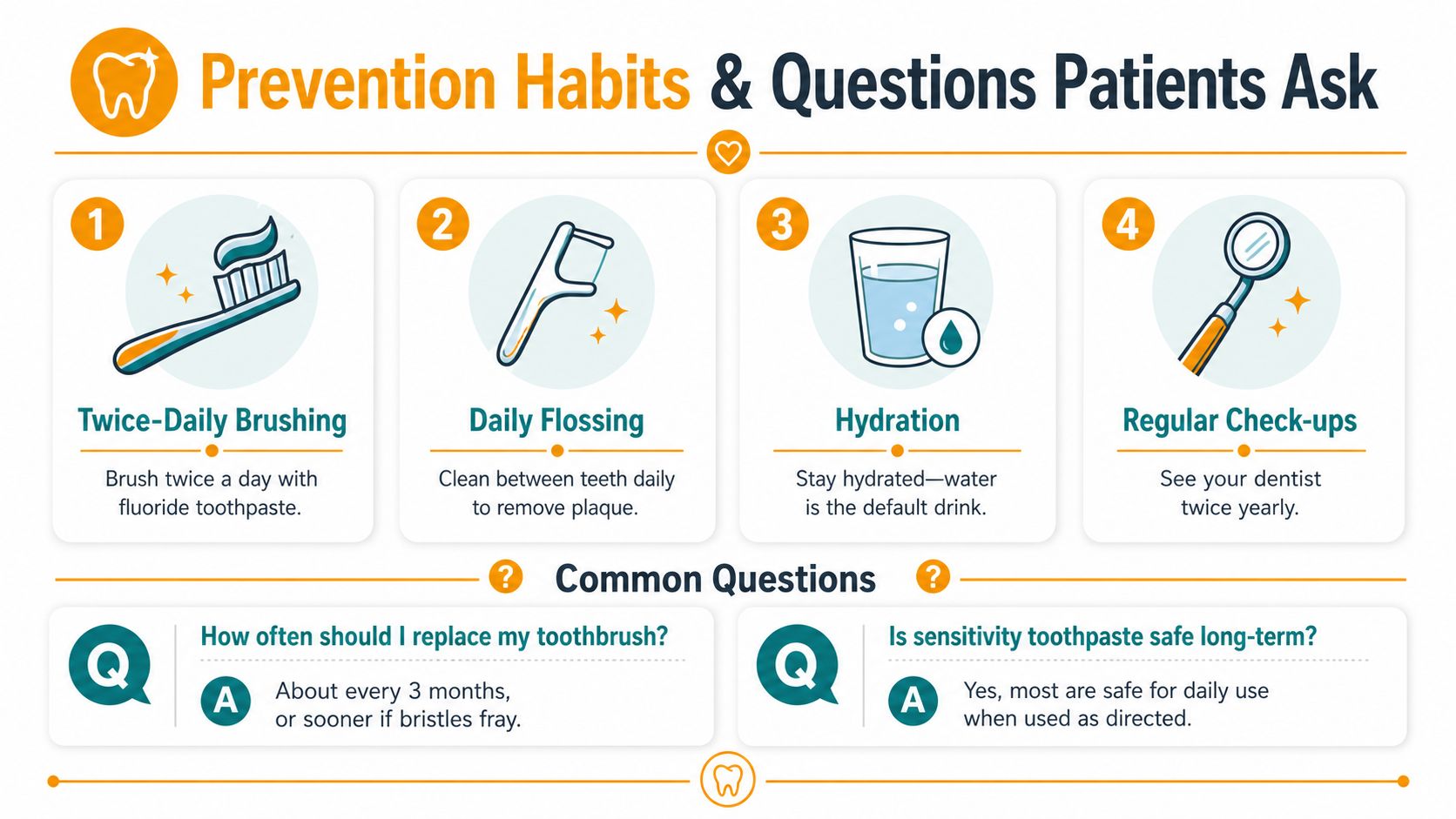
The simplest prevention plan is still the most reliable. Brush twice a day with fluoride toothpaste, clean between the teeth once a day, keep water as the default drink between meals, use a custom mouthguard for sport or grinding, and keep up with regular check-ups. For many adults, six-monthly visits are a practical minimum, especially if there's a history of decay, sensitivity, or grinding.
A practical visit also helps catch problems before they hurt. The Smile Spot's adult care package is $240 and includes an exam, X-rays, scale, and fluoride, with a reduced rate for children, which gives families a clearer way to stay ahead of pain without guessing at costs.
FAQ
How do I tell a sinus ache from a real toothache?
Sinus-related pain usually feels like pressure across several upper teeth and often gets worse when you bend forward. A true toothache more often ties to one tooth and changes with chewing, cold, or sweet triggers.
How long is it safe to wait before pain worsens?
If the pain is getting stronger, waking you up, or coming with swelling, don't wait. If it's mild and clearly linked to a simple trigger, book a dental check soon so the cause doesn't deepen.
Can sensitivity toothpaste replace a dental visit?
It can help with mild sensitivity, but it won't fix decay, a crack, pulp inflammation, or gum disease. If the same tooth keeps hurting, sensitivity toothpaste is a support, not a diagnosis.
If you're dealing with tooth pain now, The Smile Spot can assess the cause, explain what's driving the pain, and map out the next step without guesswork. Visit The Smile Spot to book care for tooth pain, urgent symptoms, sensitivity, or a lingering ache that needs a proper exam.